

Key Takeaways
- Protecting health and safety comes before discussing fault or settlement amounts.
- Insurance adjusters need information, but injured people should provide accurate facts without guessing or minimizing symptoms.
- Photos, witness information, medical records, receipts, and a written timeline can support a claim.
- Early settlement offers may not account for future treatment, missed work, or lasting limitations.
- Organized communication helps injury victims respond confidently and avoid preventable errors.
Table Of Contents
- Start With Safety at the Crash Scene
- Gather Information and Preserve Evidence
- Put Medical Care First
- Meet Wisconsin Reporting Requirements
- Communicate Carefully With Adjusters
- Review Settlement Offers Before Signing
- Avoid Common Claim Mistakes
- Common Questions
After a vehicle collision, an insurance adjuster's call can arrive before an injured person has had time to process what happened. Although adjusters may be polite and helpful, their role is to investigate and evaluate a claim for the insurance company. Someone coping with serious injuries, disputed fault, or a low offer may want to discuss the situation with a personal injury attorney in Wausau before making decisions that could affect compensation.
The best approach is calm, careful, and documented. Injury victims do not need to argue with an adjuster or make a final decision during the first phone call. They can focus on medical care, preserve evidence, keep communications organized, and ask for time to review requests or settlement paperwork.
Start With Safety at the Crash Scene
Insurance issues can wait until everyone is safe. Check for injuries, and call 911 when a person needs urgent medical help, when traffic is blocked, when a vehicle is unsafe, or when impairment may be involved. Give the dispatcher the road name, nearest cross street or mile marker, direction of travel, number of injured people, and any hazards such as smoke, fuel, or blocked lanes.
If no one is hurt and a vehicle can be moved safely, get it out of the travel lanes. If it is disabled, do not risk injury by pushing it. Turn on hazard lights, remain alert for approaching traffic, and follow instructions from first responders. Avoid debating blame at the scene. A simple exchange of factual information is safer and more useful than an argument.
Gather Information and Preserve Evidence
Before memories fade, collect the other driver's name, contact information, driver's license details, license plate number, vehicle description, and insurance information. Ask witnesses for their names and phone numbers. If an officer responds, note the officer's name, agency, and report number when available.
Take photographs only when it is safe. Capture the vehicles from several angles, visible injuries, damaged personal property, lane markings, traffic signals, road conditions, debris, skid marks, and nearby signs. A photo of an obstructed sign, poor lighting, or icy pavement may preserve a detail that becomes important later. Save damaged clothing, helmets, car seats, and other items until the claim is resolved.
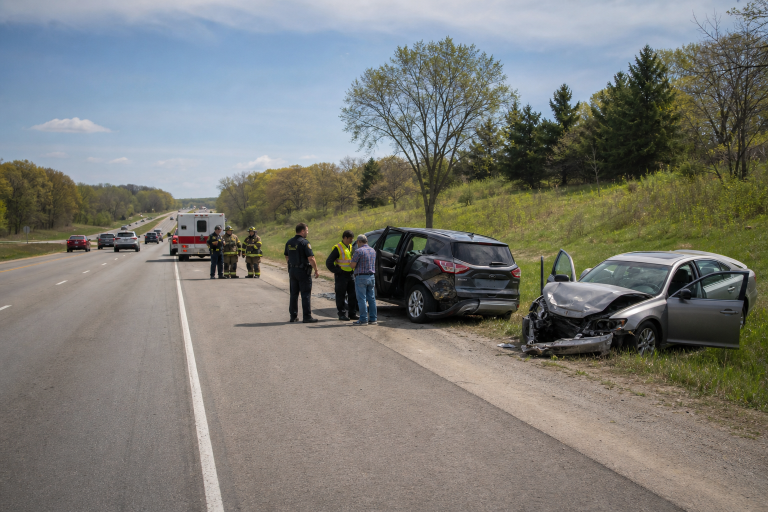
Put Medical Care First
Some injuries are not obvious immediately after a crash. Pain, dizziness, headaches, numbness, confusion, weakness, and reduced range of motion can develop hours or days later. Seeking timely care protects health and creates a clearer medical timeline. Symptoms of a possible concussion, including worsening headache, repeated vomiting, confusion, or unusual behavior, deserve prompt attention under guidance, such as the warning signs of a concussion.
Follow treatment recommendations and keep copies of discharge instructions, prescriptions, test results, medical bills, and appointment records. Also, maintain a brief daily journal that describes symptoms, sleep problems, mobility limitations, missed activities, and time away from work. This record can help explain how the injury affected everyday life.
Meet Wisconsin Reporting Requirements
Wisconsin generally requires a crash report when a collision causes an injury, at least $1,000 in damage to a person's vehicle or property, or at least $200 in damage to government-owned property other than a vehicle. If law enforcement does not submit a report, drivers may need to complete one themselves through Wisconsin's crash-reporting process. Reporting requirements can apply even when the parties seem to agree about what happened.
Communicate Carefully With Adjusters
Notify your own insurer promptly and provide basic, truthful information. When an adjuster calls, get the person's name, phone number, email address, insurance company, and claim number. Keep a log of every call, voicemail, email, letter, and document sent. A written follow-up after a call can clarify what was discussed.
What to Say
Stick to known facts. Identify the vehicles involved, confirm the date and location, and describe the collision without speculation. It is appropriate to say, "I am still receiving medical care and cannot yet describe the full extent of my injuries." Do not guess about speed, fault, future recovery, repair costs, or whether an injury is minor.
What to Consider Before Agreeing
An adjuster may request a recorded statement, medical authorization, or access to records. Read every request carefully. A broad authorization can permit access to medical information unrelated to the collision. Ask what information is needed, why it is needed, and whether a narrower authorization will work. Never feel pressured to give a recorded statement or sign a release without first understanding its effect.
Review Settlement Offers Before Signing
A quick offer can be tempting when bills are arriving, but a release usually ends the claim permanently. Before accepting, consider whether treatment is complete, whether doctors anticipate future care, whether all wage losses have been calculated, and whether pain or limitations may continue. Request the offer in writing and review exactly which claims and parties the release covers.
Avoid Common Claim Mistakes
- Apologizing or admitting fault before the facts are fully known.
- Delaying medical evaluation despite pain or concerning symptoms.
- Posting detailed crash updates, photos, or activity videos on social media.
- Throwing away receipts, damaged property, or medical paperwork.
- Missing insurer letters, appointments, or claim deadlines.
- Accepting a settlement before understanding the full impact of the injury.
Common Questions
Should an injured person speak with the other driver's insurer?
They can provide basic identifying and crash information, but they should avoid speculation, recorded statements, and settlement decisions made under pressure.
What if pain begins the next day?
Seek medical care promptly, follow treatment advice, and document when symptoms began. Delayed symptoms can occur, but they should not be ignored.
How long should records be kept?
Keep physical and digital copies until the claim is fully resolved, all treatment has ended, and no disputes remain regarding bills, repairs, or compensation.
Final Thoughts
Dealing with an insurance adjuster is easier when injury victims take one step at a time. Prioritize safety, obtain appropriate medical care, preserve evidence, communicate accurately, and do not rush into a final settlement. Careful records and deliberate decisions can provide a stronger foundation for the claim and a clearer path forward.

FOLLOW ME ON SOCIAL MEDIA


No comments:
Post a Comment
I love reading and responding to comments but in order to get my reply you must ensure you are NOT a no-reply blogger. If you are, here are some quick steps to change that!
1. Go to the home page of your Blogger account.
2. Select the drop down beside your name on the top right corner and choose Blogger Profile.
3. Select Edit Profile at the top right.
4. Select the Show My Email Address box.
5. Hit Save Profile.