

Table Of Contents
- Why Decluttering Before Storage Makes Sense
- How To Sort Belongings Before A Move
- What To Keep, Donate, Sell, Or Discard
- How To Estimate Storage Space
- How To Prepare Items For Storage
- Packing Tips For Better Use Of Space
- Brooklyn Disposal Rules To Check
- Common Mistakes To Avoid
- A Simple Pre-Storage Checklist
- Conclusion
Renting storage can make a Brooklyn move, renovation, downsizing project, or seasonal reset far more manageable. However, placing everything you own into a unit without sorting first can create an expensive extension of a crowded apartment. Before choosing self storage Coney, Island, take time to identify what is useful, valuable, meaningful, and truly worth keeping. A focused decluttering process helps you rent only the space you need, reduce packing time, and make it easier to find belongings later. The goal is not to get rid of everything. It is to avoid paying month after month to store broken furniture, duplicate kitchen tools, expired electronics, or clothing that no longer fits your life.
Why Decluttering Before Storage Makes Sense
Storage works best for belongings you expect to use again, cannot easily replace, or need to protect during a temporary change. Every item removed before moving day can reduce the number of boxes, the amount of labor, and potentially the size of the unit you rent. Fewer belongings also mean less lifting, less labeling, and less time spent searching through stacks later. For example, a household renovating a Brooklyn apartment may need to store a sofa, dining set, bedroom furniture, and carefully packed personal items. Old rugs, damaged chairs, unused exercise equipment, and boxes untouched for years may not deserve the same paid space. Decluttering first turns storage into a practical tool rather than a place where clutter disappears.
How To Sort Belongings Before A Move
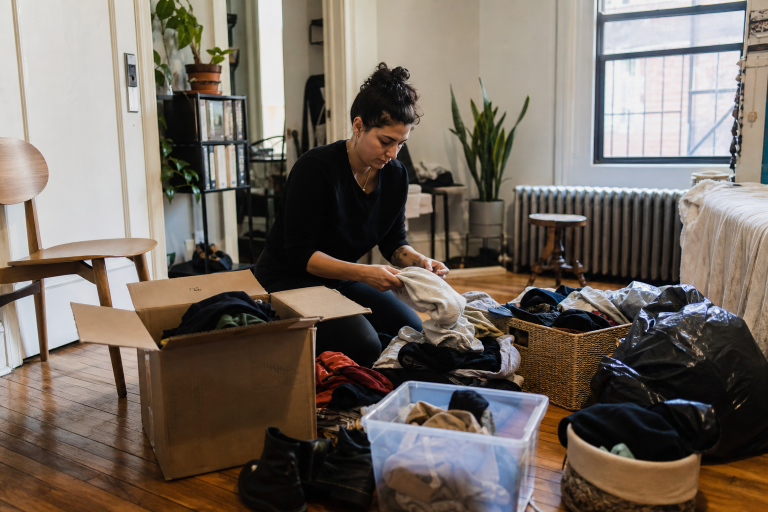
Work one room at a time so the project stays realistic. Set up four clearly marked piles or zones:
- Keep: Items you use, expect to use soon, or genuinely value.
- Donate: Clean, functional belongings that could be useful to someone else.
- Sell: Items with enough resale value to justify photographing, listing, and transferring them.
- Discard: Broken, stained, unsafe, incomplete, or outdated items.
Start with closets, under-bed storage, seasonal decorations, kitchen duplicates, and storage cabinets. These areas often contain the least essential belongings. Give sale items a firm deadline, such as one or two weeks. If they do not sell, donate them or dispose of them properly instead of allowing them to return to the keep pile.
Give Sentimental Items Their Own Review
Sentimental belongings deserve care, but they should not receive automatic approval. Keep the pieces that preserve a memory or have real family significance. Consider photographing bulky mementos, saving one representative item from a collection, or sharing items with relatives who will use them.
What To Keep, Donate, Sell, Or Discard
Use a simple decision test when you are unsure about an item:
- Have you used it during the past year?
- Would it cost more to replace than to store?
- Does it fit your likely home, work, or lifestyle plans?
- Could someone else benefit from it now?
Rarely used furniture may be worth storing if it is high quality, difficult to replace, or intended for a future home. Low-cost, worn, or oversized furniture may be better donated or replaced later. Store electronics only when they are current, functional, and packed safely. For seasonal clothing, keep durable pieces that fit well and will be worn again, rather than every item saved from past years.
How To Estimate Storage Space
Create an inventory before selecting a unit. List large furniture, appliances, boxes, business records, seasonal goods, and specialty items separately. Measure beds, dressers, shelving, desks, bicycles, and other large pieces. This helps prevent choosing a unit based only on a rough guess.
Plan by Type of Load
- Small personal load: Clothing, décor, keepsakes, and boxes. Use sturdy cartons and stack heavier boxes low.
- Studio or one-room contents: A bed, dresser, desk, boxes, and smaller furniture. Measure major pieces before booking.
- Apartment contents: Furniture, appliances, boxes, and household goods. Sketch a loading plan before move day.
- Business storage: Files, supplies, equipment, or inventory. Use detailed labels and maintain an item list.
Use vertical space carefully, especially with uniform boxes. Fragile items need protection and should not be used to support heavy loads. If you expect to visit the unit often, leave a narrow walkway to reach items stored in the back.
How To Prepare Items For Storage
Clean and completely dry furniture, appliances, clothing, and rugs before packing. Moisture can create odors, mildew, and damage over time. Disassemble bed frames, tables, and shelving when practical, then place hardware in labeled bags taped securely to the related item. Wrap mirrors, glass, artwork, and delicate décor with suitable protective materials. Store important documents in sealed plastic containers rather than in loose cardboard boxes. Avoid placing food, wet materials, candles, fuel, or pest-attracting items in storage. Temperature-sensitive belongings, including certain artwork, records, instruments, and electronics, may require a climate-controlled environment.
Packing Tips For Better Use Of Space
- Use small boxes for books, tools, and other heavy belongings.
- Use larger boxes for pillows, blankets, linens, and lightweight items.
- Label the top and one side of every box.
- Place frequently needed belongings near the entrance.
- Keep a written or digital inventory outside the unit.
- Cover furniture to prevent dust while avoiding materials that trap moisture.
Use a label format that is easy to scan: BEDROOM | WINTER CLOTHES | BOX 3 OF 6.
Take photos of valuable belongings before storage, record the serial
numbers of electronics and equipment, and keep access details and keys
in a secure place.
Brooklyn Disposal Rules To Check
Check local rules before leaving unwanted furniture, mattresses, rugs, appliances, or electronics at the curb. New York City provides guidance for furniture, mattresses, and rugs. Mattresses and box springs must be sealed in plastic, and incorrect disposal can result in a fine. Donate usable goods whenever possible before choosing disposal. Electronics, batteries, chemicals, paints, and similar materials require special care and should never be placed inside a storage unit. The city's SAFE Disposal Events provide information on the responsible handling of many harmful household products.
Common Mistakes To Avoid
- Renting a unit before sorting belongings.
- Choosing space based only on floor area.
- Stacking heavy boxes on fragile items.
- Leaving no path to reach the back of the unit.
- Using weak or mismatched boxes that collapse.
- Storing damp clothing, rugs, or furniture.
- Failing to label containers and track inventory.
- Paying to store items that cost less to replace.
A Simple Pre-Storage Checklist
- Sort every room into keep, donate, sell, and discard categories.
- Measure large furniture and create a final inventory.
- Clean, dry, and protect belongings before packing.
- Disassemble large items and secure their hardware.
- Label every box and keep priority items near the front.
- Review disposal requirements and confirm the unit fits the final load.
Decluttering before renting storage saves money, time, and effort. Once unnecessary belongings are removed, the items that remain are easier to measure, pack, protect, and retrieve. A thoughtful sorting process gives Brooklyn residents a cleaner start, whether storage is needed for a few months or a longer transition.
Conclusion
Decluttering before renting storage helps you make better use of both your space and your budget. By sorting belongings, keeping only what you truly need, and packing items carefully, you can reduce storage costs, stay organized, and make future access much easier. Taking time to measure, label, and protect your belongings also helps prevent damage and unnecessary stress. Whether you're moving, renovating, or simply creating more room at home, a thoughtful approach ensures your storage unit holds items that are genuinely worth keeping rather than clutter that can be donated, sold, or discarded.

FOLLOW ME ON SOCIAL MEDIA


self storage Coney, Island

No comments:
Post a Comment
I love reading and responding to comments but in order to get my reply you must ensure you are NOT a no-reply blogger. If you are, here are some quick steps to change that!
1. Go to the home page of your Blogger account.
2. Select the drop down beside your name on the top right corner and choose Blogger Profile.
3. Select Edit Profile at the top right.
4. Select the Show My Email Address box.
5. Hit Save Profile.