

Table of Contents
- Start With Salt Lake City Growing Conditions
- Walk the Property Before Choosing Plants
- Design the Yard in Water Zones
- Decide How Much Lawn the Property Really Needs
- Choose Plants for Utah's Climate
- Improve Soil and Protect It With Mulch
- Build a Smarter Irrigation Plan
- Add Hardscaping That Makes the Yard More Useful
- Plan for Snow, Ice, and Salt Exposure
- A Simple Yard Planning Checklist
- Common Questions About Low-Water Landscaping in Salt Lake City
- Build for the Whole Season
A low-water yard in Salt Lake City should feel inviting in July, survive winter freezes, and remain manageable when spring runoff arrives. The goal is not to eliminate every green plant or cover the property in stone. It is to create a landscape that fits the site, uses water deliberately, and gives each feature a useful role.
homeowners planning a project on landscaping Salt Lake City, Vargas Bros Landscaping is a local Utah company with more than 20 years of experience in full landscape design, xeriscaping, hardscaping, retaining walls, paver patios, and water features. Their work throughout Salt Lake City and surrounding communities reflects the practical need to coordinate planting, drainage, irrigation, and durable outdoor surfaces rather than treating them as separate decisions.
Start With Salt Lake City Growing Conditions
Salt Lake City landscapes face conditions that differ sharply from those in humid regions. Summer heat, dry air, variable soils, wind exposure, cold winters, and freeze-thaw cycles all affect what will thrive. One part of a yard may bake in the afternoon sun while another holds moisture beside a fence, downspout, or shaded wall.
Start by treating the yard as a system. Plants, soil, slopes, sprinkler coverage, mulch, patios, and drainage should support one another. A beautiful planting plan will struggle if it is placed in compacted soil, watered unevenly, or exposed to runoff that it was not designed to handle.
Walk the Property Before Choosing Plants
Take notes before removing turf or ordering materials: Mark full-sun areas, morning sun, afternoon shade, and deep shade. Notice where water gathers after rain or irrigation, especially near foundations, walkways, retaining walls, and fence lines. Identify steep sections that may need ground covers, mulch, terracing, or a retaining wall to limit erosion.
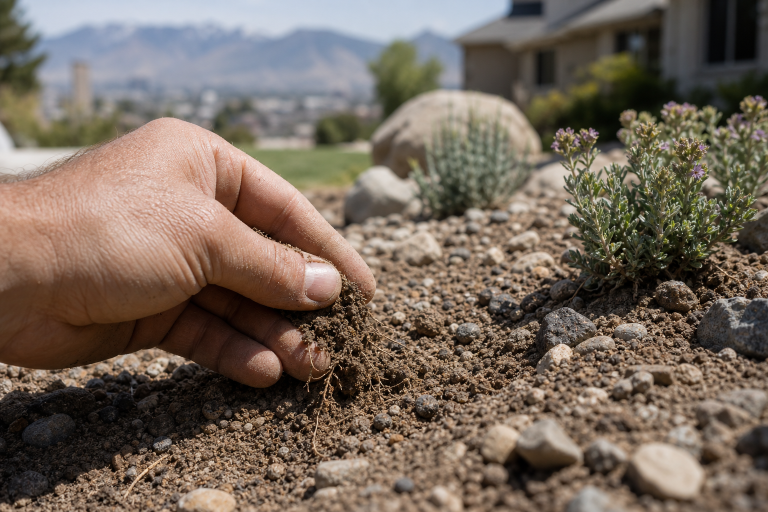
Check the soil in several spots. It may be sandy, rocky, clay-heavy, compacted, or a mixture of conditions created during construction. Preserve healthy mature trees whenever possible, then plan new beds around their root zones and shade patterns.
Design the Yard in Water Zones
Hydrozoning means grouping plants with similar moisture needs. This simple design choice prevents drought-tolerant plants from being overwatered just because they share an irrigation line with thirstier plants. Utah State University's overview of the Salt Lake City Turf Trade program also shows why practical lawn areas and water-wise planting can work together.
- Low-water zones: Use drought-tolerant shrubs, perennials, ornamental grasses, and well-adapted ground covers.
- Moderate-water zones: Reserve these for entry gardens, patio borders, containers, and areas that receive beneficial runoff.
- Higher-water zones: Keep these small and purposeful, such as a play lawn, pet area, or a frequently used gathering space.
Decide How Much Lawn the Property Really Needs
A lawn is most valuable where people actually use it. Keep grass for play, pets, seating, or a cooling green view, but reconsider narrow strips beside driveways, steep turf that is difficult to mow, and isolated patches that need separate sprinkler zones. A smaller lawn can still provide the familiar look many homeowners want.
A low-water turf blend may be an option for functional lawn areas. Avoid replacing every planted surface with gravel, however. Large expanses of rock can feel harsh, store heat, and leave little room for shade, pollinator-friendly flowers, or seasonal texture. A balanced yard usually combines practical turf, planting beds, mulch, paths, and shade.
Choose Plants for Utah's Climate
Select plants for winter hardiness, sun exposure, mature size, soil type, wind, and water needs, not simply for their appearance at the nursery. Build layers with trees, shrubs, perennials, grasses, and ground covers. This creates visual depth and gives the yard interest across multiple seasons.
Place taller trees and shrubs where they can offer shade without blocking key views, crowding windows, or interfering with structures. Flowering perennials can add color and support pollinators, while ground covers can soften slopes and reduce bare soil. Plant diversity also helps avoid a landscape that depends on a single species or a single seasonal display.
Improve Soil and Protect It With Mulch
- Remove construction debris, invasive weeds, and oversized rocks from future planting areas.
- Address poor drainage or weak plant growth with a soil test when needed.
- Add appropriate organic matter to improve the structure in compacted planting beds.
- Grade the soil so water moves away from the home and does not pond beside hardscape.
- Let newly graded areas settle before finishing delicate beds or precise path edges.
Mulch helps protect that soil investment. Organic mulch can moderate soil temperature, reduce evaporation, and suppress weeds around trees, shrubs, and perennials. Rock mulch can fit sunny borders and slopes when used thoughtfully. Keep all mulch away from siding and tree trunks, and refresh or level it as it decomposes or shifts.
Build a Smarter Irrigation Plan
Efficient irrigation depends on coverage, pressure, timing, and routine inspection. Use drip irrigation for many planted beds and containers, then use spray irrigation only where it suits the lawn. Repair leaks, replace damaged heads, and adjust nozzles to keep water off sidewalks, driveways, and buildings.
Water deeply enough to encourage roots to grow downward, then adjust schedules as temperatures, rainfall, and plant establishment change. Salt Lake City Public Utilities recommends checking soil moisture before watering and inspecting sprinklers regularly. After winter, inspect for cracked components, clogged emitters, and uneven coverage before summer demand begins.
Add Hardscaping That Makes the Yard More Useful
Paver paths protect planting beds by directing foot traffic. Patios, seating areas, and small gathering spaces can turn unused lawn into a space used every day. On sloped properties, professionally planned retaining walls can manage grade changes and help keep soil where it belongs. Blend stone and pavers with planted edges, shade, and mulch so the yard feels connected rather than barren.
Plan for Snow, Ice, and Salt Exposure
Choose snow-storage areas before winter, keeping them away from delicate plants and drainage outlets. Near roads, sidewalks, and driveways, select durable plants suited to occasional salt exposure. Use sturdy edging where snow shovels or equipment may pass, and inspect pavers, walls, and walkways after freeze-thaw cycles.
A Simple Yard Planning Checklist
- Measure lawn, planting beds, slopes, and proposed patio areas.
- List priorities such as shade, privacy, seating, pet space, or erosion control.
- Check irrigation before purchasing plants.
- Choose a maintenance level that fits your schedule.
- Review local rules and available water-saving programs.
- Complete the project in phases if that produces a better long-term result.
Common Questions About Low-Water Landscaping in Salt Lake City
Can a low-water yard still have grass?
Yes. Keep grass where it serves a clear purpose, use appropriate turf, and avoid watering it on the same schedule as drought-tolerant planting beds.
Is xeriscaping the same as using only rocks?
No. Xeriscaping uses intentional design, suitable plants, efficient irrigation, soil care, mulch, and realistic maintenance. Rock can be one material within the design, not the entire design.
Can low-water landscaping help with erosion?
Yes. Deep-rooted plants, ground covers, mulch, grading, drainage improvements, and properly designed retaining walls can help stabilize exposed slopes.
Build for the Whole Season
The best Salt Lake City yard is not defined by the fewest plants or the most expensive materials. It is designed around the property's soil, sun, water, slope, and everyday use. With purposeful lawn, resilient plants, healthy soil, efficient irrigation, and useful hardscape, a low-water landscape can remain comfortable and attractive through summer heat and the colder months that follow.

FOLLOW ME ON SOCIAL MEDIA


No comments:
Post a Comment
I love reading and responding to comments but in order to get my reply you must ensure you are NOT a no-reply blogger. If you are, here are some quick steps to change that!
1. Go to the home page of your Blogger account.
2. Select the drop down beside your name on the top right corner and choose Blogger Profile.
3. Select Edit Profile at the top right.
4. Select the Show My Email Address box.
5. Hit Save Profile.