

Key Takeaways
- Personal injury claims may arise from car crashes, falls, unsafe property conditions, defective products, medical negligence, and other preventable harm.
- Early documentation can preserve evidence and make it easier to explain how an injury affected daily life.
- Insurance companies may investigate quickly, but an early offer does not always reflect the full value of a claim.
- New Jersey filing deadlines and special notice requirements can affect a person's rights.
- Legal representation can provide structure, advocacy, and guidance throughout negotiations or litigation.
After an accident, the physical pain is often only part of the problem. Medical visits, missed work, insurance calls, vehicle damage, and uncertainty about the future can create pressure at a time when an injured person needs room to recover. Speaking with a New Jersey personal injury lawyer can help someone understand the claims process, protect important evidence, and make informed decisions about the next steps. Personal injury legal representation is not limited to filing a lawsuit. It can include investigating what happened, identifying responsible parties, calculating losses, communicating with insurers, negotiating a settlement, and preparing a case for court when a fair agreement cannot be reached. Every situation is different, so the facts, injuries, insurance coverage, and deadlines all deserve careful attention.
What Is a Personal Injury Claim?
A personal injury claim is a civil claim seeking compensation after another person, business, or organization allegedly caused harm through careless, reckless, or wrongful conduct. The central question is often whether someone failed to use reasonable care and whether that failure caused measurable injury or loss. For example, a driver who runs a red light, a property owner who ignores a dangerous condition, or a company that sells an unsafe product may face a claim if their conduct contributed to an injury. The legal analysis depends on evidence, applicable law, and the specific relationship between the parties. People who want a basic overview of court procedures can review resources on representing themselves in court. However, complex injury matters often involve detailed rules, evidentiary issues, and negotiations that make experienced guidance valuable.
Common Types of New Jersey Injury Cases
Personal injury law covers many kinds of accidents and harmful events. Some of the most common matters include:
- Motor vehicle collisions: Claims involving cars, trucks, motorcycles, pedestrians, bicycles, rideshare vehicles, or commercial vehicles.
- Slip and fall incidents: Injuries connected to wet floors, broken steps, poor lighting, uneven walkways, or other hazardous property conditions.
- Work-related accidents: Injuries that may involve workers' compensation benefits, third-party claims, or both.
- Medical negligence: Claims alleging that a healthcare provider failed to meet the required professional standard of care.
- Defective products: Injuries allegedly caused by a dangerous consumer product, vehicle component, medical device, or manufacturing defect.
- Wrongful death: Claims brought by eligible family members after a fatal injury caused by another party's conduct.
Why Legal Representation Matters
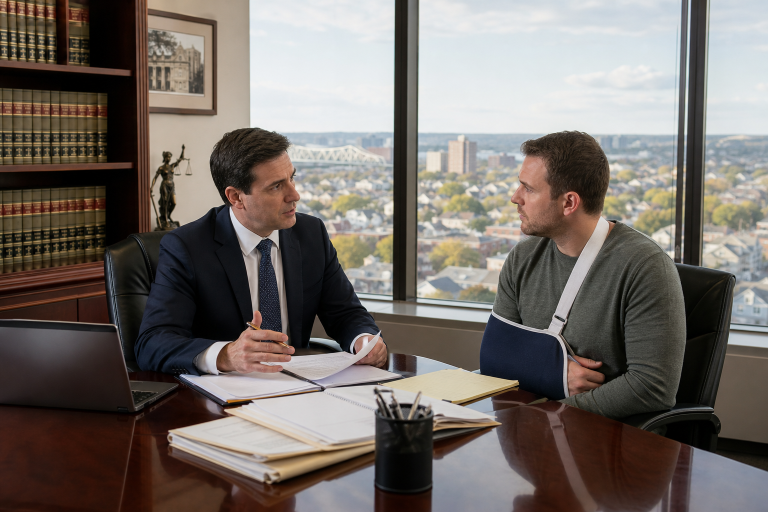
Insurance adjusters regularly handle claims, evaluate records, and negotiate settlements. An injured person may be dealing with that process for the first time while also attending medical appointments and managing financial stress. A lawyer can take over communications, organize evidence, and help prevent a claimant from making incomplete or misunderstood statements. Representation also helps create a clearer picture of the full impact of an injury. A claim may involve more than just an emergency room bill. It can include follow-up treatment, therapy, prescription costs, future medical needs, lost income, reduced earning capacity, transportation expenses, and how pain or disability changes a person's everyday life.
Negotiation and Litigation
Many injury claims are resolved through negotiation, but preparation matters even when settlement is the goal. If an insurer disputes fault, minimizes the injury, or refuses to offer reasonable compensation, a lawyer may recommend filing suit. Litigation can involve pleadings, discovery, depositions, expert opinions, motion practice, mediation, arbitration, and possibly trial.
Steps to Take After an Injury
The right response depends on the circumstances, but several actions can be useful after an accident:
- Seek prompt medical care and follow treatment recommendations.
- Report the incident when appropriate, such as to the police, a property manager, or an employer.
- Photograph injuries, vehicle damage, the accident scene, and dangerous conditions when it is safe to do so.
- Collect contact information for witnesses and keep copies of reports.
- Save bills, receipts, work-loss records, insurance letters, and medical paperwork.
- Avoid posting detailed statements about the accident or recovery on social media.
- Be cautious before accepting a release or settlement payment that may end the claim.
How a Personal Injury Claim Is Built
A strong claim is usually built from evidence rather than assumptions. Depending on the case, this may include photographs, surveillance video, police reports, witness statements, medical records, vehicle data, maintenance records, employment documents, and expert analysis. The goal is to connect the event, responsible conduct, injury, and resulting losses. New Jersey follows a comparative negligence approach in many cases. That means the conduct of each party may be examined, and a claimant's recovery can be affected if they are found partly responsible. Because fault disputes can become complicated, it is important to provide accurate facts and preserve available evidence.
Understanding Damages
Compensation, often called damages, is intended to address losses caused by an injury. Potential damages may include medical expenses, expected future care, lost wages, diminished earning capacity, property damage, pain and suffering, and loss of enjoyment of life. The available categories and amount of recovery depend on the evidence and the law governing the case. There is no universal settlement value for a particular diagnosis or type of accident. Two people can suffer similar injuries but have very different claims because their treatment, work duties, prior medical history, available coverage, and long-term limitations are not the same.
Deadlines and Special Rules
Time limits are among the most important issues in personal injury law. In general, New Jersey courts identify a two-year limitations period for many personal injury actions, but exceptions and different deadlines can apply. The civil law frequently asked questions also note that special circumstances may alter the usual time period. Claims involving public entities can require a notice of claim much sooner than an ordinary lawsuit deadline. Cases involving minors, medical malpractice, workplace injuries, uninsured drivers, or injuries discovered later may raise additional timing questions. Waiting can mean lost evidence, unavailable witnesses, or a missed legal deadline.
Choosing Legal Counsel
When considering a personal injury attorney, ask practical questions about experience with similar cases, communication practices, fee arrangements, who will handle day-to-day work, and how the firm evaluates settlement offers. A productive consultation should give the injured person an opportunity to explain what happened, ask questions, and understand possible options without being pressured into an immediate decision. Personal injury representation in New Jersey can provide more than courtroom advocacy. It can give an injured person a structured way to pursue accountability while focusing on treatment and recovery. Acting promptly, keeping records, and getting individualized legal advice can make a meaningful difference in protecting a potential claim.
Conclusion
A personal injury claim can involve far more than the initial accident. Medical treatment, lost income, insurance negotiations, evidence, damages, and legal deadlines can all affect the outcome. Taking early action by seeking medical care, preserving records, documenting the incident, and understanding your rights can help protect your potential claim. For more complicated cases involving serious injuries, disputed fault, denied benefits, or significant financial losses, speaking with a New Jersey personal injury lawyer can help identify available options and ensure important decisions are made with the full circumstances in mind.

FOLLOW ME ON SOCIAL MEDIA


No comments:
Post a Comment
I love reading and responding to comments but in order to get my reply you must ensure you are NOT a no-reply blogger. If you are, here are some quick steps to change that!
1. Go to the home page of your Blogger account.
2. Select the drop down beside your name on the top right corner and choose Blogger Profile.
3. Select Edit Profile at the top right.
4. Select the Show My Email Address box.
5. Hit Save Profile.