

Key Takeaways
- TMS may be considered when standard depression treatments have not provided enough relief.
- A thorough mental health and medical evaluation should come first.
- TMS and tDCS use different forms of noninvasive brain stimulation.
- Treatment usually involves multiple sessions over several weeks.
- Benefits and side effects vary between individuals.
- Patients should discuss medical history, medications, and safety concerns with a clinician.
- Brain stimulation works best as part of a broader, ongoing treatment plan.
- Research continues to examine newer and more personalized stimulation approaches.
Why Interest In Brain Stimulation Is Growing
Depression can persist even when someone has made a real effort to follow a treatment plan. Symptoms such as low mood, loss of interest, poor concentration, fatigue, sleep disruption, and difficulty functioning can continue despite several reasonable treatment attempts. That experience does not mean a person has failed treatment. It may mean the care plan needs another careful review. When people need coordinated evaluation and support beyond a single service, a mental health clinic in Indianapolis may help bring medication, therapy, and other treatment discussions into one more connected plan. A clinician should also assess urgent safety concerns, including thoughts of self-harm or suicide. Anyone in immediate danger should call 911 or 988 in the United States.
How Noninvasive Brain Stimulation Works
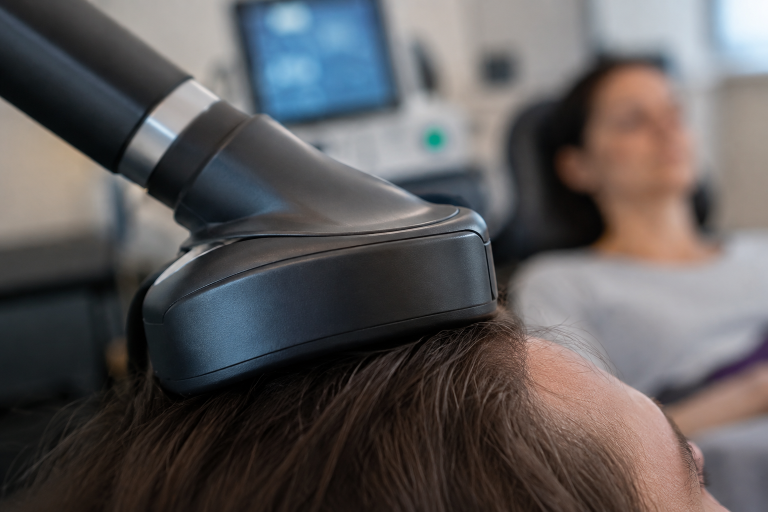
Transcranial magnetic stimulation, often called TMS or repetitive TMS, uses a device with a magnetic coil positioned against the scalp. The coil delivers carefully timed magnetic pulses to selected brain areas involved in mood regulation. It does not require surgery, implanted electrodes, or general anesthesia, and patients remain awake during treatment. Another approach, transcranial direct current stimulation (tDCS), uses low-level electrical current delivered through electrodes placed on the scalp. It is different from TMS and remains an area of ongoing research for depression in the United States. These treatments aim to influence brain activity, but the precise biological processes underlying symptom improvement are still being studied. That uncertainty is important. Clinicians can explain the evidence behind a recommended protocol, but they should not claim to know exactly how treatment will work for one individual. Treatment selection should be based on established clinical use, appropriate screening, and realistic expectations.
Who May Benefit From It
Noninvasive brain stimulation may be considered for adults with major depressive disorder, particularly when symptoms remain significant after other treatments have not provided enough relief. Before recommending it, a clinician commonly reviews past medications, therapy participation, symptom duration, current functioning, and the person's goals. A full assessment should also consider bipolar disorder, substance use, sleep disorders, neurological conditions, medical causes of mood symptoms, and suicide risk. For example, a person who has tried several antidepressants and consistent therapy but still cannot work, sleep, or manage daily responsibilities may ask whether TMS is an appropriate option to evaluate. Medication and therapy should not be stopped or changed without guidance from the prescribing or treating clinician.
What Treatment Sessions Are Like
- Initial assessment: The clinician reviews symptoms, medical history, medications, treatment history, and goals.
- Positioning: The patient sits in a treatment chair while the device is placed at a planned location near the head.
- Stimulation: The device delivers repeated pulses according to the selected protocol.
- Monitoring: The care team checks comfort, side effects, and changes in symptoms.
- Follow-up: Progress is reviewed throughout the treatment course and afterward.
Session length, frequency, and the number of visits vary by protocol and clinical circumstances. Many plans involve weekday appointments over several weeks, so scheduling should be addressed before starting. Patients can ask about missed appointments, transportation after the first visit, work accommodations, and how the practice tracks progress. Keeping a simple symptom journal may also help identify changes in mood, sleep, motivation, and concentration.
Possible Benefits And Limits
Some patients experience improvement in depression symptoms, daily functioning, motivation, sleep, or concentration. Changes may develop gradually rather than after the first few sessions. Others may notice limited improvement or may need a different treatment strategy after the course is complete. Even when symptoms improve, depression can return. A clinician may recommend continued therapy, medication management, follow-up visits, or other maintenance planning based on the person's history. The goal is not to promise remission. It is to make an informed decision about whether the potential benefits, demands, and uncertainties make sense for the individual.
Safety And Common Side Effects
Common short-term effects can include scalp discomfort during stimulation, facial muscle movement, headache, or lightheadedness. Serious complications are uncommon, but seizure risk and other safety issues must be discussed before treatment. Patients should promptly report any new, severe, or worsening symptoms to the treatment team. Screening should be individualized. Be prepared to discuss seizure history, implanted medical devices, metal in or near the head, medications, pregnancy, neurological conditions, and other relevant health concerns. A clinician can determine whether a device, medical condition, or medication requires extra precautions or makes treatment unsuitable.
Questions To Ask Before Starting
- Is this treatment appropriate for my diagnosis and prior treatment history?
- What type of stimulation and schedule do you recommend?
- How will you measure whether my symptoms are improving?
- What side effects should I report right away?
- What happens if I do not improve enough?
- How will therapy, medication, sleep, and lifestyle support fit into my plan?
- What costs might remain after insurance coverage or other benefits are applied?
- What follow-up care may be needed if symptoms improve or return?
What Research Shows
Research is exploring faster schedules and more personalized ways to target stimulation. A 2026 randomized trial of intermittent theta-burst stimulation found greater improvement in clinician-rated depression symptoms during a 10-session active treatment course than with sham treatment. Still, the group difference was not sustained at the four-week follow-up. That result illustrates why short-term improvement and lasting benefit should be considered separately. Other noninvasive approaches are also under study. Recent clinical trial evidence examined prefrontal transcranial pulse stimulation for major depressive disorder, while new brain-circuit research in mice explored how accelerated TMS may affect stress-disrupted neural connections. These findings are promising, but animal studies and early clinical trials do not establish that every newer protocol will provide durable results for every patient.
When reviewing treatment claims, look beyond headlines. Study size, the use of a sham comparison group, follow-up length, side effects, participant characteristics, and peer review all affect how confidently results can be applied to real-world care.
Final Takeaway
Noninvasive brain stimulation may offer another treatment option for people who have not found enough relief through standard depression treatment. Depending on the specific technique and individual circumstances, treatment may involve a series of sessions and may require assessment of medical history, current symptoms, medications, and previous treatment experiences. The strongest next step is a careful evaluation, a clear discussion of potential benefits, limitations, side effects, treatment requirements, and alternatives, and regular communication with a qualified clinician. A useful plan fits the person's symptoms, health needs, schedule, financial considerations, treatment preferences, and long-term goals. Patients can also ask how progress will be monitored, what changes might indicate that the treatment should be adjusted, and what other options may be considered if the expected improvement does not occur.

FOLLOW ME ON SOCIAL MEDIA


No comments:
Post a Comment
I love reading and responding to comments but in order to get my reply you must ensure you are NOT a no-reply blogger. If you are, here are some quick steps to change that!
1. Go to the home page of your Blogger account.
2. Select the drop down beside your name on the top right corner and choose Blogger Profile.
3. Select Edit Profile at the top right.
4. Select the Show My Email Address box.
5. Hit Save Profile.