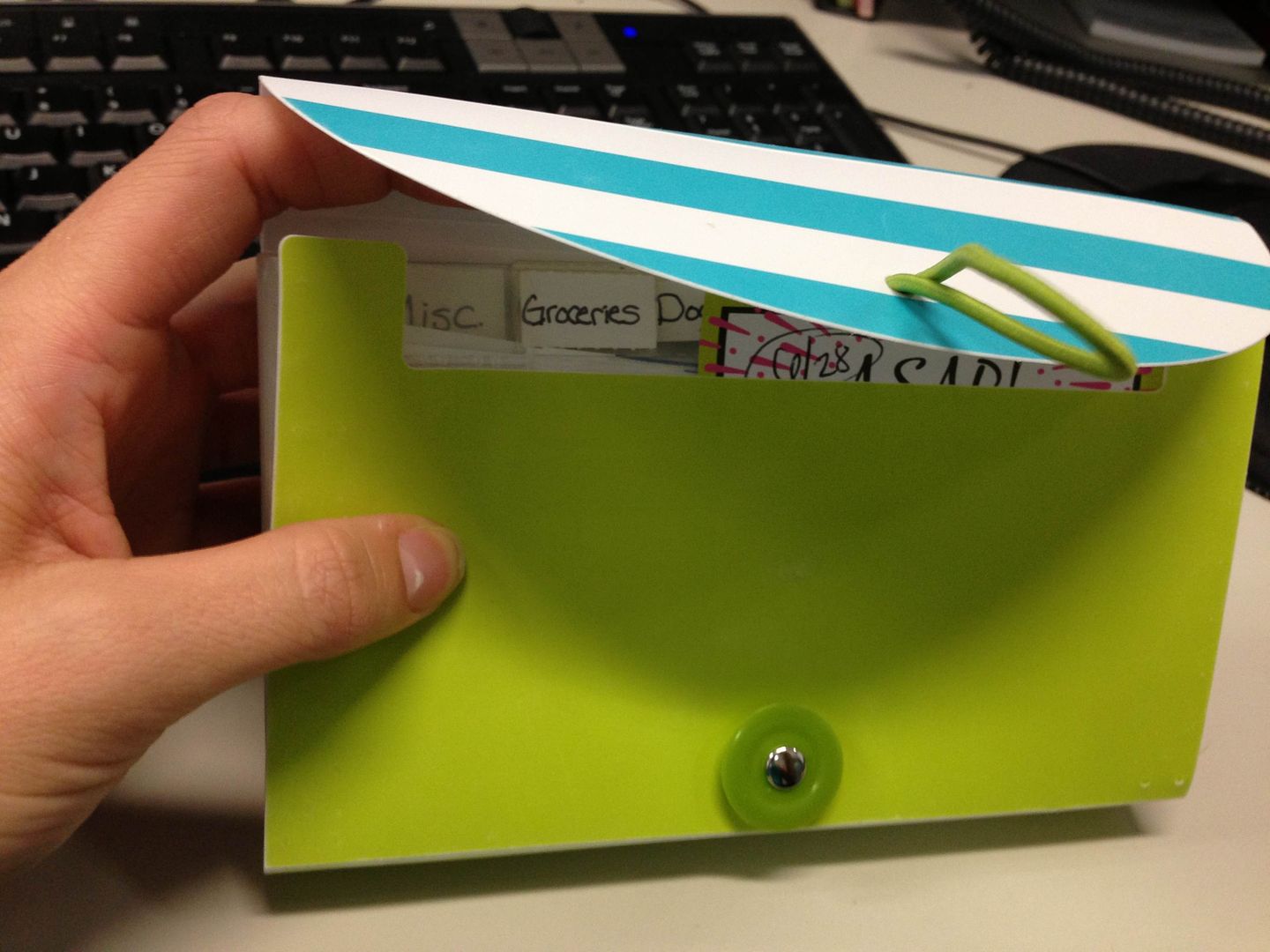
Even if you are a pro at managing your money and avoiding impulse buys at the mall or clothing store, most of us can still agree that one part of our budget is always a struggle. For some reason, the grocery store is full of temptation and since food is technically a necessity, it seems that it's easier for one to lose control when perusing the aisles.
Check out my being on a budget posts!
Showing posts with label being on a budget. Show all posts
How to Stay Within Your Grocery Budget
Thursday, September 15, 2016
Friday, February 12, 2016
So in case you haven't seen my hints on social media, I have officially completed my first book. That's right!
Fixing Your Finances | A Practical Guide to Managing Money and Eliminating Debt is designed to help you turn your life around when it comes to money.
Labels:
being on a budget,
books,
budgeting,
Finance
Monday, January 4, 2016
It's been quite a while since I published my posts about getting on a budget and my budget spreadsheets so I figured I'd do another post that basically sums it all up again. It's a new year and a new chance for you to get everything organized so you can get out of debt, build up your savings, or achieve whatever financial goals you have.
Tuesday, September 16, 2014
I love blogging about budgets, but when I talk about it in person, it seems there are a lot of myths that people bring up in regards to budgeting. So I am here to address them.
Here are some common budget myths that you really CAN'T afford to believe.
"I can't get on a budget, I don't even make enough money as it is."
You don't make enough money because you AREN'T on a budget. A budget is a way to address your finances and make a spending plan. So if you think you don't make enough money, a budget can actually help.
How?
[] When you write everything down you can see where your expenses go. Maybe if you cut out your bar visits, dining out, and daily Starbucks you actually DO make enough money to pay all your bills.
[] Budgets allow you to control where your money goes so that nothing gets out of hand.
"I don't have to time to budget."
Um, being on a budget takes no time at all. It's the initial process that take a bit of time but once you are set up and ready to go the hard work is done. I even made a blog post about how to get on a budget.
"I don't need a budget."
Technically everyone needs a budget. People don't realize what a budget is. It's a system of managing your money. So if you say you don't need one or you don't use one as it is, then you must be saying that you literally don't track anything, and you don't even keep a running count of bills in your head. Everyone can benefit from a budget.
"Budgets are for people that can't manage money."
This is my favorite misconception about budgets. Even the wealthiest of people are on a budget. How do you think they manage their money?
What budget excuses do you hear?
Did you know that I offer a budget spreadsheet, debt tracker, and I have a financial book available for purchase?
PURCHASE Spreadsheet Bundle
PURCHASE Budget Spreadsheet
PURCHASE Debt Tracker
PURCHASE Spreadsheet Bundle
PURCHASE Budget Spreadsheet
Be sure to follow Ask Away on Facebook, Twitter, Bloglovin', Pinterest, and Instagram!
Labels:
being on a budget,
budget,
Finance,
money
Monday, June 16, 2014
1. Downgrade your cable package and get rid of the house phone
2. Buy generic brands of toiletry products
3. Buy generic brands at the grocery store
4. Plan meals a week ahead so you know exactly what you need to buy and DON'T buy any more
5. Use a cash envelope system to see what silly cash purchases you can cut back on
6. Buy used books over new ones
7. Buy kindle books instead of paper books
8. Shop at thrift stores
9. Use fans during the summer so you don't have to crank the air conditioning as much
10. Exercise at home using DVDs or by running outside instead of a gym membership
11. Paint your own nails/toes
12. Make your own laundry detergent
13. Hang your clothes to dry instead of using a dryer
14. Pack your lunch
15. Bring your own coffee instead of buying Starbucks on the way to work
16. Cut your own lawn instead of paying someone to do it
17. Use coupons and watch sales flyers so you can double your savings
18. Exchange services for other services (blogging for an event, blogging about a product, tailor someone's clothing in exchange for them to mow your lawn, etc.)
19. Check www.retailmenot.com before making a purchase on any website
20. Circulate magazines with friends or coworkers so you don't need to pay for so many magazine subscriptions
Let me know in the comments below other ways you can save!
Be sure to join my Facebook group, Fixing Your Finances, to help you with your finance journey along the way.

Labels:
being on a budget,
budget,
Finance,
saving money
Monday, May 26, 2014
I get it all the time…the weird looks when I pull out my cash envelope system and root through my FUN
envelope. I do it before I agree to any plans with anyone.
Monday, April 28, 2014
After I posted my Guide to Being on a Budget, a lot of people asked how to stop living paycheck to paycheck. So I did a post about that which you can find here.
Still the most common question I continue to get was “What if my income isn’t enough to cover my monthly expenses?”
That’s a great question and a very common problem. In fact, I used to be that way as well and I can tell you the ways I changed it. It is certainly possible for most people as long as you stay dedicated and disciplined. Remember, it’s worth it!
So here are 5 methods I used. I hope these help answer that question.
Still the most common question I continue to get was “What if my income isn’t enough to cover my monthly expenses?”
That’s a great question and a very common problem. In fact, I used to be that way as well and I can tell you the ways I changed it. It is certainly possible for most people as long as you stay dedicated and disciplined. Remember, it’s worth it!
So here are 5 methods I used. I hope these help answer that question.

1. Cash Envelope System
You won’t spend more than what you planned to if you plan for everything.
I can’t stress enough how crucial an envelope system is. Not only does it help you see where your money goes but when you set it up, you need to write down what type of expenses you generally have. Since most people don’t even think of random things like a car emergency, or a random doctor’s appointment (copay + medicine cost), it can sometimes throw off your month and you end up spending more than you plan for. Even if I don’t have a car expense one month, I still put money aside from my paycheck, so that if I have one the next month there’s already money there. For instance my muffler rusted out on my car this month and guess what, I didn’t even flinch because I had more than enough o cover it in my envelope system under the car category.
Think of it as a mini savings fund. It technically is a savings fund, so when I think of how much money is in my savings I always remind myself there’s even more if I include my car fund, pet emergency fund etc. Refer to my link on my envelope system to set up your own! I even have a stress free Christmas because I put money aside all year, as detailed here.
2. Cut Costs Everywhere + In Every Way
I did a post about 10 things I splurge on and 10 things I save on and I can’t tell you how much it makes a difference with my finances. Try shopping at the dollar store for cleaning supplies or buying generic brands as often as possible. Cut coupons and follow sales so that you can get double savings when you match coupons up with existing deals.
And remember every little thing adds up, even your $5 lunch at work. I pack my lunch, I make my own coffee at home, I buy my own drinks and bring them in, and I drive a car that’s paid off. Even though it’s nice to get a new car, I’d rather save the money each month than have another car payment.
Your routine bills deserve extra attention, as well. It might not be easy to cut all of your utility bills, but take a look at the subscriptions you can cut, as well as which you can switch for a better deal, such as by looking at cable TV providers in your area. Even if it’s just a little bit saved, that can make a significant difference over time.
I did a post about 10 things I splurge on and 10 things I save on and I can’t tell you how much it makes a difference with my finances. Try shopping at the dollar store for cleaning supplies or buying generic brands as often as possible. Cut coupons and follow sales so that you can get double savings when you match coupons up with existing deals.
And remember every little thing adds up, even your $5 lunch at work. I pack my lunch, I make my own coffee at home, I buy my own drinks and bring them in, and I drive a car that’s paid off. Even though it’s nice to get a new car, I’d rather save the money each month than have another car payment.
Your routine bills deserve extra attention, as well. It might not be easy to cut all of your utility bills, but take a look at the subscriptions you can cut, as well as which you can switch for a better deal, such as by looking at cable TV providers in your area. Even if it’s just a little bit saved, that can make a significant difference over time.
3. Make Extra Money Each Month
I did a post about the 10 weird ways I save money and as silly as it sounds, every dollar adds up. I get paid to take online surveys (all of my sites I use are legit and I’ve done them for well over 5 years!) and in turn I get paypal cash, gift cards for stores and eating out, Itunes, Amazon, etc. I make $50 -$100 a month from that and while some people think it’s not enough or may not be worth it… that’s a month of gas for me!
I also sell things on ebay. It may take some time but once you start doing it you get more comfortable with using ebay and you’ll be very pleased with the income you make!
4. Buy and Accumulate Less Stuff
I embraced minimalism in many aspects of my life and it’s amazing how free I feel financially. I don’t spend money on DVDs and books because I cut back on my collection. I use Apple TV to rent, and I own a Kindle so I don’t have to accumulate physical copies of books. It also has me conditioned to stop and think before I purchase anything. Just because something looks amazing on the shelf, I ask myself to I really need that? It’s just going to take up space and I have enough home décor as it is for now.
5. Live Well Below Your Means
I don’t get manicures and pedicures. Instead, I do them myself. I ask for gift certificates for them as a gift however so I still get to enjoy them. I go to a very affordable hair salon and I take care of my hair in between cuts so I can stretch every last dollar I have.
Instead of going to the gym, I workout at home to DVDs. I moved back home with my parents which isn’t so glamorous but it saves me money right now.
I wash my hair every other day which saves on shampoo and conditioner costs and I only do one load of laundry a week.
Another thing I never do anymore is rush to the store to buy an outfit for a night out. I use what I own already, and I create new outfits by mixing and matching. I also thrift shop if I absolutely must go out.
I truly hope some of these methods can answer your questions but if you still have some, please leave them in a comment below!
I did a post about the 10 weird ways I save money and as silly as it sounds, every dollar adds up. I get paid to take online surveys (all of my sites I use are legit and I’ve done them for well over 5 years!) and in turn I get paypal cash, gift cards for stores and eating out, Itunes, Amazon, etc. I make $50 -$100 a month from that and while some people think it’s not enough or may not be worth it… that’s a month of gas for me!
I also sell things on ebay. It may take some time but once you start doing it you get more comfortable with using ebay and you’ll be very pleased with the income you make!
4. Buy and Accumulate Less Stuff
I embraced minimalism in many aspects of my life and it’s amazing how free I feel financially. I don’t spend money on DVDs and books because I cut back on my collection. I use Apple TV to rent, and I own a Kindle so I don’t have to accumulate physical copies of books. It also has me conditioned to stop and think before I purchase anything. Just because something looks amazing on the shelf, I ask myself to I really need that? It’s just going to take up space and I have enough home décor as it is for now.
5. Live Well Below Your Means
I don’t get manicures and pedicures. Instead, I do them myself. I ask for gift certificates for them as a gift however so I still get to enjoy them. I go to a very affordable hair salon and I take care of my hair in between cuts so I can stretch every last dollar I have.
Instead of going to the gym, I workout at home to DVDs. I moved back home with my parents which isn’t so glamorous but it saves me money right now.
I wash my hair every other day which saves on shampoo and conditioner costs and I only do one load of laundry a week.
Another thing I never do anymore is rush to the store to buy an outfit for a night out. I use what I own already, and I create new outfits by mixing and matching. I also thrift shop if I absolutely must go out.
I truly hope some of these methods can answer your questions but if you still have some, please leave them in a comment below!

FOLLOW ME ON SOCIAL MEDIA
Monday, February 24, 2014
This post was originally posted in 2014 but gets updated yearly.
If you're already working on fixing your finances (whether it's from by being on a budget post or my book), you're likely feeling motivated to create a spending system that works for you. This is key to taking control of your spending by using cash and finding a way to keep it organized. I've shown off my original Filofax Budget Envelope System and I want to give you the tips to make your own!
Tuesday, November 26, 2013
While I thoroughly enjoy the Holiday season, it can be chaotic and disruptive to my disciplined spending and to my budget, which is why I always plan ahead and set up a Christmas budget!! So I decided to share some tips with you and some instructions on setting up your very own spending plan!
Some Holiday Budget Tips:
*$* Gather all of the items you have that are new, unused and can be regifted. Put them all in a box (as you gather them or all at once) and make this your gift box where you can go to pick out gifts for people for almost any occassion.
*$* If you have a large family, suggest setting up a drawing so each member gets assigned just one person to buy for. And set a spending limit.
*$* Start saving a Christmas Spending fund a year in advance by adding $5 to an envelope every paycheck. It all adds up!!
*$* Home made gifts are a great way to save money and give a personal touch to any gift. I'll feature some next week so be sure to subscribe so you don't miss anything!
*$* Services can make a wonderful treat for family members. Get crafty and design a paper coupon voucher good for 1 car wash/lawn mowing/weed pulling, etc.
And here are some step by step instructions to create, plan, and execute your Holiday shopping and spending plan.
1. Make a List
Write down the name of every person you need to have a gift for.
2. Determine your spending limit.
Look at the amount you've saved up in your envelope and either divide it by the number of names on your list...or break down the amount per person on a one by one basis. If you want to budget more for your closer family or friends, now's the time to figure that out. Write the amount next to each person's name.
3. Decide on a gift for each person.
Does each person get a handmade item, a service coupon, or an actual monetary valued gift? Write down 2-3 gift ideas for each person if you can think of that many. Try to think of things they need. If you know your parents need a sofa cover, list that! Even regular everyday household goods make nice gifts. And..this is the important part..... go through your Gift box from the tip in the beginning of this post and shop it to see if there's anything you can regift to any family members or friends.... this is where the aunt of your boyfriend/husband/partner gets easier to shop for!
4. Plan out your shopping map.
This is the fun part for those of us that love planning and organizing EVERYTHING. First figure out what stores you are going to for each gift and write those down next to the gifts. If it's a crafty DIY item, write down the supplies you need and the stores you can get the supplies at.
5. Plan your actual shopping trips.
Decide what days you will do your online shopping and your in store shopping. Try to get it all done at once or in 2 -3 days. This way, you aren't rushed and you aren't stressed. If you can get multiple items at one store, that's a great idea for knocking out your list in one trip. If you want to take advantage of coupons or sales so you can make sure you get an item that your friends/family want, at the budget-approved cost..then this is the step you will do your research at!
6. Get some envelopes!
Place each persons cash in an envelope with their name on it. On the outside of the envelope write down the store and the item or items for them. When you end up shopping, make sure you group everything together by store and day.
7. SHOP!
Stick to what's on your list and what's in each envelope. When you get a receipt place it in each person's envelope. Take advantage of coupons and sales and DON'T use a credit card!
8. Plan a crafting and wrapping day.
This is when you will make some of your gifts and also when you will start the wrapping and packaging process. And if you're like me, you won't have to spend much on wrapping supplies because you stock up when it's on sale and you utilize gift bags, some of which you save from gifts you've received in the past!
Well, there you go... if you follow a budget, it will be a much smoother process.
But that's not all..... Here are some other items that cost money around the holidays and here's how you can save on them:
*$* If you have a large family, suggest setting up a drawing so each member gets assigned just one person to buy for. And set a spending limit.
*$* Start saving a Christmas Spending fund a year in advance by adding $5 to an envelope every paycheck. It all adds up!!
*$* Home made gifts are a great way to save money and give a personal touch to any gift. I'll feature some next week so be sure to subscribe so you don't miss anything!
*$* Services can make a wonderful treat for family members. Get crafty and design a paper coupon voucher good for 1 car wash/lawn mowing/weed pulling, etc.
And here are some step by step instructions to create, plan, and execute your Holiday shopping and spending plan.
1. Make a List
Write down the name of every person you need to have a gift for.
2. Determine your spending limit.
Look at the amount you've saved up in your envelope and either divide it by the number of names on your list...or break down the amount per person on a one by one basis. If you want to budget more for your closer family or friends, now's the time to figure that out. Write the amount next to each person's name.
3. Decide on a gift for each person.
Does each person get a handmade item, a service coupon, or an actual monetary valued gift? Write down 2-3 gift ideas for each person if you can think of that many. Try to think of things they need. If you know your parents need a sofa cover, list that! Even regular everyday household goods make nice gifts. And..this is the important part..... go through your Gift box from the tip in the beginning of this post and shop it to see if there's anything you can regift to any family members or friends.... this is where the aunt of your boyfriend/husband/partner gets easier to shop for!
4. Plan out your shopping map.
This is the fun part for those of us that love planning and organizing EVERYTHING. First figure out what stores you are going to for each gift and write those down next to the gifts. If it's a crafty DIY item, write down the supplies you need and the stores you can get the supplies at.
5. Plan your actual shopping trips.
Decide what days you will do your online shopping and your in store shopping. Try to get it all done at once or in 2 -3 days. This way, you aren't rushed and you aren't stressed. If you can get multiple items at one store, that's a great idea for knocking out your list in one trip. If you want to take advantage of coupons or sales so you can make sure you get an item that your friends/family want, at the budget-approved cost..then this is the step you will do your research at!
6. Get some envelopes!
Place each persons cash in an envelope with their name on it. On the outside of the envelope write down the store and the item or items for them. When you end up shopping, make sure you group everything together by store and day.
7. SHOP!
Stick to what's on your list and what's in each envelope. When you get a receipt place it in each person's envelope. Take advantage of coupons and sales and DON'T use a credit card!
8. Plan a crafting and wrapping day.
This is when you will make some of your gifts and also when you will start the wrapping and packaging process. And if you're like me, you won't have to spend much on wrapping supplies because you stock up when it's on sale and you utilize gift bags, some of which you save from gifts you've received in the past!
Well, there you go... if you follow a budget, it will be a much smoother process.
But that's not all..... Here are some other items that cost money around the holidays and here's how you can save on them:
Food
Make your own when you can, and try to make things from scratch using what you already have in your pantry. Plan out any meals or party contributions in advance so you don't have to rush all at once and buy everything. When the pressure is on, you don't make as wise of purchasing decisions.
Cards
Take advantage of some discounts on popular sites such as SnapFish, Cardstore, or Walgreens where you can design your card, include a photo, customize text, and get a discount. They are always running specials! Try to keep your cards flat and simple so you don't have to break the bank on postage. Also, deliver cards when you can instead of mailing them. It's nice to get mail still so why not toss it in their mailbox when you know they aren't home!?
Decorations
Make your own or use Pinterest for inspiring ideas. Recycle what you already have by using it in different ways. Remember... decorations are only temporary so don't break the bank on them and AVOID the displays in stores or else you'll cave and buy a bunch of stuff you don't need.
Hopefully, this post helps a lot of you with the next few weeks! Please let me know if you have any budgeting questions or any tips (comment below with your own tips!)
And be sure to check out my new book, Fixing Your Finances on Amazon!
Tuesday, July 16, 2013
The funny thing about this post is that once you get to the bottom of it, you'll see that there ARE no unexpected expenses if you budget wisely!
Last week I asked my Twitter followers what unplanned and unexpected expenses always end up coming up and throwing off their budget and finances. It’s quite awesome actually the responses I got, because each one has an easy solution, that I’ve already been doing…. The truth is there really is NO unexpected expenses if you budget for them, and here’s how I do it.
The responses on Twitter included Vet bills, House Repairs, and Car Maintenance.
That’s why in my envelope system, I put $20 away to each, from every paycheck.
If you put $20 away every 2 weeks, in 3 months you’ll have $120 in one of the 3 envelopes. Can I just tell you it’s an amazing feeling when I realize my windshield wipers need replaced, because I no longer think “Oh crap, do I have money in the budget for them and when will I be able to buy them?”
Now I just look in my envelope, and grab the amount I need.
This also acts as a mini savings per category, so that you don’t have to tap into your main emergency fund as often.
So, when you go to do your envelope categories, as discussed in my Budget Blog Post, you can think of what things have thrown your finances off in the past (do you tend to get flat tires often? That’s what the car envelopes for!) and then add that as a category.
Wednesday, June 26, 2013
This post was originally published in 2013 but gets updated yearly.
The feeling of having debt is overwhelming and when you're trying to work on paying it off as one of your financial goals, it can be chaotic if you don't have the other aspects of your finances in order. A major aspect is creating and living by a budget, not to restrict your spending in an unreasonable way but to assign every dollar of your money a job whether it's to be spent, saved, or put towards debt.