

Key Takeaways
- Implant posts and crowns do not get cavities, but the surrounding gums and bone still need protection.
- Gentle brushing and daily cleaning between teeth are central to a dependable home routine.
- Bleeding, swelling, pain, a bad taste, or movement around an implant should be assessed promptly.
- Smoking, grinding, missed visits, and difficult-to-clean restorations can increase maintenance needs.
- Regular professional reviews help identify changes in the gums, bone, bite, and restoration before they become larger problems.
For Portland, Oregon patients, dental implant maintenance is an ongoing part of protecting the investment made in a healthier smile. Whether an implant supports one crown, a bridge, or a full arch of teeth, consistent care helps keep the replacement tooth comfortable, functional, and easier to clean.
A busy routine should not lead to a complicated one. A few reliable habits, plus professional guidance tailored to your restoration, can make implant care manageable through Portland workdays, weekend hikes, restaurant meals, and everything in between.
Why Implant Care Still Matters
An implant restoration cannot decay in the same way as natural enamel. However, plaque can still collect near the gumline, and the tissues surrounding an implant can become inflamed. Peri-implant mucositis refers to inflammation in the soft tissues around an implant. Peri-implantitis is a more serious condition that can involve bone loss around the implant and may affect long-term stability.
That is why an implant that feels normal still deserves attention. The crown, bridge, denture, connecting screws, and nearby natural teeth all need monitoring. Professional maintenance guidance recognizes that healthy implant care involves both the restoration and the tissues supporting it.
Build a Daily Cleaning Routine
The best routine is one you can repeat every day. You do not need an overwhelming collection of products, but you do need to clean thoroughly and gently.
Morning Care
- Brush with a soft-bristled manual or electric toothbrush.
- Use light pressure along the gumline rather than forceful scrubbing.
- Clean the front, back, and chewing surfaces of the crown or bridge.
- Spend extra time where the restoration meets the gums.
Evening Care
- Brush again before bed.
- Clean between teeth and around the implant each day.
- Remove food debris beneath a bridge or fixed full-arch restoration.
- Clean removable implant-supported dentures according to your dentist's instructions.
Hard bristles and aggressive brushing can irritate gum tissue. Ask your dental team which toothpaste, floss, interdental brush, or water flosser fits your mouth and restoration design.
Clean Between Teeth and Under Restorations
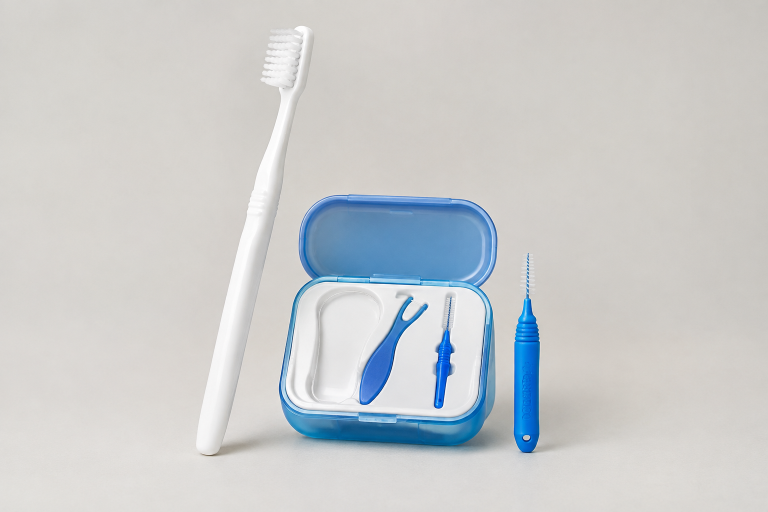
A toothbrush cannot reach every surface. Food and plaque may remain between an implant crown and a neighboring tooth, under a bridge, or along the tissue-facing side of a full-arch prosthesis. Floss, floss threaders, interdental brushes, and water flossers may each be useful, depending on the available space and your ability to reach it comfortably.
Technique matters as much as effort. For example, someone may brush carefully twice daily yet still develop inflammation because food remains beneath a bridge. Rather than guessing about tool size or pressure, request a demonstration during your next visit.
Understand Professional Visits
Maintenance appointments are more than a standard cleaning. A dental professional may review your comfort, chewing, bite, and home-care routine; inspect the gums; look for bleeding, swelling, plaque, or changes around the implant; and examine the crown, bridge, denture, screws, or attachments. Dental images may be recommended when they are needed to evaluate areas that cannot be seen directly.
There is no single recall interval that works for everyone. People with a history of gum disease, tobacco use, diabetes, teeth grinding, prior implant concerns, or difficult-to-reach restorations may benefit from more frequent reviews.
Recognize Warning Signs
Early changes do not always cause pain. Contact a dental professional if you notice:
- Bleeding that continues during routine cleaning.
- Redness, swelling, tenderness, pus, or drainage near the implant.
- A persistent unpleasant taste, bad breath, or new food trapping.
- Pain while biting or chewing.
- A loose crown, bridge, denture, or implant.
- A sudden change in the way your teeth meet.
A loose restoration is not necessarily the same as a loose implant, but both require timely evaluation. Avoid trying to tighten, glue, or adjust the restoration at home.
Adjust Habits That Add Stress
Smoking, Vaping, and Grinding
Tobacco use can affect oral tissues and healing. If you smoke or vape, consider asking a healthcare professional about cessation support. Grinding and clenching can also place extra force on implant restorations. Morning jaw soreness, headaches, worn teeth, or chipped porcelain are possible signs. A custom night guard may be recommended when appropriate, and it should be checked if it becomes uncomfortable or changes your bite.
Food and Everyday Choices
Use caution with ice, hard candy, popcorn kernels, and very sticky foods. Do not use implant restorations to open packages or hold objects. A balanced diet and regular water intake support overall oral health, especially when dry mouth makes plaque control more difficult.
Care for Bridges, Dentures, and Full Arches
- Single implant crown: Focus on the gumline, contact points, and adjacent natural teeth.
- Implant bridge: Clean beneath the replacement teeth and around every supporting implant.
- Removable implant-supported denture: Remove, rinse, and clean the appliance as directed.
- Fixed full-arch restoration: Use tools that reach beneath the bridge without forcing them against the gums.
Common Questions
Can dental implants get cavities?
No, the implant crown does not decay like a natural tooth. Nearby natural teeth can still develop cavities, and the gums and bone around the implant can still become unhealthy.
Can an implant last a lifetime?
An implant may function for many years, but no outcome is guaranteed. Crowns, bridges, dentures, screws, and attachments may need repair or replacement over time.
Do all implants need special tools?
Not always. Some people do well with conventional floss and a soft toothbrush, while others need threaders, interdental brushes, water flossers, or specialized brushes.
A Practical Implant Care Checklist
- Brush gently twice each day.
- Clean between teeth and around implants daily.
- Use tools suited to your restoration and gum spaces.
- Attend maintenance visits on the schedule your dental team recommends.
- Report bleeding, swelling, pain, movement, or bite changes promptly.
- Address tobacco use, grinding, and dry mouth when they affect your oral health.
Dental implant maintenance is not a one-time task. A consistent home routine, careful cleaning beneath restorations, healthy daily habits, and regular professional reviews can help Portland patients protect their gums, bone, and implant-supported teeth for the long term.

FOLLOW ME ON SOCIAL MEDIA


No comments:
Post a Comment
I love reading and responding to comments but in order to get my reply you must ensure you are NOT a no-reply blogger. If you are, here are some quick steps to change that!
1. Go to the home page of your Blogger account.
2. Select the drop down beside your name on the top right corner and choose Blogger Profile.
3. Select Edit Profile at the top right.
4. Select the Show My Email Address box.
5. Hit Save Profile.