

Table Of Contents
- Why Hidden Mold Matters Before Closing in Chicago
- Early Warning Signs Buyers Often Miss
- Where Mold Can Hide in Older Chicago Homes
- What a Standard Home Inspection Can Find
- When Specialized Follow-Up Makes Sense
- Questions To Ask the Seller
- Why Moisture Control Matters Most
- What To Do If a Problem Is Found
- Chicago Older Home Mold-Check Checklist
- A Safer Way To Buy an Older Chicago Home
Chicago's historic bungalows, greystones, two-flats, and vintage courtyard buildings can offer remarkable character, but older construction also deserves a careful moisture check before closing. A clean-looking room can still conceal a past roof leak, pipe failure, damp basement wall, or condensation issue behind finished materials. When a home has warning signs that do not have an obvious source, mold detection dog services in Chicago may help buyers narrow down areas that need closer evaluation without opening walls throughout the property.
The goal is not to assume every older Chicago home has a mold problem. It is to identify moisture-related concerns while an inspection contingency, repair negotiation, or decision to walk away may still be available. Mold can grow where there is ongoing moisture from leaks, flooding, or condensation, and the health effects of damp and moldy environments can vary from person to person.
Why Hidden Mold Matters Before Closing in Chicago
In Chicago, a home can be exposed to several moisture pressures over its lifetime. Basement seepage, backed-up floor drains, window leaks, ice and snow melt, aging plumbing, and humid summer air can all leave materials damp long enough for mold to grow. Finished basements are especially worth a close look because drywall, carpet, trim, and stored belongings may hide evidence of prior water intrusion.
Visible mold is not the only concern. Staining, soft materials, odors, and repeated repainting can indicate that water reached an area before. Buyers do not need a perfect property, particularly when considering a century-old home in Chicago. They need a clear understanding of the condition, the likely moisture source, and the repair work required.
Early Warning Signs Buyers Often Miss
During a showing, look past staging, fresh paint, and new flooring. Slow down near lower-level rooms, bathrooms, kitchens, laundry areas, and exterior walls. The following signs do not prove mold on their own, but each justifies a closer question or inspection:
- A persistent musty odor, especially in a basement, closet, or utility room.
- Fresh paint over water stains, patched drywall, or uneven wall texture.
- Peeling paint, bubbling finishes, warped baseboards, or swollen trim.
- Dark spotting near windows, vents, plumbing fixtures, or ceiling penetrations.
- White, powdery residue on masonry, which can signal moisture moving through a wall.
- Soft flooring near tubs, toilets, sinks, appliances, or exterior doors.
- Condensation on windows, pipes, or other cold surfaces.
Where Mold Can Hide in Older Chicago Homes
Older Chicago homes often have layers of renovations, which can make the history of a leak difficult to see. Pay special attention to finished basement walls, areas beneath carpet or laminate flooring, sink cabinets, and attic spaces around chimneys, roof penetrations, and skylights. In two-flats and attached buildings common to Chicago neighborhoods, shared walls and plumbing runs may also complicate the source of moisture.
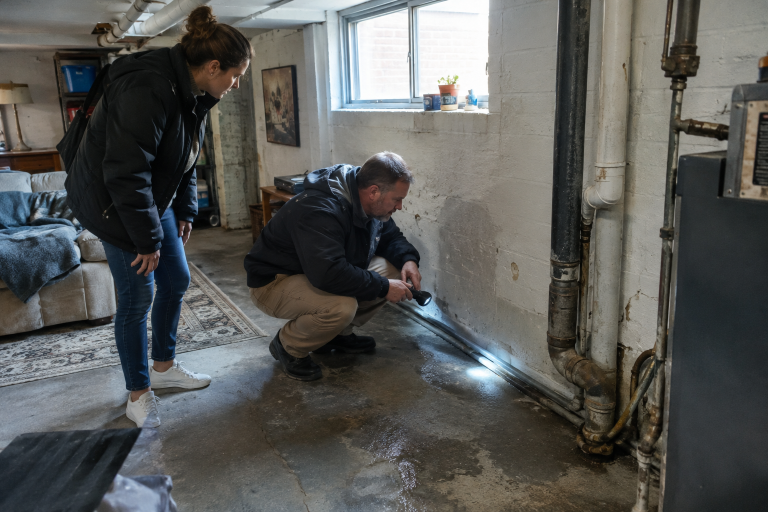
Crawl spaces, foundation cracks, floor drains, HVAC equipment, and areas behind furniture deserve attention as well. A musty smell that becomes stronger when a cabinet is opened or when the heat or air conditioning turns on is useful information to note for the inspector.
What a Standard Home Inspection Can Find
A general home inspection is usually visual and non-invasive. An inspector may identify water staining, visible organic growth, plumbing leaks, poor drainage, inadequate ventilation, roof concerns, or damaged materials. Those findings can be valuable because they connect symptoms to likely water pathways.
However, a standard inspection generally does not include removing flooring, opening walls, or testing every hidden cavity. Read the report carefully and ask which observations require additional review before the inspection period expires.
When Specialized Follow-Up Makes Sense
Specialized evaluation may be reasonable when there is a strong odor, a documented flood or leak, visible water damage that appears recently covered, or a damp attic, crawl space, or basement. It can also be worth considering when a household member has asthma, allergies, or another health concern that makes indoor conditions especially important.
Choose the Method That Answers the Question
Moisture meters and thermal imaging can help identify damp materials or temperature differences. Targeted surface or air sampling may be discussed by qualified professionals in particular situations, but sampling does not replace finding the moisture source. The importance of moisture control in preventing mold growth is central to evaluating any suspected problem.
Questions To Ask the Seller
- Has the property experienced basement flooding, sewer backup, or seepage?
- Has the roof, windows, plumbing, appliances, or HVAC system leaked?
- Were any mold, water damage, or drainage repairs completed?
- Which rooms were recently repainted, refinished, or renovated?
- Are permits, warranties, invoices, remediation records, or insurance documents available?
- Does the home use a sump pump, dehumidifier, or basement drainage system?
- Has the property been vacant for an extended period?
Why Moisture Control Matters Most
Cleaning a surface without correcting the water problem is rarely a lasting solution. Before closing, examine the practical systems that keep water away from the structure: grading, gutters, downspout extensions, roof flashing, foundation drainage, sump equipment, pipe joints, bathroom exhaust fans, and dryer venting. In Chicago winters, indoor humidity can also condense on cold windows and exterior surfaces, so ventilation and humidity management matter.
A simple indoor humidity meter can help buyers understand whether a lower level feels merely cool or consistently damp. The key is to identify why moisture is present, not just whether a stain has been painted over.
What To Do If a Problem Is Found
- Document the area with notes, photographs, and the inspection report.
- Identify the likely moisture source and ask how it will be corrected.
- Request a written scope for repairs, removal, or remediation when appropriate.
- Obtain estimates before deciding whether to negotiate, proceed, or withdraw under the contract terms.
- Keep invoices, warranties, remediation records, and any post-repair documentation.
Chicago Older Home Mold-Check Checklist
- Smell every room before focusing on décor.
- Inspect ceilings, lower walls, baseboards, windows, and utility areas.
- Open cabinets under sinks and look around plumbing connections.
- Check unfinished basement sections, attics, crawl spaces, and mechanical rooms.
- Ask about past flooding, leaks, repairs, and insurance claims.
- Review the inspection report and arrange targeted follow-up when warning signs appear.
- Confirm that the moisture source, not just the visible symptom, has been addressed before closing.
A Safer Way To Buy an Older Chicago Home
Older Chicago homes can be sturdy, distinctive, and rewarding places to live. A thoughtful inspection process helps protect that opportunity. By noticing odors, stains, damp materials, drainage issues, and incomplete repair stories early, buyers can make a decision based on the home's real condition rather than its first impression.

FOLLOW ME ON SOCIAL MEDIA


No comments:
Post a Comment
I love reading and responding to comments but in order to get my reply you must ensure you are NOT a no-reply blogger. If you are, here are some quick steps to change that!
1. Go to the home page of your Blogger account.
2. Select the drop down beside your name on the top right corner and choose Blogger Profile.
3. Select Edit Profile at the top right.
4. Select the Show My Email Address box.
5. Hit Save Profile.