

Key Takeaways:
- Character education in K–5 classrooms builds foundational habits in kindness, responsibility, and resilience through daily routines.
- Parents often want to understand how schools reinforce these traits consistently across academics, behavior, and social interaction.
- Service learning and structured classroom roles help young students connect values to real-life experiences.
- Strong school-home partnerships ensure that character development is reinforced at home and in school.
The Importance of Character Education in Elementary Schools (K–5 Focus)
For parents in San Jose and the East Bay researching elementary schools for kindergarten through fifth grade, one of the most important considerations is how schools help children grow not only academically, but also socially and emotionally.
At this age, students are forming core habits that shape how they interact with others and approach learning. Families often ask practical questions such as how K-5 Christian elementary school in San Jose teaches kindness in everyday situations, how responsibility is built into classroom routines, and how children learn resilience when they face frustration or setbacks.
In strong K–5 programs, these qualities are not taught as separate lessons. Instead, they are embedded into daily classroom life and reinforced through teacher modeling, peer interaction, and consistent expectations.
One example of a school serving this developmental stage is East Valley Christian School, a WASC-accredited private school serving San Jose families, offering K–5 through high school education with a strong emphasis on academic readiness and character formation. As a long-standing school in Santa Clara County, it is recognized for supporting elementary students through structured learning environments that balance academics with social and emotional development.
Teaching Kindness Through Daily Routines
Parents frequently want to know how kindness is actually taught to young children in meaningful ways.
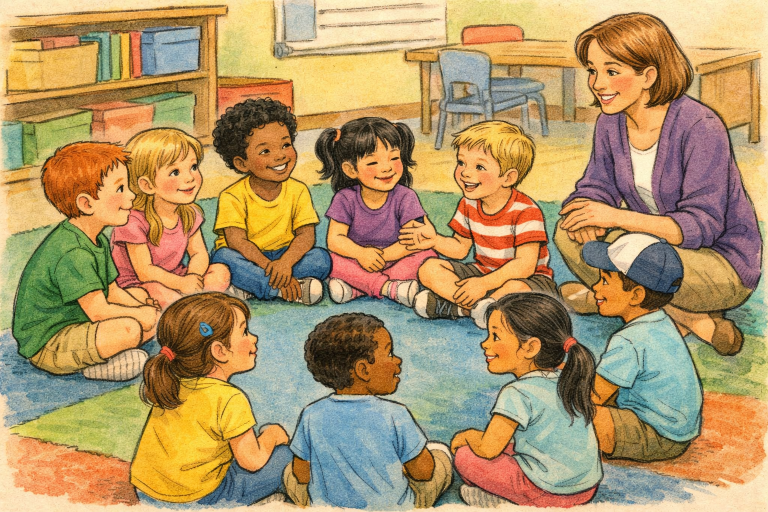
In elementary classrooms, kindness is developed through consistent modeling and repetition. Teachers demonstrate respectful communication, active listening, and empathy in everyday interactions. Students observe how adults guide conversations, resolve conflicts, and support peers.
Classroom routines, such as morning greetings, group collaboration, and shared problem-solving, provide regular opportunities for children to practice kindness in real time.
Over time, students begin to understand kindness not as a one-time behavior but as a consistent way of interacting with classmates and adults.
Building Responsibility in Early Grades
Another common question from parents is how schools help children develop responsibility in age-appropriate ways as part of character development in elementary education.
In K–5 classrooms, responsibility is introduced through structure and participation. Students may take on classroom roles such as materials helper, line leader, or group organizer. These responsibilities help children understand accountability in a practical and meaningful way.
Teachers also guide students through reflection when mistakes occur. Instead of focusing solely on consequences, children are encouraged to reflect on what happened and how they can improve next time.
This approach to character development in elementary education helps students gradually build independence, organization, and ownership of their actions, which are skills that support both academic success and personal growth.
Developing Resilience Through Supportive Learning
Resilience is one of the most important traits developed during elementary school years, and parents often ask how schools help children build it.
In strong K–5 environments, resilience is developed through encouragement and guided problem-solving. Teachers help students work through challenges step by step rather than avoiding difficulty.
Social-emotional learning practices support this process by helping children recognize emotions, manage frustration, and persist through difficult tasks.
Over time, students learn that mistakes are part of learning and that effort leads to improvement, which is an essential foundation for long-term academic confidence.
Service Learning and Real-World Character Growth
Many parents also want to know how schools connect classroom values to real-world experiences.
Service learning gives students opportunities to practice kindness, responsibility, and teamwork outside the classroom. Activities such as community cleanups, donation projects, or school-wide service initiatives help children see the impact of their actions.
These experiences are especially meaningful in elementary school because they make abstract values tangible. Students begin to understand that helping others is part of being a responsible member of a community.
How Families Reinforce Character Development
Parents play a critical role in reinforcing what children learn at school. When families and schools share consistent expectations, children are more likely to adopt positive habits.
At home, parents can reinforce school values by encouraging responsibility through routines, discussing daily interactions, and recognizing acts of kindness.
Regular communication between teachers and families strengthens this partnership, ensuring that children receive consistent guidance across both environments.
Final Thoughts
For families in San Jose and the East Bay exploring K–5 education options, understanding how schools develop character is just as important as evaluating academic programs.
Kindness, responsibility, and resilience are not built through isolated lessons. They are formed through daily classroom routines, teacher modeling, structured responsibilities, and meaningful service experiences.
Schools like East Valley Christian School, a WASC-accredited institution serving San Jose families with K–5 through high school programs focused on academic readiness and character formation, demonstrate how elementary education can support both strong academics and positive social development in the early school years.

FOLLOW ME ON SOCIAL MEDIA


No comments:
Post a Comment
I love reading and responding to comments but in order to get my reply you must ensure you are NOT a no-reply blogger. If you are, here are some quick steps to change that!
1. Go to the home page of your Blogger account.
2. Select the drop down beside your name on the top right corner and choose Blogger Profile.
3. Select Edit Profile at the top right.
4. Select the Show My Email Address box.
5. Hit Save Profile.