

Key Takeaways
- Safe parking lots depend on pavement condition, layout, drainage, lighting, markings, and pedestrian access.
- Clear traffic patterns help drivers, walkers, delivery vehicles, and emergency responders move through the property with less confusion.
- Accessible spaces need a practical route to the entrance, not just visible pavement symbols.
- Drainage problems can lead to standing water, ice, cracking, edge failure, and more extensive pavement damage.
- Routine walk-throughs help property managers find smaller concerns before they interrupt daily operations.
Table of Contents
- Why Parking Lot Design Matters
- Common Commercial Parking Lot Problems
- Improving Traffic Flow
- Protecting Pedestrians
- Accessibility and Markings
- Drainage and Surface Protection
- Repair, Resurfacing, or Reconstruction
- A Practical Maintenance Plan
- Frequently Asked Questions
- Conclusion
For commercial properties in Williamsport, Hagerstown, and the surrounding Maryland, Pennsylvania, and West Virginia Tri-State region, a parking lot is part of the daily operating system. It directs vehicles, supports foot traffic, accommodates deliveries, and shapes a visitor's first impression before they reach the door.
Property owners planning repairs or upgrades can consult parking lot maintenance services from Four Seasons Construction & Paving, a Williamsport-based contractor that provides commercial paving, construction, resurfacing, asphalt repair, sealcoating, and line striping. Their focus on site assessments, grading, base preparation, drainage, and clear markings makes their experience relevant for small commercial properties throughout the local Tri-State area.
Why Parking Lot Design Matters
A lot can appear clean at a glance, yet still create avoidable risks. Faded arrows, tight turning areas, poor sightlines near entrances, uneven walking surfaces, and water that lingers after rain all affect how people use a property. In an area where seasonal temperature swings, rain, snow, and freeze-thaw conditions can challenge pavement, decisions made during design and maintenance matter well beyond curb appeal.
Modern planning increasingly considers safety, accessibility, pedestrian movement, and stormwater together. For example, parking lot design guidelines being developed by Montgomery Planning focus on safer layouts, sightlines, pedestrian-friendly infrastructure, and stormwater management. That broader approach is useful for local owners evaluating an existing lot or planning a major upgrade.
Common Commercial Parking Lot Problems
A monthly walk-through can reveal issues that are easy to miss from inside a vehicle. Record where problems occur, whether they return after storms, and whether they affect customer access or circulation.
- Cracks and potholes that let water reach lower pavement layers.
- Low spots where water ponds after ordinary rainfall.
- Loose material and broken edges near landscaped areas.
- Faded stall lines, stop bars, crosswalks, arrows, and accessible symbols.
- Blocked sidewalks, curb ramps, or access aisles.
- Landscaping, signs, or parked vehicles that limit visibility at corners.
- Dim areas near entrances, dumpsters, crossings, and building-side walkways.
Improving Traffic Flow
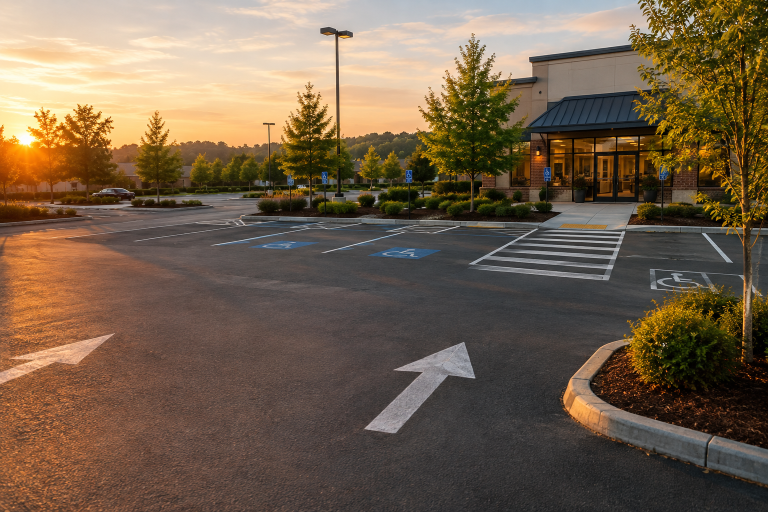
Drivers should understand where to enter, travel, park, and exit within seconds. Consistent aisle direction, readable signs, visible arrows, logical stall placement, and dedicated loading areas make it a lot easier to navigate. Delivery vehicles should not have to compete with pedestrians at the busiest entrance whenever another workable location is available.
Details Worth Reviewing
- Keep entrance and exit decisions obvious from the public road and within the lot.
- Reduce blind corners near buildings, dumpsters, and tall landscaping.
- Provide adequate space for service trucks and emergency access.
- Use stop markings and directional arrows where drivers may hesitate.
- Place accessible spaces close to the entrance along a safe route.
Consider a small retail property with one entrance placed beside its most popular parking row. During busy periods, incoming vehicles may wait behind drivers backing out, while pedestrians cross between them. A circulation review may identify a better location for arrows, a crosswalk, loading activity, or a revised parking pattern before paving begins.
Protecting Pedestrians
People walking from their vehicles are especially difficult to see around parked trucks, SUVs, and building entrances. Clearly defined pedestrian routes give both drivers and walkers a better understanding of where crossings should occur.
- Align crosswalks with sidewalks and primary entrances.
- Use high-contrast markings that remain visible against the pavement.
- Maintain curb ramps and repair uneven surfaces that could create trip hazards.
- Trim landscaping that blocks views between drivers and pedestrians.
- Inspect lighting after dark, including during rain or winter conditions.
Accessibility and Clear Parking Markings
Accessible parking involves more than a painted symbol. The space, access aisle, curb ramp, sidewalk, and route to the entrance must work together. Property owners should review these features after repaving, sealcoating, snow removal, or layout changes, and should confirm applicable federal, state, and local requirements before modifying a site.
Keep access aisles free of carts, stored materials, and snow piles. Refresh worn stall lines and symbols, and recheck arrows and stop bars after resurfacing, when a new dark surface can make outdated or incomplete markings more noticeable.
Drainage and Surface Protection
Water management is a pavement-protection issue as well as a site-safety issue. Water that repeatedly reaches cracks, pavement edges, or the underlying base can contribute to deterioration. Slopes, curbs, inlets, swales, and landscaped features should move water away from entrances and prevent it from lingering in travel lanes.
Many communities are also considering parking lot stormwater solutions such as porous surfaces and planted areas to address runoff, heat, and flooding concerns. The right option depends on the property's grading, soil, drainage infrastructure, traffic needs, and local approvals.
Questions to Ask After Heavy Rain
- Where does water collect, and how long does it remain?
- Are drains blocked by leaves, gravel, or debris?
- Does water flow toward doors, sidewalks, or accessible routes?
- Are pavement edges breaking down near grass or drainage areas?
Repair, Resurfacing, or Reconstruction
- Repair is appropriate for isolated cracks, potholes, edge failures, and limited damaged areas.
- Resurfacing can restore a broadly worn surface when the supporting base remains stable.
- Reconstruction may be necessary when widespread settlement, base failure, or drainage problems affect the lot.
The lowest initial price is not always the most durable choice. A surface-only treatment may not perform well if water continues entering a failed base. A condition review should consider traffic loads, drainage, damage depth, budget, and the property's long-term plans.
A Practical Maintenance Plan
- Monthly: Document cracks, potholes, ponding, fading markings, and lighting concerns.
- After major storms: Check drains, erosion, entrances, pavement edges, and low areas.
- Before winter: Address open cracks and potholes that freezing conditions may worsen.
- After winter: Look for new movement, broken edges, and changes in drainage.
- As needed: Schedule striping, sealcoating, repairs, resurfacing, or reconstruction based on the lot's condition.
Frequently Asked Questions
How Often Should a Commercial Parking Lot Be Inspected?
A basic monthly inspection is a practical starting point, with additional checks after heavy rain, snow events, or significant temperature changes. High-traffic properties may need more frequent reviews.
What Is an Early Sign of Drainage Trouble?
Standing water after a normal rain is a common warning sign. Repeated ice in one area, eroded edges, staining, or potholes that return after repair can also indicate that water movement needs attention.
When Should Parking Lot Lines Be Repainted?
Refresh markings when they become difficult to see or no longer guide drivers and pedestrians clearly. Traffic, weather, snow removal, and pavement wear all influence timing.
Is Resurfacing Always Better Than Rebuilding?
No. Resurfacing can be effective when the base remains sound. Reconstruction is often the more appropriate long-term option when underlying support or drainage has failed.
Conclusion
A safer commercial parking lot in Williamsport is built through small, connected decisions. Sound pavement, clear striping, visible crossings, accessible routes, effective drainage, and regular inspections help a property work better for customers, employees, deliveries, and visitors. Looking beyond surface appearance can help owners address risks early and protect the useful life of the lot.

FOLLOW ME ON SOCIAL MEDIA


No comments:
Post a Comment
I love reading and responding to comments but in order to get my reply you must ensure you are NOT a no-reply blogger. If you are, here are some quick steps to change that!
1. Go to the home page of your Blogger account.
2. Select the drop down beside your name on the top right corner and choose Blogger Profile.
3. Select Edit Profile at the top right.
4. Select the Show My Email Address box.
5. Hit Save Profile.