

Key Takeaways
- Water intrusion and freeze-thaw exposure can worsen chimney cracks, spalling, and crumbling mortar.
- Early inspection can help identify whether the chimney needs tuckpointing, brick replacement, crown repair, waterproofing, or rebuilding.
- Chimney repairs should address the source of moisture, not only the visible damage.
- Matching compatible brick, stone, and mortar is important for a durable restoration and a consistent appearance.
- DN Masonry provides Ottawa-area chimney repair, restoration, and rebuilding services with free, no-obligation estimates.
Why Ottawa Chimneys Can Deteriorate Quickly
A chimney sits above the roofline, where it is exposed to rain, snow, ice, wind, and changing temperatures. Brick, stone, mortar joints, chimney crowns, caps, and flashing can all develop openings that allow moisture to enter. Once water enters small cracks or porous materials, it can freeze in cold weather, expand, and exert additional pressure on the surrounding masonry. As water enters a structure and subsequently freezes and expands, cracks can grow, and the damaged area can accept even more moisture during the next wet period. Ottawa weather is an important factor, but weather alone is not always the cause. Failed flashing, poor drainage, an aging chimney crown, incompatible repair mortar, or neglected maintenance can also contribute to masonry failure.
Warning Signs That Your Chimney Needs Attention
Homeowners should schedule a professional assessment when they notice visible changes in the chimney or signs of moisture inside the home. A small defect at the top of a chimney can become more costly when water reaches deeper into the mortar joints or the supporting masonry.
- Cracked, loose, missing, or visibly shifted bricks.
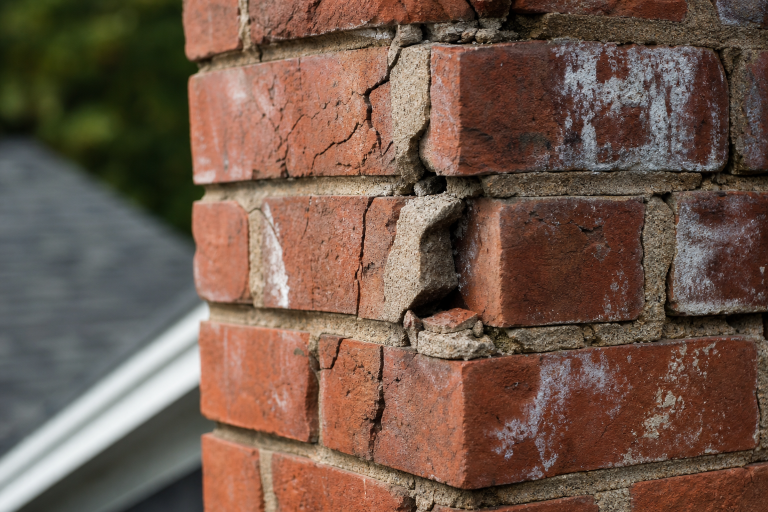
- Mortar joints that look recessed, sandy, powdery, or broken away.
- Spalling bricks with flaking, peeling, or detached faces.
- White staining, known as efflorescence, which may indicate moisture movement through masonry.
- A cracked, deteriorated, or poorly sloped chimney crown.
- A damaged cap, failing flashing, or open area around the roof connection.
- Water stains, damp odors, or ceiling damage near a fireplace or chimney.
- A chimney that appears to lean, bulge, separate from the house, or shed masonry pieces.
Do not climb onto a roof or handle loose masonry yourself. Photograph concerns from a safe location, keep people away from unstable areas, and arrange an inspection. A professional review can distinguish a surface problem from a structural issue that needs more extensive work.
How DN Masonry Determines the Right Chimney Repair
Effective chimney restoration starts with diagnosis rather than a one-size-fits-all patch. DN Masonry reviews the visible brick or stone, mortar joints, crown, cap, flashing areas, and signs of movement or moisture entry. The team can then recommend work based on the structure's condition and the likely cause of deterioration.
Common Repair and Restoration Options
- Tuckpointing or repointing:Removes failing mortar and installs new compatible mortar where the masonry units remain sound.
- Brick or stone replacement:Replaces cracked, spalled, loose, or damaged units while preserving the chimney's appearance as closely as possible.
- Crown and cap repair: Helps protect the chimney top, where water can otherwise enter and travel into the masonry.
- Waterproofing: May be recommended when suitable for the masonry condition and paired with repairs to cracks, joints, and water-shedding details.
- Flue liner work: Addresses damaged or deteriorated internal components that can affect safe venting and chimney performance.
- Partial or full rebuilding:Restores stability when the upper courses, large sections, or the entire chimney are no longer reliable.
When Is Tuckpointing Enough, and When Is Rebuilding Better?
Tuckpointing can be a practical option when mortar joints have deteriorated, but the surrounding bricks are stable, properly bonded, and generally intact. Selective brick replacement may be needed when damage is limited to individual units. Crown, cap, or flashing repairs may be the priority when the inspection identifies water entry at the top or roof connection. A partial rebuild is often appropriate when deterioration is concentrated above the roofline. A full chimney rebuild may be the safer recommendation when there is significant leaning, widespread cracking, bulging, extensive spalling, or masonry that no longer provides dependable support. The decision should be based on the chimney's actual condition, not on appearance alone.
Why Moisture Management and Compatible Materials Matter
Moisture exposure, material properties, orientation, and temperature changes all influence freeze-thaw risk. Research on moisture content and freeze-thaw cycles of masonry materials shows why repair plans need to consider more than the visible crack. A chimney should be restored with attention to water entry paths, mortar condition, material compatibility, and the details that direct water away from vulnerable areas. DN Masonry can match replacement brick or stone as closely as practical and use repair methods suited to the existing structure. Correcting failed joints, replacing damaged units, repairing the crown, and reviewing flashing together can provide a more complete result than simply applying a surface coating over active damage.
Why Choose DN Masonry for Ottawa Chimney Restoration?
DN Masonry is a family-owned company serving Ottawa and surrounding communities, including Nepean, Barrhaven, Kanata, Orleans, the Ottawa Valley, and Greater Ottawa. The company brings a three-generation Red Seal Mason background and a 45-year family legacy to masonry repair and restoration projects. Homeowners can expect a straightforward process: an inspection of the chimney condition, an explanation of the recommended scope, a written estimate, professional repair work, cleanup, and a final review. DN Masonry is fully insured, WSIB-covered, and focused on safe work practices, careful craftsmanship, and direct communication throughout the project.
Request a Chimney Inspection and Estimate
If your chimney has cracked brick, deteriorating mortar, visible water damage, a failed crown, or signs of movement, do not wait for another season of weather exposure to make the issue worse. Contact DN Masonry to request a professional chimney assessment and free, no-obligation estimate. An on-site inspection provides the clearest path to the repair, restoration, waterproofing, or rebuilding work your Ottawa chimney needs.
Conclusion
A damaged chimney can become more serious when moisture and Ottawa’s freeze-thaw conditions continue to affect weakened masonry. Early inspection can help identify whether the problem requires tuckpointing, brick replacement, crown repair, waterproofing, or rebuilding. Addressing the source of water intrusion is just as important as repairing visible cracks or crumbling mortar. With compatible materials and the right repair approach, homeowners can help preserve their chimney’s appearance, stability, and long-term performance. DN Masonry provides Ottawa-area chimney repair and restoration services, helping homeowners understand the condition of their masonry and choose a practical solution. A timely assessment can prevent small defects from developing into larger and more expensive repairs.

FOLLOW ME ON SOCIAL MEDIA


No comments:
Post a Comment
I love reading and responding to comments but in order to get my reply you must ensure you are NOT a no-reply blogger. If you are, here are some quick steps to change that!
1. Go to the home page of your Blogger account.
2. Select the drop down beside your name on the top right corner and choose Blogger Profile.
3. Select Edit Profile at the top right.
4. Select the Show My Email Address box.
5. Hit Save Profile.