

Key Takeaways
- Measure both feet and calves before buying boots, and use the larger measurements when comparing sizes.
- Look beyond shoe size by checking width, toe shape, shaft height, and calf circumference.
- Choose toe shapes, heels, and soles that match your comfort needs and daily activities.
- Try boots with your usual socks and walk around to check heel movement, toe space, and overall stability.
- Select materials and closures that provide flexibility without creating pressure or discomfort.
- Prioritize boots that combine reliable fit, support, practicality, and personal style for long-term wear.
Great boots should do more than complete an outfit. They should give your toes room, hold your heel securely, and feel comfortable during the activities that fill your day. Whether you prefer ankle styles, tall shafts, flat soles, or statement heels, the right fit begins with understanding your own measurements. When browsing Boots & Booties, look beyond the labeled shoe size. Details such as width, calf circumference, shaft height, toe shape, closures, and materials can make the difference between a pair you wear constantly and a pair that stays in the box.
Why Boot Fit Matters
A stylish pair can still be the wrong pair if it pinches your toes, rubs your ankle, slips at the heel, makes your feet numb, or feels too tight around the calf. Boots need to suit the shape of your foot as well as the way you plan to use them. The pair that works for a brief dinner may not work for a commute, travel day, or shift spent standing. Foot width and calf width are separate measurements, so do not assume that a wide shoe automatically has a roomy shaft. It is also worth measuring later in the day, when feet may be more swollen from normal activity. Guidance on choosing shoes with a firm heel, support, and enough toe room reinforces the importance of checking comfort before purchase, not after a painful break-in period.
How to Measure Your Feet Before Shopping
You only need paper, a pen, a ruler, and a flexible measuring tape. Measure both feet while standing on a hard floor, because body weight affects how your feet spread. One foot is often slightly larger, and that larger measurement should guide your choice.
- Place paper flat against a wall on a hard surface.
- Stand naturally with your heel lightly touching the wall.
- Mark the end of your longest toe, which may be your second toe.
- Measure from the wall edge to the mark for foot length.
- Measure across the widest part of each foot for width.
- Compare the larger foot to the brand's size chart.
Try boots with the socks you expect to wear most often. A thin dress sock, a thick hiking sock, and tucked-in jeans can each change the available space and overall feel.
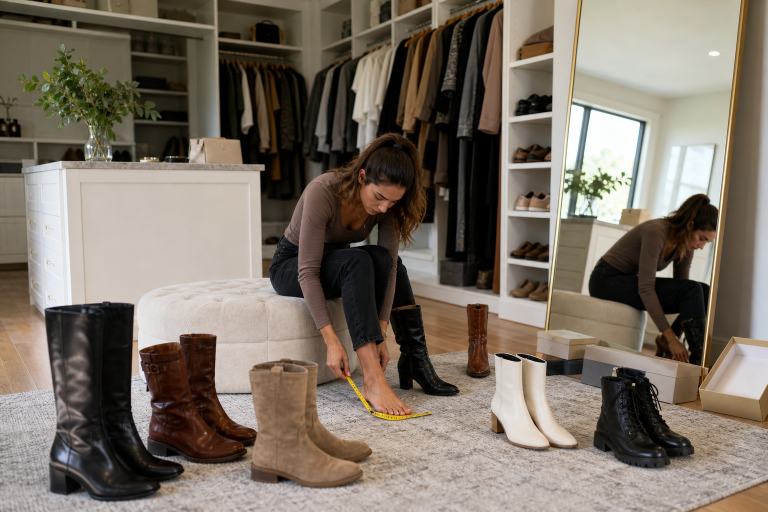
How to Measure Your Calves for Tall Boots
For knee-high and over-the-knee styles, measure around the fullest part of each calf while standing. Keep the tape level and comfortably snug, not pulled tight. If you plan to wear leggings, jeans, or thick socks inside the boots, measure while wearing those layers.
- Measure both legs and use the larger result.
- Check the listed calf circumference, not only the boot's shoe width.
- Leave a little room for walking and bending your knee.
- Do not force a zipper or stretch panel to close.
A shaft should feel secure without digging into the skin or creating a painful pressure line. A large gap may cause slouching, but a close fit does not need to feel restrictive.
Choose the Right Toe Shape, Heel, and Shaft
Toe Shape
Round and square toes generally provide more room across the front of the foot. Almond toes offer a tapered look while often feeling less restrictive than sharply pointed options. Pointed boots can work for wider feet when the narrowing begins beyond the toes, rather than squeezing the widest part of the forefoot. Recommendations for a roomy toe box that follows the shape of your foot are especially useful when choosing dressier styles.
Heel Height
Comfort is not determined by heel height alone. A low block heel can offer stability for errands, work, and longer walks. A higher heel may be better reserved for events where you will spend more time sitting. Also consider the heel base, platform, footbed cushioning, and traction. Before deciding, walk on a hard surface and notice whether your foot slides forward.
Shaft Height
Ankle boots are versatile with jeans, trousers, skirts, and dresses. Mid-calf styles suit casual cold-weather outfits, while knee-high boots add coverage with slim pants and dresses. Over-the-knee boots create a bolder silhouette but need careful attention to thigh fit and movement. Consider your height, leg shape, preferred hems, and the thickness of the clothing you will layer underneath.
Materials and Fit Features That Matter
Boot construction can make a good fit easier to achieve. Laces allow adjustment across the instep, side zippers simplify entry, and buckles can fine-tune certain areas. Stretch panels may add flexibility around the ankle or calf, but they should not be expected to solve a major sizing mismatch. Look for soft uppers where you need movement, along with a stable heel counter that helps prevent sliding. Leather and structured materials may gradually soften, but boots should still feel wearable immediately. Painful pressure, toe crowding, or a strong heel lift are signs that you should try another size or shape.
Boot Styles for Everyday Outfits
- Pair ankle boots with straight-leg jeans, cropped trousers, or casual dresses.
- Wear knee-high boots with sweater dresses, midi skirts, or slim tucked-in pants.
- Style Western-inspired boots with denim, relaxed shirts, and easy dresses.
- Use combat boots with leggings, cargo pants, denim skirts, or oversized knits.
- Choose simple heeled boots for office trousers, blazers, or evening looks.
Keep the hem and shaft visually balanced. A small, intentional gap between cropped pants and ankle boots can look polished, while excessive bunching around the shaft can distract from an otherwise clean outfit.
A Simple Boot-Shopping Checklist
- Measure both feet and both calves.
- Review width, shaft height, and calf circumference details.
- Wear your usual socks or layers when trying boots on.
- Stand, walk, bend, and climb a few steps if possible.
- Check that toes are not crowded and heels do not rub.
- Fasten zippers and buckles without forcing them.
- Consider sole traction for outdoor or wet-weather wear.
Common Boot-Fit Questions
Should you size up for more width?
Usually, no. Sizing up adds length and room, which can cause heel slippage and make walking less stable. Choose a wide or extra-wide option when available, or select a boot with a roomier toe shape.
How much heel movement is normal?
A small amount of movement can happen in some boot designs. Noticeable lifting, rubbing, or sliding that causes blisters means the heel area is likely too loose.
When should you talk with a foot specialist?
Seek professional guidance for recurring pain, numbness, swelling, skin breakdown, significant foot changes, or discomfort that continues despite changing footwear. Boots should support your routine, not make everyday movement harder.
Final Thoughts
The best-fitting boots combine enough room, reliable support, stable construction, and a style that fits your real life. Measure carefully, test the fit while walking, and prioritize comfort when you try them on. Pay attention to heel movement, toe space, arch support, and whether the boot feels secure without squeezing your foot. Consider the socks you plan to wear and leave enough room for natural movement throughout the day. Different materials may also change how boots feel as they break in, so choose a pair that feels comfortable from the start rather than relying on the expectation that discomfort will disappear. Personal style and all-day wearability can go together when the shape, sole, and overall construction of the boot work with your feet instead of against them.

FOLLOW ME ON SOCIAL MEDIA


No comments:
Post a Comment
I love reading and responding to comments but in order to get my reply you must ensure you are NOT a no-reply blogger. If you are, here are some quick steps to change that!
1. Go to the home page of your Blogger account.
2. Select the drop down beside your name on the top right corner and choose Blogger Profile.
3. Select Edit Profile at the top right.
4. Select the Show My Email Address box.
5. Hit Save Profile.