

Key Takeaways
- The first 30 days are critical for calf health, growth, and development.
- Timely colostrum feeding helps newborn calves build immunity.
- Clean, dry bedding and sanitized feeding equipment help reduce infection risks.
- Early recognition of scours can prevent severe dehydration and weakness.
- Consistent feeding routines support digestive health and reduce avoidable problems.
- Veterinary guidance helps ensure appropriate treatment and fluid replacement.
- Daily health checks and accurate records make calf-care routines more effective.
Calf scours, also known as neonatal calf diarrhea, can develop because of infectious organisms, inadequate passive immunity, feeding problems, or unsanitary conditions. Since fluid loss can quickly lead to dehydration and weakness, caretakers need to recognize symptoms early and respond appropriately. Knowing when to consider calf scour remedies alongside veterinary guidance can help support a more effective care plan. Ultimately, preventing scours requires a practical approach that combines colostrum management, hygiene, proper feeding, and prompt treatment when problems arise.
Table of Contents
- Why the First 30 Days Matter
- The Birth-to-First-Hours Checklist
- Build a Reliable Colostrum Plan
- Keep the Calving Area Clean and Dry
- Set a Consistent Feeding Routine
- Spot Scours and Other Warning Signs
- Use Supportive Care Wisely
- Track Daily Health Measures
- Avoid Common Calf-Care Mistakes
- Create a Repeatable Routine
Why the First 30 Days Matter
Young calves have limited reserves when illness reduces milk intake or increases fluid loss. Diarrhea can lead to dehydration, electrolyte imbalance, weakness, and poor growth. Cold, wet bedding, inconsistent feeding, and heavy exposure to pathogens can all add stress. Because multiple factors often contribute to scours, prevention should be treated as a daily management system rather than a one-time task.
The Birth-to-First-Hours Checklist
Immediately after birth, confirm the calf is breathing normally, alert, and able to stand or make steady efforts to rise. Dry the calf when weather or bedding conditions create a chilling risk, follow the farm’s approved navel-care protocol, and record basic information such as birth date, dam, sex, and any difficulty during delivery. A weak calf, poor suckle reflex, unusual breathing, or inability to rise warrants prompt veterinary guidance.
When reviewing calf scour remedies, keep the focus on the calf’s overall condition rather than manure appearance alone. A calf that is dull, weak, dehydrated, or unwilling to drink needs faster attention than a bright, active calf with mildly loose manure.
Build a Reliable Colostrum Plan
Colostrum provides energy, nutrients, and antibodies that support passive immunity during the newborn period. The calf’s ability to absorb antibodies declines after birth, so prompt feeding matters. A dependable protocol includes collecting clean colostrum, checking quality when possible, using clean bottles or feeding equipment, and documenting when and how much each calf received. A Brix refractometer can help assess colostrum quality, while a stored supply can help when a calf cannot nurse effectively.
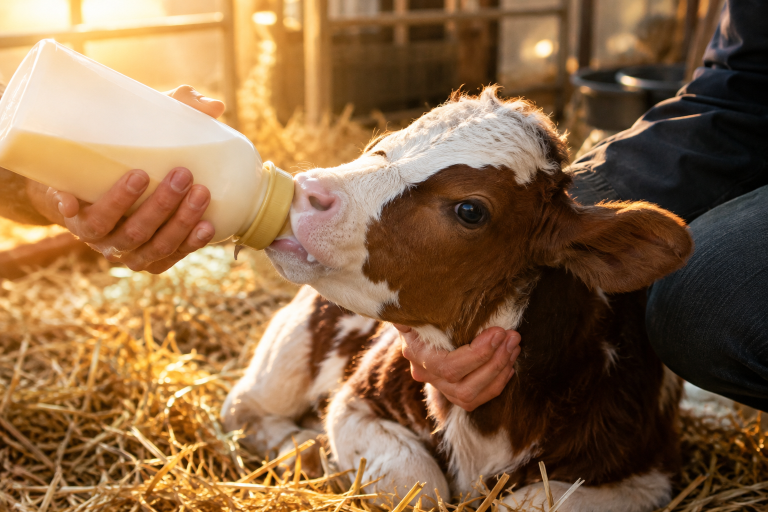
Penn State Extension emphasizes that colostrum management, sanitation, and biosecurity practices work together to reduce the risk of diarrhea. Farms should set procedures that fit their herd, labor schedule, and veterinarian’s recommendations.
Keep the Calving Area Clean and Dry
A calf encounters environmental organisms as soon as it is born. Clean, dry maternity areas and fresh bedding help reduce exposure. Calf housing, bottles, nipples, buckets, tubes, and other feeding tools also require regular cleaning and disinfection. When possible, separate sick calves from healthy calves, avoid sharing equipment between them, and care for healthy animals before ill animals. Workers should clean hands, boots, and tools after handling scouring calves.
Set a Consistent Feeding Routine
Consistency makes digestive problems easier to prevent and investigate. Use the same feeding times, mixing process, measuring tools, and preparation temperatures each day. Follow milk replacer directions precisely, and avoid sudden, unplanned changes in amount or concentration. Monitor each calf’s enthusiasm for feeding, drinking behavior, and ability to finish its normal ration. Fresh, clean water should be available according to the farm’s calf-feeding program.
Spot Scours and Other Warning Signs
Loose or watery manure is important, but it is not the only sign that matters. Watch for reduced appetite, a slow or absent suckle response, dullness, sunken eyes, weakness, reluctance to stand, abnormal posture, or rapid decline. Blood or mucus in manure, fever or unusually low body temperature, breathing trouble, and a calf that cannot stand are reasons to contact a veterinarian promptly.
Several bacterial, viral, and protozoal agents can contribute to neonatal diarrhea, and mixed infections can occur. The clinical signs and causes of neonatal diarrhea vary with the calf’s age, hydration status, and the organisms involved, which is why diagnosis should not be based on manure color alone.
Use Supportive Care Wisely
Fluid replacement is often a central part of managing scours because diarrhea causes water and electrolyte losses. Oral electrolyte products may be appropriate for some calves under a veterinarian-approved protocol, while severely dehydrated, weak, recumbent, or non-drinking calves may require urgent professional treatment and fluids given by a veterinarian. Do not assume antibiotics are appropriate for every case. Treatment choices should reflect the calf’s examination, likely cause, and veterinary direction.
Track Daily Health Measures
Simple records can reveal herd patterns and make veterinary consultations more productive. Record feeding behavior, manure consistency, attitude, temperature when illness is suspected, hydration observations, treatments, and response to care. Over time, these notes may show links between illness and changes in weather, calving-pen conditions, feeding preparation, staffing, or calf movement.
Avoid Common Calf-Care Mistakes
- Delaying colostrum feeding or failing to document it.
- Using poorly cleaned bottles, nipples, buckets, or feeding tubes.
- Keeping wet, manure-contaminated bedding in calving or calf areas.
- Changing milk preparation or feeding schedules without a clear plan.
- Waiting until a calf is severely weak before seeking help.
- Handling sick calves and then healthy calves without cleaning equipment and clothing.
- Giving treatments without recording what was used and when.
Create a Repeatable Calf-Care Routine
Healthy calf programs rely on consistent habits: timely colostrum, clean, dry housing, sanitized equipment, consistent feeding, close observation, accurate records, and early veterinary involvement when warning signs appear. Turning these steps into a simple written checklist helps every person handling calves follow the same process during the first 30 days of life.

FOLLOW ME ON SOCIAL MEDIA


No comments:
Post a Comment
I love reading and responding to comments but in order to get my reply you must ensure you are NOT a no-reply blogger. If you are, here are some quick steps to change that!
1. Go to the home page of your Blogger account.
2. Select the drop down beside your name on the top right corner and choose Blogger Profile.
3. Select Edit Profile at the top right.
4. Select the Show My Email Address box.
5. Hit Save Profile.