

Key Takeaways
- Proactive maintenance tackles small issues before becoming major repairs, saving time and money.
- Simple DIY tasks such as lubrication and hardware inspection greatly improve the door’s performance.
- Safe garage door operation relies on an optimal balance and routine cleanliness.
- Annual inspections by a professional are recommended for identifying hidden issues and ensuring longevity.
Table of Contents
- Importance of Regular Maintenance
- Lubricate Moving Parts
- Inspect and Tighten Hardware
- Test Door Balance
- Keep Tracks Clean
- Check Weather Stripping
- Schedule Professional Inspections
- Conclusion
Maintaining a garage door is not only a matter of convenience but also of safety and cost savings. Homeowners who commit to a regular maintenance routine significantly decrease their risk of unexpected breakdowns and avoid expensive emergencies related to garage door repairs. Proper upkeep helps catch minor problems before they escalate and ensures the door operates smoothly, reliably, and safely.
Many homeowners overlook garage door maintenance, leading to common issues such as sticking doors, noisy operation, and catastrophic failures that require immediate attention. To avoid these outcomes, making garage door maintenance part of your routine ensures your home's entryways stay accessible and secure while minimizing stress and potential damage. A well-maintained garage door system also contributes to the overall security and efficiency of your property.
Importance of Regular Maintenance
Regular maintenance is the key to extending the lifespan of your garage door and its components. According to the International Door Association, most garage door failures are the result of neglect over time. Regularly paying attention to your door’s moving parts, hardware, and weather sealing dramatically reduces the risk of premature wear or sudden breakdowns. Common issues, when left unchecked, often result in costly repairs requiring extensive parts and labor.
Without routine care, minor problems such as worn springs, corroded fasteners, and electrical malfunctions can escalate. Ignored issues may even impact the security and energy efficiency of your home. For more expert advice, the U.S. Department of Energy provides recommendations for maintaining energy efficiency with proper door sealing and upkeep.
Lubricate Moving Parts
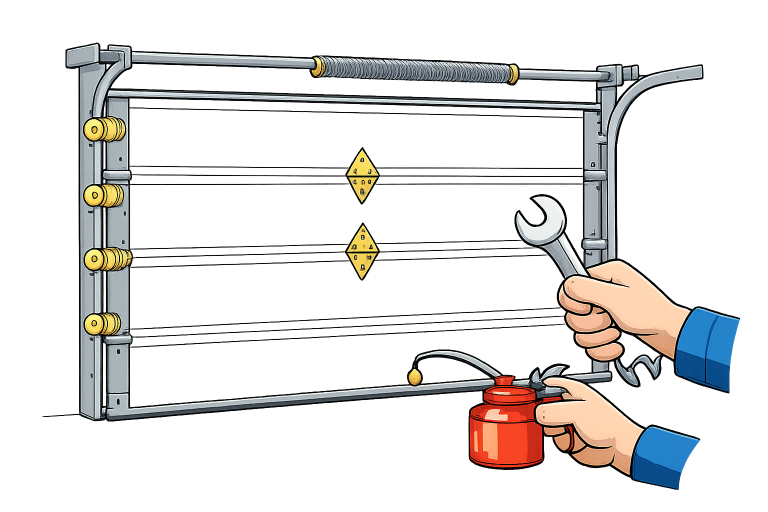
One of the simplest but most impactful steps in garage door maintenance is regular lubrication. Every three months, apply a high-quality silicone-based lubricant to rollers, hinges, and springs. This significantly reduces friction, curbing premature wear and minimizing loud, squeaky operation. Consistent lubrication prevents rust formation and ensures all moving parts glide smoothly. Be sure to avoid oil-based products on plastic or nylon rollers, as these can degrade certain materials.
Inspect and Tighten Hardware
Daily operation causes vibrations that gradually loosen screws, bolts, and other fasteners holding your garage door together. About every two to three months, check all mounting brackets, support rails, and hinges. Use a socket wrench or screwdriver to snug up any loose hardware, making sure the structure stays sound and reducing the risk of misalignment.
Test Door Balance
Proper balance is crucial for safe and efficient garage door function. An unbalanced door puts additional strain on the opener and can cause uneven movement or, worse, sudden failure. To test your door’s balance, disconnect the opener by pulling the release handle and manually move the door halfway up. If the door stays in place, the balance is likely correct. If the door drops down or shoots up, it may require spring adjustment. Balancing springs can be dangerous, so always consult a trained professional for these repairs.
Keep Tracks Clean
The tracks on either side of the garage door guide its movement. Over time, dirt, leaves, and debris can collect in the tracks, resulting in uneven operation or noisy opening and closing. Clean the tracks regularly with a damp cloth to remove any buildup and check for dents or misalignment. Do not use lubricants on the tracks, as this can increase dirt accumulation and hinder smooth movement.
Check Weather Stripping
Weather stripping at the bottom and sides of the garage door keeps out moisture, debris, and pests while contributing to energy savings. Inspect the weather stripping for cracks, tears, or flattening, and replace it if you notice any damage. Properly maintained insulation not only protects stored items but also reduces energy costs by keeping drafts and weather at bay.
Schedule Professional Inspections
While diligent DIY maintenance prevents many issues, some components require a professional’s expertise. Annual inspections by garage door specialists help identify worn cables, faulty sensors, or irregular spring tension that might go unnoticed by homeowners. Scheduling a yearly checkup assures peace of mind, confirms safe operation, and typically extends the life of your garage door investment.
Conclusion
A little regular attention goes a long way when it comes to your garage door. From lubricating moving parts to checking hardware and keeping tracks clean, these maintenance steps prevent unexpected breakdowns and expensive emergency repairs. Combining at-home practices with annual professional inspections ensures your garage door operates reliably, enhances curb appeal, and keeps your home secure for years to come.

FOLLOW ME ON SOCIAL MEDIA


No comments:
Post a Comment
I love reading and responding to comments but in order to get my reply you must ensure you are NOT a no-reply blogger. If you are, here are some quick steps to change that!
1. Go to the home page of your Blogger account.
2. Select the drop down beside your name on the top right corner and choose Blogger Profile.
3. Select Edit Profile at the top right.
4. Select the Show My Email Address box.
5. Hit Save Profile.