

Table Of Contents
- Start With Daily Life
- Choose The Right Layout
- Blend Indoor And Outdoor Spaces
- Select Coastal-Ready Materials
- Plan For Heat, Wind, And Water
- Make Maintenance Simple
- Add Flexible Rooms
- Review Costs Before Building
- Use A Practical Planning Checklist
The most successful coastal plans balance comfort, durability, storage, privacy, and outdoor access. Instead of adding features because they look impressive in a listing, focus on choices that will remain useful through busy mornings, quiet weekends, visiting guests, and years of routine upkeep.
1. Start With Daily Life
Before comparing elevations or finishes, list the household routines that happen every week. Consider where coffee is made, where shoes and bags land, how meals reach the patio, and whether someone needs a calm place to work. A family that enjoys kayaking may need a rinse area and equipment storage more than a formal dining room. Another household may value a compact office, a quiet guest room, and a direct garage-to-kitchen path.
2. Choose The Right Layout
A practical floor plan makes a home feel more generous without adding unnecessary square footage. Keep major traffic paths clear, place storage close to where it will be used, and use windows to bring in daylight while protecting private areas.
Layout Questions To Ask
- Is the main bedroom buffered from busy gathering spaces?
- Can groceries move easily from the garage to the kitchen?
- Is there a drop zone for wet towels, shoes, and bags?
- Can guests reach a bathroom without walking through private rooms?
- Will the home remain comfortable if mobility needs change?
A smaller plan with useful circulation and fewer neglected rooms can serve a household better than a larger home that feels awkward to move through.
3. Blend Indoor And Outdoor Spaces
Coastal living often happens partly outdoors, so patios and porches deserve the same planning as interior rooms. Locate covered seating near the kitchen or living area, provide shade during hot afternoons, and consider screens where insects are common. Wide doors can improve flow, but furniture placement should still leave a comfortable route in and out.
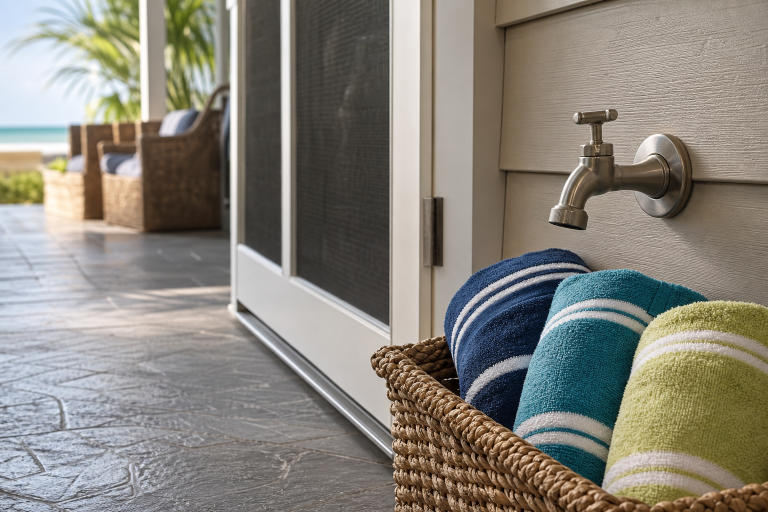
Useful Outdoor Features
- Covered seating for sun protection and light rain.
- Easy-clean flooring that handles sand and moisture.
- Lighting for safe evening movement.
- Storage for chairs, bikes, tools, and water gear.
- Outdoor faucets or rinse stations near active entry points.
4. Select Coastal-Ready Materials
Salt air, humidity, heat, wind, and bright sun can be demanding on a home. Choose materials based on performance, repairability, and realistic maintenance requirements, not just a product label. Ask for specifications, warranties, recommended cleaning methods, and installation details.
Material Areas To Review
- Exterior finishes: Look for moisture resistance and color stability.
- Roofing: Review wind ratings, fastening methods, and service life.
- Windows and doors: Compare seals, glazing, shading, and protection options.
- Hardware: Select finishes suited to salty, humid conditions.
- Flooring: Favor surfaces that tolerate water, sand, and regular cleaning.
5. Plan For Heat, Wind, And Water
Weather planning should shape site decisions early. Grading, drainage paths, roof design, protected openings, elevated mechanical equipment, and backup power considerations all affect how a home performs during severe conditions. FEMA explains that coastal areas can have additional floodplain requirements related to waves, storm surge, and high-velocity water, so flood-zone details should be reviewed before finalizing a design. FEMA floodplain management guidance for property owners provides useful background for property owners.
Questions For Local Professionals
- Which flood zone and wind requirements apply to this lot?
- How will water move away from the home during heavy rain?
- Where should HVAC equipment, electrical components, and generators be located?
- Which upgrades go beyond the local minimum requirements?
- How could design choices affect insurance, permits, or resale?
Local codes, surveys, engineering, and permitting requirements should guide final decisions. General planning advice is useful, but it cannot replace site-specific professional direction.
6. Make Maintenance Simple
Coastal durability also depends on how easy a home is to inspect and care for. Include accessible hose connections, washable entry surfaces, replaceable screens, reachable filters, and protected storage for seasonal items. Create a calendar for roof and drainage checks, exterior washing, caulk inspection, pest control, and air-conditioning service. Preparing before a storm is also important, and the National Weather Service hurricane planning guide recommends understanding a home's exposure to storm surge, flooding, and wind.
7. Add Flexible Rooms
Flexible spaces help a home stay useful as routines change. A study can become a guest room, a spare bedroom can support hobbies or exercise, and a well-sized hallway can make daily movement easier. Use neutral finishes, practical lighting, outlets in multiple locations, and storage that can adapt to different furniture arrangements. Flexibility is usually the result of good proportions, not simply more square footage.
8. Review Costs Before Building
A complete coastal budget includes more than the structure itself. Account for site preparation, drainage, surveys, permits, weather-related upgrades, landscaping, patios, screens, utilities, insurance considerations, and a contingency fund. When comparing options, weigh both the upfront price and the likely long-term benefit. An upgrade that improves comfort and reduces future repairs may offer more value than a purely decorative feature.
9. Use A Practical Planning Checklist
- Write down daily routines, hobbies, and storage needs.
- Set a total project budget that includes site work and contingency funds.
- Review flood, wind, drainage, access, and permitting conditions.
- Choose a floor plan that supports privacy and easy movement.
- Connect indoor living areas to useful, shaded outdoor spaces.
- Compare materials for durability, cleaning, and repair needs.
- Plan equipment, towels, shoes, and seasonal storage early.
- Include at least one adaptable room or living area.
- Ask how major decisions could affect insurance and resale.
- Build a maintenance plan before construction begins.
Conclusion
A well-planned coastal home feels relaxed because it works hard behind the scenes. It supports everyday routines, handles local conditions, welcomes outdoor living, and limits unnecessary maintenance. By making decisions through the lens of daily life, homeowners can create a coastal home that remains comfortable, resilient, and useful for years to come.

FOLLOW ME ON SOCIAL MEDIA


No comments:
Post a Comment
I love reading and responding to comments but in order to get my reply you must ensure you are NOT a no-reply blogger. If you are, here are some quick steps to change that!
1. Go to the home page of your Blogger account.
2. Select the drop down beside your name on the top right corner and choose Blogger Profile.
3. Select Edit Profile at the top right.
4. Select the Show My Email Address box.
5. Hit Save Profile.