

Key Takeaways
- Attic heat reaches living spaces through radiation, conduction, moving air, and air leaks.
- Insulation, air sealing, ventilation, and reflective materials each perform different jobs.
- Radiant barriers are generally most useful where strong summer sun and cooling demand are major concerns.
- Roof leaks, moisture issues, and open ceiling penetrations should be addressed before adding new attic materials.
- Attic ducts deserve attention because hot ambient air can increase cooling-system strain.
Mansfield homeowners know how quickly a sunny North Texas afternoon can turn an upstairs room uncomfortable. The roof absorbs solar energy, the attic heats up, and that heat can work its way toward the rooms below. A properly planned radiant barrier installation can be useful in the right attic, but it works best as one part of a complete strategy.
The right priority depends on the home's roof exposure, insulation level, ventilation paths, duct location, and air leaks. Rather than expecting one material to solve every problem, homeowners in Mansfield, Texas, can achieve better comfort by first identifying how heat enters the house.
Why Attics Get So Hot
In Mansfield, a roof under direct sunlight can transfer substantial heat into the attic before the hottest part of the day has passed. Roof color, roof shape, shade from trees, outdoor temperature, and the direction of the roof plane all affect attic conditions. A bedroom below a west-facing roof may remain warm into the evening because the attic and ceiling materials release stored heat gradually.
The attic is meant to buffer the roof from conditioned rooms. When insulation is thin, uneven, compressed, or bypassed by gaps, that buffer becomes less effective. Homes with air-handling equipment or ducts in the attic can face an additional challenge because the cooling system operates in a very hot environment.
For attics with bare spots or settled coverage, blown-in attic insulation can help create more continuous coverage across the attic floor, provided air leaks and moisture concerns are handled first.
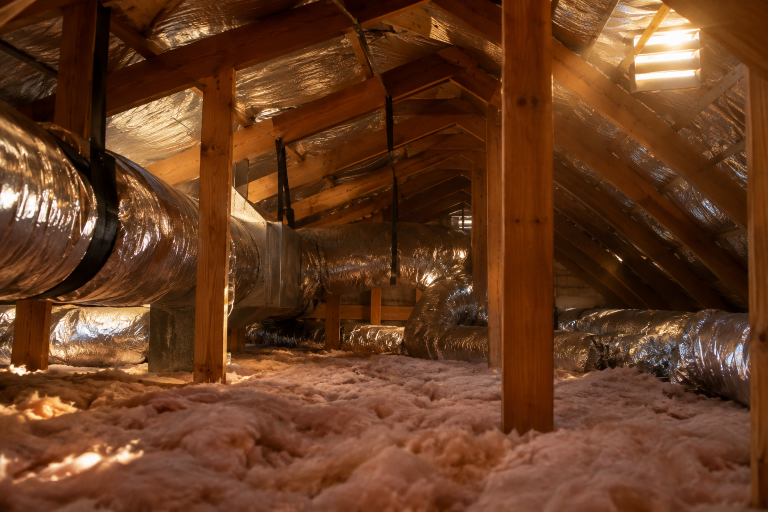
The Four Ways Heat Moves
Radiation
Radiant heat travels across open space from a hotter surface to a cooler one. In an attic, the underside of hot roof decking can radiate heat toward insulation, framing, ducts, and ceiling surfaces. Reflective systems are designed for this specific form of heat movement, not for every source of unwanted heat.
Conduction
Conduction is the transfer of heat through solid materials, including roof decking, framing, drywall, metal ductwork, and insulation. Bulk insulation slows conductive heat flow between the hot attic and the conditioned home below.
Convection
Convection occurs when warm air moves. Hot attic air rises, circulates, and can leave through properly designed exhaust openings while outdoor air enters through intake openings. This is why clear ventilation paths matter.
Air Leakage
Air leaks connect the attic directly to the living space. Common locations include attic hatches, plumbing and wiring penetrations, recessed fixtures, duct openings, and gaps around framing. Sealing these locations helps prevent conditioned air from escaping and attic air from entering the home.
What Attic Insulation Can and Cannot Do
Attic insulation is rated by R-value, which describes resistance to heat flow. It can slow heat moving through the ceiling assembly, but it does not automatically stop air leakage, correct roof leaks, or remove moisture. Uneven coverage, wet insulation, visible gaps, room-to-room temperature differences, and unexpectedly high summer cooling use are all reasons to inspect the attic.
A strong attic system usually combines air sealing, adequate insulation, moisture control, and ventilation. Skipping one of those pieces can limit the value of the others.
Where Reflective Materials Fit
Reflective attic materials are commonly foil-faced products installed so that a reflective face borders an air space. They can be especially relevant for Mansfield homes with intense summer sun, broad unshaded roof areas, and ducts or HVAC equipment located in the attic. The reflective systems that address radiant heat guidance from the Building America Solution Center note that performance depends on insulation level and geographic location.
That distinction matters. The same guidance reports that a radiant barrier can reduce attic-to-house heat flow by about 40 percent, but this does not equal a 40 percent reduction in whole-home energy use. In suitable warm climates like Mansfield's, the related reduction in annual cooling costs is often estimated at 8 to 12 percent. Results vary with the home, attic layout, insulation, ducts, and local weather.
Results may be smaller in homes that already have high insulation levels, limited attic heat gain, or poorly installed material. A barrier should not block soffit or ridge ventilation, nor should it be installed as a substitute for correcting major leaks or moisture problems.
The Role of Attic Ventilation
Ventilation can help move warm, moist air through a vented attic, but it does not replace insulation or air sealing. Intake vents near the soffits need a clear path, and exhaust openings near the ridge or gable need to work with that intake. Insulation baffles can help keep loose-fill material from blocking soffit openings.
Bathroom and kitchen fans should exhaust outdoors, not into the attic. Water stains, damp insulation, mold-like odors, or active roof leaks should be evaluated before installing new insulation or reflective material.
A Practical Upgrade Order
- Repair roof leaks and resolve moisture sources.
- Inspect existing insulation for gaps, damage, and uneven depth.
- Seal major openings between the attic and living space.
- Confirm that soffit intake and upper exhaust paths remain open.
- Improve insulation coverage for the home's design and climate needs.
- Seal and insulate accessible attic ductwork where appropriate.
- Consider a radiant barrier when strong solar gain remains a meaningful issue.
Why Mansfield, Texas Climate Matters
Mansfield's hot summers make solar heat gain a practical concern, especially for homes with long afternoon sun exposure and high cooling demand. Reflective materials can be more relevant here than in cold climates, where preventing winter heat loss through air sealing and deeper insulation is often the larger priority. The need for an air space beside a reflective surface is an important installation principle in warm-climate attic design.
Common Attic Upgrade Mistakes
- Expecting one product to solve air leakage, insulation, and ventilation problems.
- Covering soffit vents with insulation.
- Ignoring water damage or condensation.
- Leaving leaky ducts in a hot attic.
- Relying on broad savings promises instead of an attic inspection.
- Working in extreme heat without protective equipment and a safe exit plan.
Questions to Ask Before Starting
- Is the main issue radiant heat, insufficient insulation, air leakage, or moisture?
- Are ducts or HVAC equipment located in the attic?
- Are the ventilation intake and exhaust paths clear?
- Will a proposed reflective material have an appropriate airspace?
- Would air sealing or insulation provide greater value first?
- How will comfort and energy-use changes be evaluated after the work is complete?
Build a Complete Attic Plan for Mansfield, Texas Homes
For Mansfield, Texas homes, attic performance is about the whole system. Insulation slows conductive heat flow, air sealing closes direct pathways, ventilation helps manage attic air, and radiant barriers can reduce solar-driven heat gain under suitable conditions. A careful inspection and staged plan can improve comfort, support efficient cooling, and help prevent minor attic problems from becoming more expensive repairs.

FOLLOW ME ON SOCIAL MEDIA


No comments:
Post a Comment
I love reading and responding to comments but in order to get my reply you must ensure you are NOT a no-reply blogger. If you are, here are some quick steps to change that!
1. Go to the home page of your Blogger account.
2. Select the drop down beside your name on the top right corner and choose Blogger Profile.
3. Select Edit Profile at the top right.
4. Select the Show My Email Address box.
5. Hit Save Profile.