


We understand this challenge. That is why we are looking at the Modern Real Estate Market. We will explore the latest trends and what they mean for you.
We will dive into the economic forces shaping housing. We will look at the pros and cons of both buying and renting. We will also examine how different areas of the country are doing. For example, in many cities, flexible options such as modern Detroit furnished rentals are becoming more popular. This gives people more choices.
Our goal is to give you clear facts. We want to help you make the best choice for your personal and financial situation. Let's explore today's real estate options together.
The current real estate landscape is marked by a complex interplay of economic factors, demographic shifts, and evolving consumer preferences. Affordability remains a central challenge, exacerbated by fluctuating interest rates and a persistent supply deficit in many regions. This environment forces many to confront the fundamental rent vs. buy dilemma, a decision that hinges not only on market conditions but also on personal financial readiness and long-term goals. Understanding the nuances of this modern market is crucial for making an informed choice.
The Economic Climate Influencing Your Choice
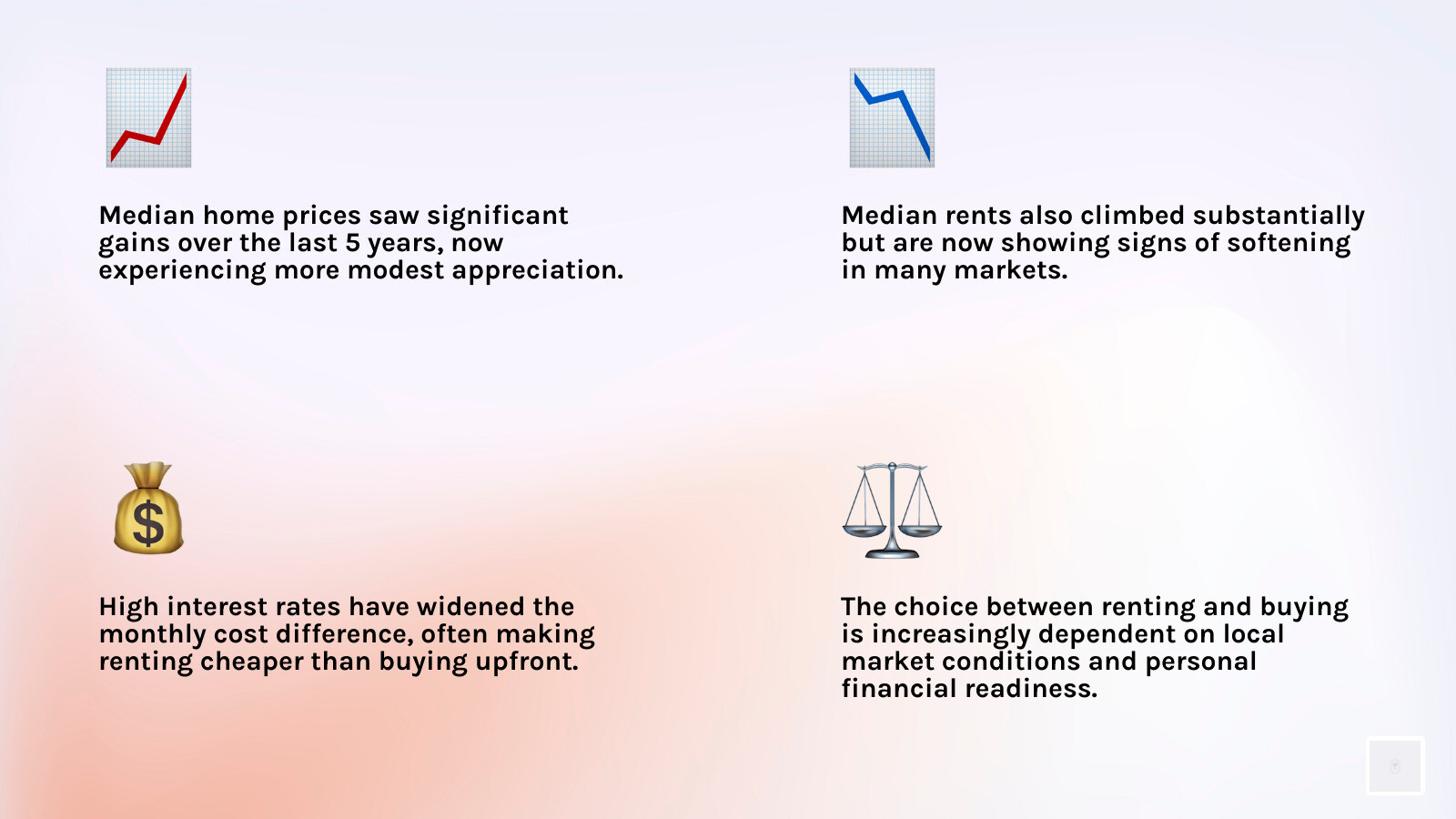
The global and national economic climate plays a pivotal role in shaping the modern real estate market, directly impacting both buying and renting decisions. We are currently navigating a period of significant economic uncertainty, influenced by factors ranging from inflation trends to geopolitical shifts. Interest rate forecasts, in particular, are a dominant concern for prospective homebuyers, as they directly affect mortgage affordability. The central bank's monetary policy, aimed at controlling inflation, has led to higher borrowing costs, which, in turn, influence consumer spending and overall economic growth.
GDP growth projections, while generally positive for Canada and the U.S. in the medium term, are tempered by potential headwinds. For instance, Canada's economic outlook is significantly influenced by potential U.S. trade policies and tariffs, which could introduce investment uncertainty, weaken the Canadian dollar, and impact export revenues. Reduced immigration targets in Canada for 2025-2027 are also expected to lead to slower population growth and, consequently, lower economic activity. Unemployment rates are a key indicator, with Canada expecting a rise until mid-2025 before stabilizing. These broader economic trends trickle down to the housing market, affecting job security, income growth, and consumer confidence.
Government policies, including changes to mortgage rules, are also designed to steer the market. In Canada, for example, new mortgage rules introduced in 2024 are expected to open up pent-up demand from homebuyers previously priced out of the market. This demonstrates how policy adjustments can directly influence activity levels and affordability.
How Economic Factors Impact Buyers
For potential homebuyers, the economic climate directly dictates mortgage qualification and monthly payment calculations. Higher interest rates, such as the 5-year fixed mortgage rate forecast at 5.5% in Canada for 2025, significantly increase the cost of borrowing, reducing buyer purchasing power. A one percentage-point drop in mortgage rates, for instance, can expand the pool of eligible buyers by millions, underscoring the market's sensitivity to interest rate movements. This environment has created significant "pent-up demand" as many potential buyers wait for more favorable borrowing conditions. Despite these challenges, the long-term potential for equity building remains a powerful incentive for homeownership, offering a hedge against inflation and a path to wealth accumulation. However, the initial financial hurdle is considerable, with the required income to afford a median-priced U.S. home having jumped by nearly $47,000 since 2019, making affordability a primary concern.
How Economic Factors Impact Renters
Renters are not immune to these economic shifts. Inflation directly impacts disposable income, making it harder to save for a down payment or manage rising living costs. While rental affordability has been a major challenge, the market is showing signs of rebalancing. Record multifamily construction, particularly in the U.S., is increasing rental supply, which is expected to lead to slower rent increases and higher vacancy rates. This rebalancing could improve renter mobility, offering more choices and potentially more favorable lease terms. In Canada, the rental market is also expected to rebalance, with increased supply and slower rent increases, though affordability will take time to improve. For some, renting offers a cost-effective short-term solution, allowing them to defer the high upfront costs and ongoing responsibilities of homeownership while waiting for more stable economic conditions or more affordable buying opportunities. The ability to move without the complexities of selling a property offers a degree of flexibility highly valued in uncertain times.
The Case for Buying in the Modern Real Estate Market
Despite the prevailing economic headwinds, the case for buying in the modern real estate market remains compelling for many, driven by strong demographic forces and the promise of long-term financial stability. Millennials, many of whom are first-time buyers, remain a key demographic driving housing demand, often prioritizing proximity to jobs as remote work trends evolve. We also observe a growing segment of single female buyers and Baby Boomers downsizing or relocating, further driving market activity.
Economists project a modest but steady recovery in home sales. In the U.S., home sales are expected to increase by about 14% nationwide in 2026, accompanied by modest home price appreciation of 2% to 3%. Crucially, wage growth is generally expected to outpace home price growth, gradually improving affordability over time. While the market may not be "off to the races," this period of rebalancing offers opportunities for buyers who are financially prepared and strategic in their approach.

Navigating Supply and Demand as a Buyer
One of the most significant challenges in the modern real estate market is the persistent housing supply deficit. The housing stock in many areas is simply not large enough for the current population, creating a structural imbalance. While inventory levels have been recovering, rising 31.5% year-over-year in May 2025, they still remain about 14% below pre-pandemic levels nationally. This slow inventory recovery means buyers often face limited choices.
An interesting dynamic has emerged between new and existing home prices. In some instances, the median resale home price is higher than the median price of a newly built home. This unusual trend is often attributed to builder incentives, such as mortgage rate buydowns or price cuts, and the geography of new construction, which often occurs in more affordable, developing areas. New construction plays a vital role in addressing the supply deficit, and builders are increasingly focusing on smaller, more affordable home types, such as townhomes and rowhomes. For buyers, this means exploring new construction might offer more favorable pricing or incentives than the existing home market. Gaining modern real estate insights for your target area can provide a significant advantage, helping you identify these specific opportunities and understand local market nuances.
Long-Term Wealth and Stability
The enduring appeal of homeownership lies in its potential to create long-term wealth and provide stability. Building equity over time is a primary financial benefit, as mortgage payments contribute to an appreciating asset rather than disappearing into rent. Homeowners also benefit from fixed housing costs, particularly with a fixed-rate mortgage, which can provide predictability against inflation, unlike rising rental rates.
Beyond financial gains, homeownership offers a unique sense of stability and the freedom to personalize a house into a home tailored to individual needs and tastes. It acts as a significant hedge against inflation, as property values tend to rise with the cost of living, preserving purchasing power. While the initial investment can be substantial, the long-term financial and personal rewards often outweigh the short-term challenges, making homeownership a cornerstone of many individuals' financial plans.
The Compelling Argument for Renting Today
While homeownership offers long-term benefits, the modern real estate market makes a compelling case for renting, especially for those who prioritize flexibility, lower upfront costs, and freedom from maintenance responsibilities. The current economic climate, marked by high mortgage rates and rising home prices, makes renting a more affordable option for many.
Renting provides unparalleled flexibility and mobility, allowing individuals to relocate easily for job opportunities, family needs, or simply a change of scenery, without the complexities and costs of selling a property. The upfront costs are significantly lower, typically limited to a security deposit and first month's rent, compared to the substantial down payments, closing costs, and moving expenses involved in buying a home. Renters are also spared the burden of property taxes, homeowners insurance, and the often-unpredictable costs of maintenance and repairs, which are typically covered by the landlord. Furthermore, many rental properties, especially in newer developments, offer access to a wide array of amenities like fitness centers, pools, and communal spaces, enhancing lifestyle without additional ownership costs.
The rental market itself is undergoing a rebalancing. Record multifamily construction has led to an increased supply of rental units, contributing to rising vacancy rates and softening rent growth in many areas. This shift is creating a more favorable environment for renters, offering more choices and potentially greater bargaining power.
Understanding Today's Rental Landscape
Today's rental landscape is characterized by a significant influx of new supply. Record multifamily construction, particularly in the U.S., has substantially increased the rental-unit inventory. This surge in supply has begun to outpace demand in many regions, leading to higher vacancy rates and regional rent declines, particularly in the South and West. This trend suggests improved renter bargaining power and a wider array of choices.
Renters now have more options than ever, ranging from basic, functional units to luxurious, amenity-rich living spaces. For instance, options extend from standard apartments to modern real estate luxury apartments that offer premium finishes, advanced smart home technology, and extensive communal facilities. This diversification means renters can often find a living situation that perfectly matches their lifestyle and budget, without the long-term commitment of a mortgage. As the rental market rebalances, we expect to see continued relief for renters, making it an increasingly attractive option for those seeking quality housing without the burdens of ownership.
The Financials of Renting in the Modern Real Estate Market
From a purely financial perspective, renting in the modern real estate market can offer several advantages. Renters avoid significant ownership costs such as property taxes, homeowners' insurance, and potential HOA fees. In many markets, the monthly cash outflow for rent is lower than a comparable mortgage payment, especially with current high interest rates. This difference can free up capital for investment elsewhere, potentially yielding returns that outpace the equity growth in a home, particularly in a slower-appreciating market.
By avoiding the large down payment required for buying, renters can maintain greater liquidity and financial flexibility. This capital can be used for other investments, retirement savings, or emergency funds. Renting also insulates individuals from the risks of market volatility, such as depreciation in property values or unexpected repair costs. While a home can be a valuable asset, it is not always the most liquid. Renters, therefore, benefit from a predictable monthly housing expense and the ability to adapt quickly to changing financial circumstances or market conditions. Using a rent vs. buy calculator can provide a personalized financial analysis, helping individuals determine which option makes the most sense for their specific situation.
Navigating Regional Divergence and Finding Opportunity
The modern real estate market is far from monolithic; it is a fragmented landscape characterized by stark regional differences across both the U.S. and Canada. There is no single national market; rather, a collection of diverse local markets, each with its own unique dynamics of supply, demand, and price growth. This regional divergence means that opportunities and challenges vary significantly across locations.
For instance, inventory recovery trends show a clear split: while the West and South in the U.S. have seen stronger rebounds in active listings, the Northeast and Midwest continue to lag behind pre-pandemic inventory levels. This imbalance directly impacts price growth, with some regions experiencing modest appreciation while others face price stagnation or even declines. Understanding these localized trends is paramount for anyone looking to make a real estate decision.
The Rise of 'Refuge Markets' and Affordability Havens
In response to historically poor affordability in many major metropolitan areas, a phenomenon known as 'refuge markets' has emerged. These are traditionally more affordable metros where homeownership remains financially feasible, attracting buyers migrating from higher-cost regions. This buyer migration contributes to the price resilience seen in some Midwest and Northeast markets, even as other regions experience softening.
We've observed price cuts in previously overheated markets like Phoenix, Tampa, and Austin, indicating a shift in seller expectations and a move towards more balanced conditions. Similarly, the time homes spend on the market has lengthened in some regions, offering buyers more leverage. This dynamic highlights the importance of local market analysis. Exploring flexible options, such as Modern Detroit furnished rentals in recovering cities, can be an excellent strategy for individuals or businesses looking to enter or test these emerging markets without the immediate commitment of a purchase. Such rentals provide a comfortable, ready-to-move-in solution, allowing for careful market observation before making a long-term investment.
A Closer Look at the Modern Real Estate Market in Key Regions
Examining specific regions further illustrates this divergence. In Canada, more affordable regions like Alberta and Quebec are expected to lead the recovery in housing prices and sales, with sales potentially reaching historically high levels. In contrast, Ontario and British Columbia, particularly the Greater Toronto Area and Vancouver, have experienced weaker markets, with sales comparable to those during the global financial crisis. British Columbia's 20% tax on house flipping, effective January 2025, further contributes to its market dynamics.
U.S. regional performance also varies widely. While national median list prices have remained relatively flat, the price per square foot has shown slight increases overall, with stronger growth in the Northeast and Midwest. Conversely, the South and West have seen slight declines in price per square foot in some periods. Local new construction plays a critical role; metros that have built more housing since 2019 generally show stronger inventory recoveries. Local job market strength and income growth also significantly influence housing demand and affordability.
Here are examples of U.S. metros that have shown strong year-over-year median list price growth in recent reports:
- Providence, RI
- Baltimore, MD
- Cleveland, OH
- Virginia Beach, VA
- Grand Rapids, MI
These examples underscore that even in a broadly rebalancing market, specific areas continue to demonstrate robust growth, often driven by a combination of relative affordability, job opportunities, and more constrained supply.
Frequently Asked Questions about Today's Market
Navigating the complexities of the modern real estate market often raises common questions about prices, affordability, and market dynamics. We aim to address some of the most pressing concerns here, drawing on current data and expert projections.
Will housing prices drop in 2026?
Economists generally do not anticipate a significant drop in housing prices in 2026. Instead, the consensus points to modest price appreciation, typically in the range of 2% to 3% nationwide. While nominal prices are expected to rise, "real" prices (adjusted for inflation) may decline slightly for a second consecutive year. This means that while the dollar value of homes might increase, their purchasing power relative to other goods and services could decrease slightly.
It's crucial to remember that regional variations will exist, with some markets potentially seeing stronger growth and others experiencing stagnation or minor corrections. The underlying housing supply deficit and ongoing demographic demand, particularly from Millennials, suggest that a major market crash is unlikely. Instead, we anticipate a continued rebalancing, with price growth moderating to more sustainable levels.
Is it cheaper to rent or buy right now?
The question of whether it's cheaper to rent or buy depends heavily on individual circumstances, local market conditions, and the time horizon of the decision. In many major metropolitan areas, renting is currently cheaper on a monthly basis, especially given the lifted mortgage rates. The typical monthly payment to buy the median-priced home increased significantly over the past few years, making renting a more financially accessible option in the short term.
However, buying can offer long-term financial benefits due to equity accumulation, tax benefits, and the potential for appreciation. Homeownership also provides stability against rising rental costs. For those considering a move within the next few years, renting offers flexibility and avoids the transaction costs associated with buying and selling. We recommend using a rent vs. buy calculator to conduct a personalized analysis, factoring in your specific income, savings, anticipated duration in a location, and local market trends to make an informed decision.
What is the 'rate lock-in' effect, and how does it impact inventory?
The "rate lock-in" effect is a significant phenomenon currently impacting housing inventory. It refers to the situation where a large number of existing homeowners have secured historically low mortgage rates, often below 6%, during periods of lower interest rates. With current mortgage rates being significantly higher (e.g., averaging 6.3% in 2026), these homeowners are hesitant to sell their properties. Moving would mean trading their low-rate mortgage for a new, much higher-rate mortgage, substantially increasing their monthly housing costs.
This reluctance to sell directly limits the supply of existing homes available on the market, contributing to the persistent inventory shortage. Even as new listings slowly increase, the overall supply remains constrained because many potential sellers are "locked in" by their favorable rates. Consequently, the primary drivers for these locked-in sellers to move are often life-changing events such as job relocation, family growth or downsizing, or other significant personal circumstances, rather than market-driven incentives. This effect is a major factor in why inventory recovery, despite year-over-year gains, remains below pre-pandemic norms.
Conclusion: Making the Right Choice for You
The modern real estate market, with its intricate web of economic forces, demographic shifts, and regional variations, presents a complex landscape for both renters and prospective buyers. We've explored the economic climate, the compelling arguments for buying, and the equally valid reasons to rent, emphasizing that there is truly no one-size-fits-all answer to the rent vs. buy dilemma.
The decision is deeply personal and financial. It requires a careful weighing of flexibility against stability, an honest assessment of your financial readiness, and a clear understanding of your long-term goals. Do you prioritize the mobility and lower upfront costs of renting, or the equity building and stability of homeownership? Your chosen location also plays a critical role, as market conditions can differ dramatically from one city or region to another.
What is clear is that the market is rebalancing. While challenges like affordability and inventory shortages persist, opportunities are emerging for both renters and buyers who approach the market with knowledge and strategy. Whether you choose to invest in a home or take advantage of the flexibility of renting, understanding these dynamics will empower you to make the decision that best aligns with your aspirations and financial well-being.

FOLLOW ME ON SOCIAL MEDIA


No comments:
Post a Comment
I love reading and responding to comments but in order to get my reply you must ensure you are NOT a no-reply blogger. If you are, here are some quick steps to change that!
1. Go to the home page of your Blogger account.
2. Select the drop down beside your name on the top right corner and choose Blogger Profile.
3. Select Edit Profile at the top right.
4. Select the Show My Email Address box.
5. Hit Save Profile.