

Table of Contents
- Treatment Overview
- Effectiveness
- Comfort and Aesthetics
- Maintenance and Lifestyle
- Cost Considerations
- Treatment Duration
- Suitability for Different Cases
- Conclusion
Choosing between traditional braces and Invisalign can feel overwhelming. Each treatment offers unique advantages and serves different needs in achieving a healthier, more confident smile. Whether you are an adult concerned with aesthetics or a teen focused on results, it helps to have the right information before making a decision. For those in Colorado who need guidance on their options, consulting an Orthodontist Denver is a great first step. Both methods are designed to correct misaligned teeth and improve oral health, but they use very different approaches. Below, you will find a comprehensive guide to the similarities and differences of braces and Invisalign, covering effectiveness, comfort, lifestyle, cost, and more.
Treatment Overview
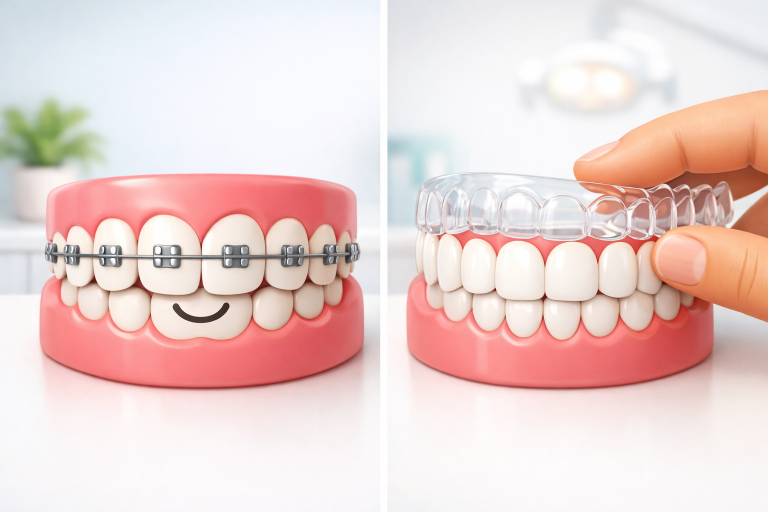
Traditional braces consist of metal brackets that are bonded to each tooth. Orthodontists connect these brackets using metal wires, which they periodically tighten or adjust to move teeth into better alignment over time. The process is visible and fixed in place until the end of treatment. In contrast, Invisalign uses a series of custom-made, transparent aligners. Each aligner is designed to fit snugly over your teeth and gently shift them into new positions. These aligners are removable, making them a discreet option for those who want minimal interference with their appearance and daily routine.
Effectiveness
Both traditional braces and Invisalign can successfully treat a variety of orthodontic issues, including crowding, gaps, and certain bite problems. However, braces are often considered more effective for complex cases, such as significant bite corrections or severe crowding. According to the Healthline medical review, braces have an edge when it comes to moving teeth vertically and rotating them to exact angles, which is why they are preferred for more severe orthodontic concerns. Invisalign is proven effective for mild to moderate alignment issues. Recent studies, including research found in the Journal of Orthodontics, indicate that while Invisalign may not be suitable for every case, it achieves comparable success rates in patients with less complex needs. Ultimately, your orthodontist will determine which method is best for your case.
Comfort and Aesthetics
One of the main draws of Invisalign is its nearly invisible design. The medical-grade plastic aligners are smooth and fitted, causing less irritation to the cheeks and gums than the metal brackets and wires of braces. Many people choose Invisalign because they want a treatment option that is both unobtrusive and comfortable. While modern braces have improved over the years with options like ceramic brackets, they are still more visible than aligners. Braces may cause initial discomfort, especially after adjustments, as the metal components can rub against the soft tissues of the mouth. However, some patients adapt quickly and find braces reasonably comfortable throughout their treatment.
Maintenance and Lifestyle
Care and maintenance routines differ significantly between braces and Invisalign. Since Invisalign aligners can be removed, patients can easily clean both their teeth and the aligners, helping reduce the risk of cavities and gum issues. There are no restrictions on food choices, and you can eat your regular meals after removing the aligners. However, success with Invisalign depends on the discipline to wear the trays for 20 to 22 hours each day. Braces, being fixed, take away the responsibility of wear time. On the other hand, they require extra care during oral hygiene routines. Flossing and brushing around brackets and wires can be more challenging, which may increase the risk of plaque buildup if not managed well. Patients also need to avoid hard, sticky, or chewy foods that could damage the brackets or wires.
Cost Considerations
The price of orthodontic treatment depends on the severity of the dental issue, expected treatment time, and where treatment is received. On average, both braces and Invisalign cost approximately $3,000 or more for a full course. Sometimes, Invisalign may cost a little extra because it requires multiple clear aligners. It is important to consult your orthodontist and check your dental insurance plan to determine which portion of the treatment, if any, is covered. The American Association of Orthodontists recommends reviewing payment options and insurance policies before starting treatment.
Treatment Duration
For most patients, Invisalign treatment lasts 12 to 18 months, depending on how closely the aligners are worn according to the prescribed guidelines. Traditional braces, due to their suitability for more complex dental issues, may require 18 to 24 months or longer. Regular visits to the orthodontist are necessary for both treatments to monitor progress and make adjustments as needed.
Suitability for Different Cases
Traditional braces are usually recommended for complex orthodontic cases, including severe crowding, substantial bite issues, and cases that require significant tooth movement or rotation. They can handle almost every orthodontic scenario, making them the gold standard in challenging cases. Invisalign is ideally suited for simple to moderate cases. These may include minor relapses after previous orthodontic treatment, small gaps, mild crowding, or moderate bite corrections. A comprehensive consultation with an orthodontist is required to determine whether Invisalign is appropriate for your treatment goals and dental anatomy.
Conclusion
Both braces and Invisalign offer effective solutions for a straighter, healthier smile, but each comes with its own pros and cons. Your choice will depend on the nature of your dental needs, your preference for visibility and comfort, your budget, and your daily habits. Personalized advice from a skilled orthodontist is essential for making the right decision and ensuring your journey to better oral health is as smooth and successful as possible.

FOLLOW ME ON SOCIAL MEDIA


No comments:
Post a Comment
I love reading and responding to comments but in order to get my reply you must ensure you are NOT a no-reply blogger. If you are, here are some quick steps to change that!
1. Go to the home page of your Blogger account.
2. Select the drop down beside your name on the top right corner and choose Blogger Profile.
3. Select Edit Profile at the top right.
4. Select the Show My Email Address box.
5. Hit Save Profile.