

Table of Contents
- Fostering Inclusive Leadership
- Implementing Innovative Pedagogical Approaches
- Prioritizing Social-Emotional Learning
- Leveraging Technology for Enhanced Learning
- Building Resilient School Cultures
- Encouraging Teacher Collaboration
- Integrating Student Support Resources
- Conclusion
With the right leadership strategies, schools can cultivate atmospheres where every student is empowered to reach their potential. Strategic leaders are not only administrators but also catalysts for positive change, inspiring educators and learners alike to embrace new challenges and opportunities for growth. Creating a robust learning environment means addressing diverse student needs, advancing effective teaching innovations, and building resilient systems that support holistic development.
Fostering Inclusive Leadership
Inclusive leadership is anchored in the belief that every student can succeed, regardless of background or circumstance. School leaders committed to inclusivity reimagine how educational resources are allocated, ensuring every learner receives equitable opportunities for success. This approach is rooted in social justice principles, meaning leaders must carefully examine and use disaggregated data to identify achievement gaps and remove barriers to learning for marginalized students.
Strategies for fostering inclusivity include diversifying instructional staff, creating culturally responsive curricula, and promoting open dialogue between educators, families, and communities. By engaging multiple perspectives, inclusive leaders help build trust and a sense of belonging throughout the school community. Developing this culture of equity benefits students and enriches educators' working environment.
Implementing Innovative Pedagogical Approaches
Innovative pedagogy is critical for maximizing student engagement and learning. Techniques such as problem-based learning, flipped classrooms, and collaborative group work enable students to take an active role in their education. These approaches are not just trends; research consistently demonstrates that innovative teaching fosters critical thinking, creativity, and deeper learning.
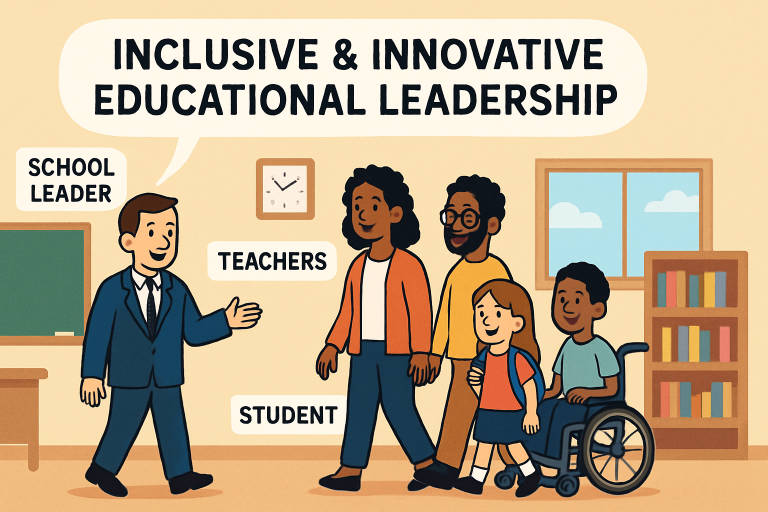
Leaders play a pivotal role by encouraging experimentation, providing professional development, and supporting the implementation of new methods. This confidence in pedagogical innovation creates a ripple effect, encouraging teachers to keep refining their practice and giving students the vital skills they need for the future.
Prioritizing Social-Emotional Learning
Integrating social-emotional learning (SEL) in schools is essential for student well-being. SEL helps students manage emotions, build resilience, maintain positive relationships, and make responsible decisions. Leaders who elevate SEL in their institutions create school cultures that prioritize nurturing students' mental and emotional health alongside academic growth.
Programs that train teachers in SEL strategies, establish peer support systems, and involve families in emotional wellness initiatives see stronger attendance rates, reduced behavioral issues, and improved academic results. By placing SEL at the forefront, educational leaders prepare students not just for academic assessments, but for life beyond school walls. The Edutopia resource hub offers valuable guidance on implementing SEL across grade levels.
Leveraging Technology for Enhanced Learning
The purposeful use of technology in classrooms can lead to more inclusive, personalized learning experiences. From virtual classrooms to adaptive learning software, technology expands access to resources and tailors instruction to student needs. School leaders are responsible for ensuring equitable access to devices and the internet, as well as for ongoing professional development to help teachers integrate new tools effectively.
While technology is not a cure-all, its thoughtful application can help close achievement gaps and foster student independence. Leaders must also be mindful of digital equity, coordinating efforts to ensure all families can fully participate in digital learning.
Building Resilient School Cultures
Resilient school cultures are defined by their ability to adapt quickly and endure change. Whether confronted by policy shifts, public health challenges, or crises, resilient leaders guide their communities with empathy, adaptability, and transparency. Structures that foster open communication, distributed leadership, and collective problem-solving help schools weather difficulties while continuing to prioritize student learning.
Encouraging innovation and resilience benefits not only students, who feel supported through changes, but also staff, who are empowered to be part of solution-oriented teams and ongoing school improvement efforts.
Encouraging Teacher Collaboration
Collaboration is vital for sustaining school improvement. Strong leaders build environments where teachers routinely share best practices, co-plan lessons, and offer one another constructive feedback. This collegial atmosphere leads to professional growth and higher teacher satisfaction. Regularly scheduled collaborative planning sessions, interdisciplinary projects, and peer observation programs are all effective strategies for fostering teamwork.
Schools where teachers feel heard and valued show lower turnover rates and better student outcomes. As shared purpose grows among educators, the entire school community benefits.
Integrating Student Support Resources
Academic success is influenced by the broader context of a student's life. Leaders who address external barriers such as mental health, housing insecurity, or access to nutritious food are better positioned to support student achievement. Effective educational leaders build strong partnerships with local organizations, mental health professionals, and social service agencies to ensure students and families have the support they need.
Comprehensive support networks directly contribute to positive academic, social, and emotional outcomes for all students, especially those facing systemic disadvantages.
Conclusion
Strong educational leadership is foundational in building learning environments where students are engaged, challenged, and supported. By implementing inclusive practices, fostering a culture of innovation and resilience, and integrating holistic support systems, educational leaders can guide their schools toward sustained success. Pursuing advanced leadership training and staying informed about evidence-based strategies will ensure that leaders continue to drive growth and excellence in education.

FOLLOW ME ON SOCIAL MEDIA


No comments:
Post a Comment
I love reading and responding to comments but in order to get my reply you must ensure you are NOT a no-reply blogger. If you are, here are some quick steps to change that!
1. Go to the home page of your Blogger account.
2. Select the drop down beside your name on the top right corner and choose Blogger Profile.
3. Select Edit Profile at the top right.
4. Select the Show My Email Address box.
5. Hit Save Profile.