

Table of Contents
- Improved Health Outcomes
- Enhanced Preventive Care
- Reduced Healthcare Costs
- Better Management of Chronic Conditions
- Increased Patient Satisfaction
- Strengthened Patient-Provider Relationship
- Conclusion
Establishing and maintaining a long-term relationship with a primary care provider (PCP) brings remarkable benefits to individuals, families, and communities alike. Not only does continuous primary care support better health outcomes, but it also leads to efficient management of both acute and chronic illnesses, ultimately reducing healthcare spending. For those searching for trusted healthcare professionals, Springfield NJ Doctors are available to provide comprehensive care, prioritizing continuity for the best patient experience.
By routinely visiting the same healthcare provider, patients receive attentive personalized care that addresses not only immediate health needs but also emphasizes prevention. From early detection of conditions to fostering clear, open communication, continuous care with a dedicated PCP can dramatically improve overall wellbeing and quality of life.
Improved Health Outcomes
Continuity with the same PCP over time is strongly linked to better health outcomes. When patients consistently visit their provider, they benefit from a doctor who is familiar with their personal and family medical history, enabling more accurate diagnoses and tailored treatment plans. A study published in the journal JAMA Internal Medicine found that ongoing relationships with primary care providers were associated with reduced mortality rates among patients. By monitoring health on an ongoing basis rather than reacting to emergencies, PCPs play a crucial role in promoting long-term wellness.
The deep understanding fostered in these relationships helps healthcare professionals notice subtle changes in patients' health that may otherwise go undetected in urgent or sporadic care situations. This proactive, preventive approach can catch diseases early when they're most treatable, directly leading to better outcomes and a higher quality of life.
Enhanced Preventive Care
Preventive healthcare is one of the hallmarks of effective primary care. Regular screenings, vaccinations, and wellness checks become much more reliable when conducted under continuous care. A report from the Centers for Medicare & Medicaid Services (CMS) highlights that adults with an established PCP receive significantly more preventive services, such as blood pressure and cholesterol screenings, compared to those without a designated primary care provider. Receiving consistent guidance on healthy behaviors and timely screenings helps identify health risks at earlier, manageable stages and reduces the development of more severe medical conditions.
Furthermore, PCPs are well-equipped to give patients personalized recommendations based on their habits, family history, and existing risk factors, resulting in a targeted and comprehensive preventive care strategy. This guidance can make a considerable difference for vulnerable populations and those managing multiple risk factors.
Reduced Healthcare Costs
Healthcare expenses can quickly spiral out of control without a coordinated approach. Continuity in primary care leads to fewer trips to the emergency room and hospital admissions, as patients’ issues are addressed before escalating. Consistent primary care visits correlated with substantially lower total healthcare costs, stemming from better medication management, regular monitoring, and effective chronic disease control. When physicians are familiar with patients' health backgrounds, they can avoid duplicate tests, unnecessary procedures, and costly specialist referrals.
Employers and insurance companies also recognize the value of investing in continuous primary care, as it can translate to fewer days missed at work and reduced insurance premiums for both parties.
Better Management of Chronic Conditions
Chronic conditions such as diabetes, hypertension, and heart disease require ongoing attention and adaptive management strategies. Patients who regularly see the same PCP tend to have better control over these long-term illnesses. Coordination with digital tools and remote monitoring can further enhance care for patients in rural or underserved areas, bolstering the role of primary care. Recent research from the National Institutes of Health indicates that continuous primary care, bolstered by supportive technologies, is linked to improved disease indicators and overall progress in managing chronic diseases.
Personalized care plans and consistent monitoring by a familiar provider ensure that chronic illnesses are managed with attention, precision, and compassion, ultimately leading to an improved quality of life and a decreased risk of complications.
Increased Patient Satisfaction
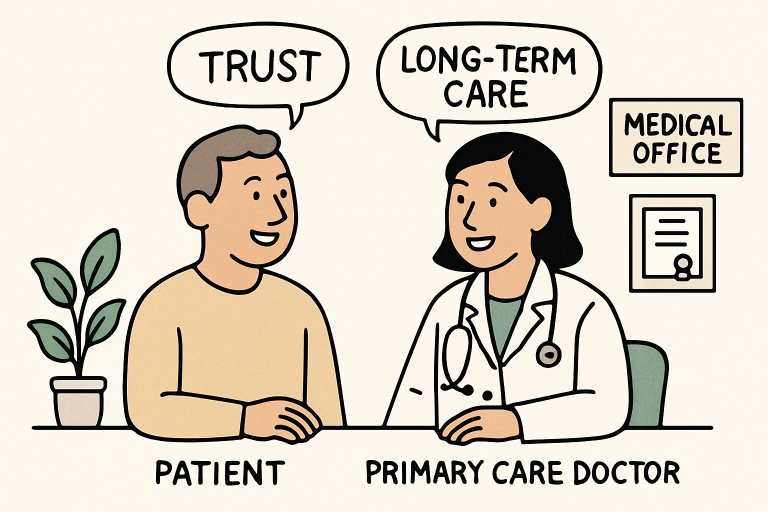
Building a relationship with a trusted physician significantly increases patient satisfaction. When patients feel heard and understood, they are more likely to follow through with treatment recommendations, medications, and lifestyle changes. This trust is fostered by familiarity, open communication, and a shared understanding that develops over time through ongoing, regular visits.
Studies have highlighted that greater patient-provider continuity also reduces anxiety, enhances trust, and makes the entire healthcare experience less intimidating. Satisfied patients are more engaged in their own care, which leads to better health outcomes and a more positive outlook on their treatment journey.
Strengthened Patient-Provider Relationship
Regular interactions with the same PCP help build a robust patient-provider relationship. This connection goes beyond diagnosing diseases; it encompasses an understanding of the patient’s lifestyle, preferences, concerns, and health goals. These factors are critical when developing individualized care plans and setting achievable health targets.
A strong relationship with a healthcare provider can motivate patients to take charge of their health while ensuring that the advice received is both practical and personalized. Such relationships contribute to an overall cohesive approach to health, enabling providers to support patients in achieving their fullest potential.
Conclusion
The advantages of continuous primary care reach well beyond immediate medical needs. By committing to regular visits with a trusted provider, patients benefit from improved health outcomes, personalized preventive strategies, better management of chronic illnesses, reduced healthcare expenses, and higher satisfaction with their care. Prioritizing continuity in primary care lays a solid foundation for lifelong health, well-being, and a positive healthcare journey for patients and their families.

FOLLOW ME ON SOCIAL MEDIA


No comments:
Post a Comment
I love reading and responding to comments but in order to get my reply you must ensure you are NOT a no-reply blogger. If you are, here are some quick steps to change that!
1. Go to the home page of your Blogger account.
2. Select the drop down beside your name on the top right corner and choose Blogger Profile.
3. Select Edit Profile at the top right.
4. Select the Show My Email Address box.
5. Hit Save Profile.