

Key Takeaways
- Advanced technologies, such as AI and robotics, are transforming warehouse operations, providing agile responses to business needs.
- Incorporating sustainable practices helps reduce cost and environmental impact, ensuring long-term operational resilience.
- Flexible, scalable warehousing models help businesses adapt to consumer demand surges and market shifts.
Table of Contents
- Embracing Smart Warehousing Technologies
- Implementing Sustainable Practices
- Advancements in Automation and Robotics
- Adopting Flexible and On-Demand Warehousing
- Leveraging Data Analytics and AI
- Integrating 5G Technology
- Prioritizing Worker Safety and Ergonomics
- Enhancing Customization and Personalization
- Optimizing Cross-Docking and Just-in-Time Inventory
- Evolving E-Commerce Fulfillment Strategies
Warehousing has entered a new era where efficiency, adaptability, and sustainability are vital for thriving in a fast-changing market. Businesses are increasingly integrating advanced technologies, such as automated systems and artificial intelligence, to gain a competitive edge and address shifting logistics demands. Adopting material handling equipment solutionscan further streamline warehouse operations, reducing bottlenecks and errors at critical points in the supply chain. As companies pursue higher productivity, evolving best practices and technological solutions set the pace for warehouse management in 2026.
Warehouse efficiency is no longer just about maximizing storage but about using innovative strategies to deliver faster, more accurate, and environmentally responsible service. The rise of e-commerce, increased consumer expectations for real-time order fulfillment, and the need for rapid adaptation require flexible, smart systems. This article explores the trends and strategies defining warehouse operations this year, including automation, AI, and sustainability measures.
Whether expanding storage capacity, increasing throughput, or mitigating labor challenges, leading warehouses are adopting innovative solutions and scalable platforms to meet today's logistics requirements. Industry leaders are also responding to powerful forces, such as the sustainability movement and the growing importance of worker safety.
Embracing Smart Warehousing Technologies
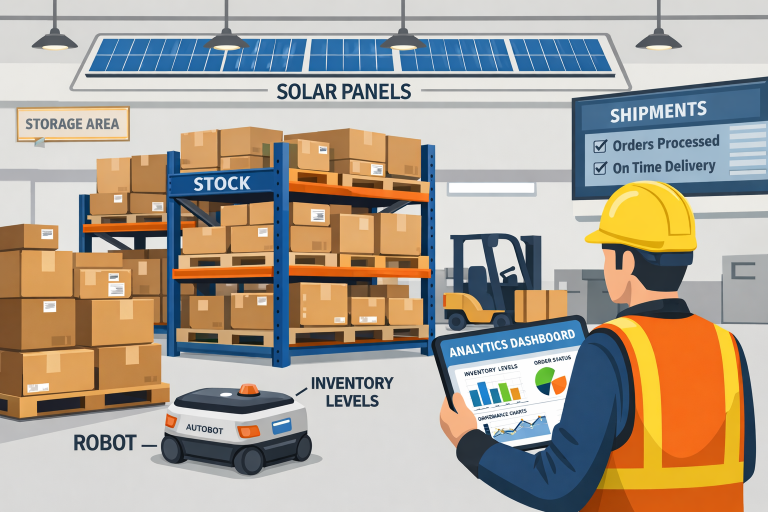
Smart warehouses leverage modern digital infrastructure, including Internet of Things (IoT) sensors, AI-powered software, and cloud-connected devices, to enhance operational agility and transparency. Real-time inventory tracking, automatic replenishment, and remote monitoring of environmental conditions allow managers to proactively address emerging challenges before they impact workflows. Warehouses using these technologies also achieve superior supply chain visibility, key for rapid order fulfillment and service reliability.
Implementing Sustainable Practices
Sustainable warehousing goes beyond reducing energy consumption. Companies are transitioning to solar-powered facilities, installing LED lighting, and using recycled or renewable materials in construction. Many operations now employ advanced packaging reduction technologies and participate in closed-loop recycling systems to minimize waste. According to the Forbes Business Council, embedding sustainability in warehouse design and practices not only helps the environment but also lowers costs over time and enhances brand reputation.
Advancements in Automation and Robotics
Automation is revolutionizing tasks such as inventory sorting, picking, and packaging. Robotic palletizers, autonomous mobile robots, and automated storage and retrieval systems increase operational throughput and reduce the risk of errors and injuries. These robotic systems are equipped with machine vision and AI-driven decision-making, providing unprecedented consistency and speed. As labor shortages continue to challenge the sector, automation supports scaling up without sacrificing quality control or precision.
Adopting Flexible and On-Demand Warehousing
On-demand warehouses enable businesses to proactively address emerging challenges before they impact workflows, such as during seasonal expansion. This model reduces capital investment and fixes imbalances by bringing storage closer to end consumers when needed. Increasingly, third-party providers enable seamless network expansion, enabling stock to be repositioned quickly to meet changing geographic and seasonal demand patterns.
Leveraging Data Analytics and AI
Data analytics tools and AI algorithms analyze massive datasets from orders, suppliers, and logistical activities to identify trends and predict demand surges. Advanced analytics streamlines replenishment schedules, minimizes out-of-stock events, and provides insights into optimal workforce allocation. Companies that embrace AI-enhanced data strategies outperform competitors with superior forecast accuracy and customer service. For more on how analytics is shifting logistics, see the resources at McKinsey & Company.
Integrating 5G Technology
The integration of 5G networks supports more connected devices and real-time communication within the warehouse. This connectivity enables seamless operation of everything from smart forklifts to connected sensors and automated picking robots. Reliable, ultra-fast data transmission with minimal latency fosters coordination among systems, enhances video surveillance, and powers real-time analytical dashboards.
Prioritizing Worker Safety and Ergonomics
Workforce well-being has emerged as a core pillar of warehouse modernization. Wearable technologies now monitor environmental exposure, fatigue, and posture, alerting workers and supervisors to risks in real time. Ergonomic interventions, such as lift-assist devices and height-adjustable workstations, reduce the risk of repetitive strain injuries and create safer working environments. Strong safety cultures, bolstered by advanced monitoring, improve retention and morale.
Enhancing Customization and Personalization
As personalization becomes standard for consumer goods, warehouses must support greater product diversity and more complex packaging processes. Flexible picking systems and modular storage solutions enable rapid changeovers and the easy accommodation of bespoke orders. Advanced warehouse management systems (WMS) enable tracking and fulfilling personalized SKU-level requirements, reducing lead times and boosting customer satisfaction.
Optimizing Cross-Docking and Just-in-Time Inventory
Cross-docking enables the direct transfer of incoming goods to outbound shipments, reducing storage time and costs. Combined with just-in-time inventory practices, cross-docking eliminates excess stock buildup and accelerates deliveries. By deploying dynamic scheduling and predictive analytics, warehouses coordinate inbound and outbound logistics efficiently, cutting inventory holding costs and transportation expenses.
Evolving E-Commerce Fulfillment Strategies
As online sales volumes soar, e-commerce fulfillment requires advanced sorting, packaging, and routing solutions. Tailored fulfillment centers, integrated WMS, and real-time shipment tracking help meet consumer expectations for same-day or next-day delivery. Investments in last-mile robotics and AI-driven dispatchingimprove overall efficiency while helping companies adapt to fluctuating demand and more complex orders.
Innovative technologies and strategies are reshaping how warehouses operate in 2026. Staying competitive now requires adopting smart tools, fostering sustainability, supporting workforce safety, and embracing a data-driven mindset for continuous improvement.

FOLLOW ME ON SOCIAL MEDIA


No comments:
Post a Comment
I love reading and responding to comments but in order to get my reply you must ensure you are NOT a no-reply blogger. If you are, here are some quick steps to change that!
1. Go to the home page of your Blogger account.
2. Select the drop down beside your name on the top right corner and choose Blogger Profile.
3. Select Edit Profile at the top right.
4. Select the Show My Email Address box.
5. Hit Save Profile.