

Understanding the Synergy of Dog Training and Daycare
 We all envision a happy, well-behaved dog that seamlessly fits into our lives. From a playful puppy to a calm adult, our canine companions enrich our homes in countless ways. However, guiding them to become confident and polite members of society often requires more than just good intentions. This is where professional dog training, especially in group settings, and high-quality daycare facilities become invaluable tools.
In this comprehensive guide, we will explore the profound benefits of combining structured group dog training classes with supervised daycare. We will uncover how these professional environments foster essential skills, promote healthy socialization, and address common behavioral challenges. Our aim is to provide you with insights into choosing the best programs to support your dog's overall well-being and strengthen your bond for years to come. Let's delve into how a holistic approach to canine care can transform your dog's life, and yours.
At its core, a group dog training class brings together multiple dog-handler teams to learn and practice skills under the guidance of a professional trainer. This communal learning environment offers distinct advantages that set it apart from private, one-on-one training sessions. While private training focuses on individual behavioral issues and tailored solutions, group classes excel at building a dog's ability to focus amidst distractions and providing crucial socialization opportunities.
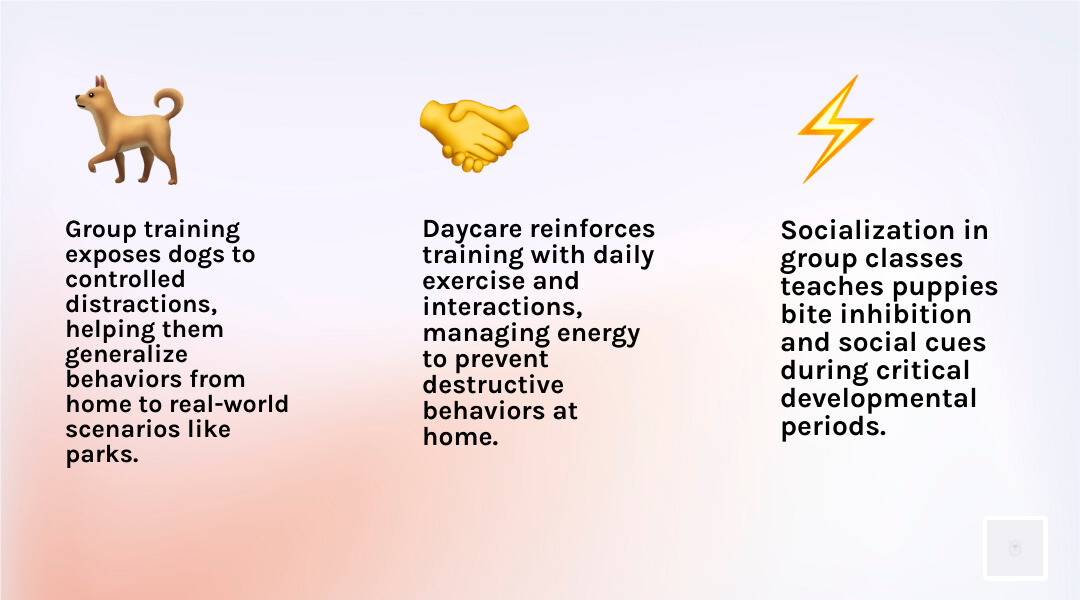
Imagine your dog mastering "sit" perfectly in your quiet living room, only to ignore you completely when a squirrel dashes by at the park. Group classes bridge this gap. They expose dogs to a controlled, safe environment filled with other dogs, people, and novel sounds, mimicking real-world scenarios. This exposure is vital for dogs to generalize their learned behaviors, making them reliable in various situations. The presence of other dogs also creates a dynamic learning space where dogs can observe and learn from their peers, and owners can gain confidence in handling their dogs around others.
The benefits of group training extend beyond mere obedience. It's a powerful tool for socialization, particularly for puppies during their critical developmental period. Puppy classes, for instance, provide a structured setting for young dogs to interact appropriately with other puppies and humans, learning crucial social cues and bite inhibition. This early, positive exposure can significantly influence a puppy's temperament and confidence as an adult, helping them grow into well-adjusted companions.
For adult dogs, group classes continue to offer socialization, helping them maintain polite interactions with other canines. This regular, positive exposure to a "pack" environment can be incredibly enriching, preventing isolation and boredom. When considering a comprehensive approach to your dog's well-being, exploring options like Paws University group training can offer a blend of structured learning and social engagement that supports their development.
However, group classes are not a one-size-fits-all solution. While many dogs thrive in this setting, those with significant behavioral challenges, such as severe fear, aggression, or high reactivity towards other dogs or people, may find the group environment overwhelming or even counterproductive initially. For these dogs, private training is often the recommended starting point. A professional trainer can assess the dog's specific needs, develop a customized plan, and work on foundational behaviors in a low-stress environment before gradually introducing controlled social interactions. This ensures the dog's safety and well-being, as well as that of others.
One of the most appealing aspects of group dog training is its affordability. While private sessions offer personalized attention, group classes generally present a more budget-friendly option for owners seeking professional guidance. This cost-effectiveness makes quality training accessible to a broader range of dog owners, ensuring more dogs receive the foundational skills they need.
The synergy between structured group training and supervised daycare is profound. Daycare provides consistent opportunities for appropriate social interaction and physical exercise, reinforcing the positive behaviors learned in class. It helps manage a dog's energy levels, reducing the likelihood of destructive behaviors at home, and offers continued exposure to a dynamic social environment. Together, these services create a holistic approach to canine wellness, addressing both mental and physical needs.
The Role of Rewards-Based Training in Group Settings
The foundation of effective professional dog training, particularly in group environments, lies in rewards-based methodologies. This approach, often referred to as positive reinforcement, focuses on rewarding desired behaviors to increase their likelihood of occurring again. It stands in contrast to older, more aversive training methods that rely on punishment or intimidation.
Professional trainers employing rewards-based techniques understand that dogs learn best when they are motivated and feel safe. Instead of using tools like prong, shock, or choke collars, which can create fear and anxiety, these trainers utilize treats, praise, toys, and play to encourage cooperation and build a strong, trusting bond between dog and handler. Many reputable training facilities, including those referred by veterinarians, explicitly state their commitment to force-free and science-based methods, recognizing that these approaches are not only humane but also highly effective.
In a group setting, rewards-based training is particularly powerful for distraction management. Dogs learn to focus on their handler and respond to cues even with the exciting presence of other dogs and people. Trainers gradually introduce distractions, helping dogs build resilience and generalize their skills. For example, a dog might first learn "sit" in a quiet corner, then practice it while another dog walks by, and eventually perform it with multiple dogs playing nearby. This progressive exposure builds a dog's ability to maintain focus and impulse control in real-world scenarios.
Certified trainers are crucial to the success of rewards-based group training. Many trainers hold certifications from nationally recognized organizations, indicating they have undergone formal training, education, and passed rigorous exams. These certifications often require ongoing continuing education, ensuring trainers stay updated on the latest science-based methods. When selecting a program, inquiring about trainer qualifications and their commitment to positive reinforcement is a key step.
The benefits of this training philosophy in a group context are manifold:
- Enhanced Motivation: Dogs are eager to participate when they anticipate positive outcomes, making learning enjoyable for them.
- Stronger Bond: Rewards-based methods foster trust and mutual respect between dog and owner, strengthening their relationship.
- Long-term Retention: Behaviors learned through positive reinforcement are typically more durable and reliable, as they are associated with positive feelings.
- Adaptability: Dogs learn to think and make choices, rather than simply avoiding punishment, which makes them more adaptable to new situations.
The group environment further reinforces these benefits by providing opportunities for both dogs and owners to practice consistency and timing, essential elements of effective positive reinforcement. Owners learn from observing other teams and receive immediate feedback from trainers on their technique.
Here's a comparison of how group learning environments and individual skill acquisition contribute to a dog's development:
Aspect Group Learning Environment Individual Skill Acquisition (Private Training) Socialization Excellent for appropriate peer interaction Limited, needs external integration Distraction Proofing Built-in, progressive exposure to real-world stimuli Requires deliberate setup by owner/trainer Cost-EffectivenessGenerally more affordable per session Higher cost per session, tailored intensity Generalization High, skills practiced in varied contexts Requires active effort to transfer skills to new environments Owner Support Community of owners, shared experiences Focused, one-on-one guidance Behavioral Issues Best for mild issues, manners, confidence building Ideal for severe fear, aggression, reactivity Pacing Structured curriculum, group pace Flexible, tailored to dog's individual learning pace Essential Skills Developed in Professional Facilities
Professional group dog training classes offer a comprehensive curriculum designed to equip dogs and their owners with practical skills for everyday life. These classes go beyond basic commands, focusing on behaviors that promote good manners, safety, and a harmonious household.
Typically, group obedience classes cover a range of fundamental commands and life skills:
- Basic Obedience: Commands like "sit," "down," "stay," and "come" (recall) are foundational. Dogs learn to respond reliably to these cues in various positions and with increasing duration and distance.
- Loose-Leash Walking: A common goal for many owners, this skill teaches dogs to walk politely on a leash without pulling, making walks enjoyable for both parties.
- Polite Greetings: Dogs learn not to jump on people, instead offering a "sit" or calm greeting when meeting new individuals.
- Impulse Control: Exercises like "leave it" (for tempting objects or food) and "wait" (at doors or before eating) teach dogs self-control, crucial for safety and good manners.
- Place/Settle Cues: Dogs learn to go to a designated spot (like a mat or bed) and relax, which is invaluable for managing excitement when guests arrive or during meal times.
- Focus Exercises: Teaching a dog to maintain eye contact and attention on their handler, even with distractions, is key to reliable obedience in any environment.
- Body Handling & Grooming:Especially in puppy classes, dogs are introduced to being touched, examined, and handled positively, preparing them for vet visits and grooming sessions.
Beyond these core skills, many facilities offer specialized group classes. For instance, classes focusing on confidence building are ideal for shy or timid dogs, using fun obstacles and positive experiences to help them feel more secure. Canine Good Citizen (CGC) preparation classes are also popular, preparing dogs to pass the American Kennel Club's certification test, which demonstrates good manners and responsible dog ownership. These classes often cover skills like accepting a friendly stranger, walking through a crowd, and reacting politely to other dogs.
While group classes are excellent for building general manners and confidence, it's important to reiterate that they are generally not suitable as a starting point for dogs with severe reactivity (e.g., barking, lunging at other dogs or people on leash) or aggression. These behaviors require a more controlled and individualized approach, often beginning with private training to ensure safety and effective behavior modification. However, some advanced group classes, like "Reactive Rover" programs, are specifically designed for dogs with mild to moderate reactivity, provided they have already received foundational private training and are deemed suitable for a controlled group environment.
The goal of these classes is to provide dogs with the skills they need to adapt to human life, fostering a stronger bond with their owners. We believe that investing in professional training is an investment in a lifetime of happiness with your canine companion. For a deeper dive into various training methodologies and their benefits, you can explore resources on Training and specific topics within our Dog Training Category.

Maximizing Socialization Through Dog Training and Daycare
Socialization is a cornerstone of a well-adjusted dog, and group training classes, especially puppy classes, play a pivotal role during critical developmental periods. The American Veterinary Society of Animal Behaviorists (AVSAB) emphasizes the importance of early, positive socialization for puppies. During what's often called the "Critical Socialization Period" (typically up to 16 weeks of age), puppies are most receptive to new experiences and forming positive associations.
Puppy group classes provide a safe and controlled environment for young dogs to interact with their peers and various people. These structured play sessions, supervised by experienced trainers, teach puppies crucial social cues, appropriate play styles, and even bite inhibition. Trainers can intervene to prevent overly rough play and ensure all interactions are positive, helping puppies develop confidence and good "dog manners." For example, puppies are often required to be at least 7 days past their first round of vaccinations to attend class, safeguarding their health while maximizing socialization opportunities.
Beyond puppyhood, group training and daycare continue to offer valuable socialization. For adolescent and adult dogs, regular exposure to other well-behaved dogs helps them maintain their social skills and prevents them from becoming isolated or fearful. This "peer learning" is invaluable, as dogs naturally communicate and learn from each other's body language.
In a professional daycare setting, dogs are carefully temperament-matched to ensure positive play groups. This supervised interaction allows dogs to burn off energy, engage in healthy play, and continue practicing polite social behaviors. It's a stark contrast to uncontrolled dog park interactions, which can sometimes lead to negative experiences and behavioral setbacks. Daycare also exposes dogs to a variety of human handlers, sounds, and routines, further broadening their comfort zones.
For owners, understanding canine body language and social cues is also part of the learning process in these environments. Trainers often provide insights into how dogs communicate, empowering owners to better interpret their dog's needs and reactions. This comprehensive approach ensures that socialization is not just about exposure, but about positive, educational experiences that build a dog's confidence and adaptability. If you're looking to help your dog become a social star, exploring resources on Dog Socialization Category and How to Turn Your Lone Wolf into a Social Star can provide further guidance.
Safety Protocols for Dog Training and Daycare
The safety and well-being of every dog are paramount in professional group training classes and daycare facilities. Reputable establishments adhere to stringent protocols to ensure a secure and healthy environment for all participants.
Vaccination Requirements: A fundamental prerequisite for enrollment is up-to-date vaccinations. All dogs must have age-appropriate vaccinations and show no signs of illness. For puppies, this typically means they must be at least 7 days past their first round of puppy vaccinations, in line with AVSAB recommendations. Common required vaccinations include Distemper, Parvovirus, Adenovirus, Rabies (age-permitting), and Bordetella. Many facilities also require a negative fecal sample to prevent the spread of parasites. These requirements protect not only your dog but also every other dog in the facility.
Temperament Screening: Before joining group activities, dogs often undergo a temperament assessment or evaluation. This helps trainers determine if a dog is suitable for group settings and ensures that playgroups in daycare are well-matched. Dogs displaying aggression, severe fear, or high reactivity may be recommended for private training first, ensuring the safety and comfort of all participants.
Supervision and Staffing: High-quality facilities maintain appropriate staff-to-dog ratios, ensuring constant and vigilant supervision during both training and play sessions. Certified professional dog trainers lead classes, while trained handlers oversee daycare interactions, intervening when necessary to guide appropriate behavior or prevent conflicts.
Facility Design and Sanitation: The physical environment is designed with safety in mind. This includes secure fencing, appropriate flooring, and designated areas for different activities or energy levels. Regular cleaning and disinfection protocols are in place to maintain hygiene and prevent the spread of illness.
Emergency Preparedness:Professional facilities have clear emergency plans, including procedures for injuries, illnesses, or unexpected events. Staff are trained in basic first aid, and contact information for owners and emergency veterinarians is readily accessible.
Equipment Guidelines: Most rewards-based training facilities have specific equipment guidelines, often prohibiting aversive tools like prong, choke, or shock collars. Instead, they recommend or require equipment such as flat buckle collars, harnesses, and standard 4-6 foot leashes. Owners are often advised to bring a treat pouch filled with high-value treats to class.
By adhering to these comprehensive safety protocols, professional dog training and daycare facilities create a secure, healthy, and positive environment where dogs can learn, play, and socialize with confidence. Understanding these measures can provide peace of mind and help owners select the best care for their canine companions. For additional insights into creating a safe and comfortable space for your dog, you might find our article on Crate Training: Teaching Your Dog to Love Their Space helpful.
Selecting a Premium Facility in Tropical Climates
Choosing the right professional dog training and daycare facility is a significant decision, especially when living in a tropical climate like Hawaii County. The unique environmental factors of warm, humid weather and abundant outdoor spaces necessitate specific considerations to ensure your dog's comfort and safety.
A premium facility in a tropical setting will prioritize features that mitigate heat and provide ample, comfortable spaces for dogs to learn and play. Look for:
- Shaded Play Yards: Extensive natural shade from trees or purpose-built shade structures are crucial to protect dogs from direct sun exposure and prevent overheating.
- Excellent Ventilation: Open-air structures or well-ventilated indoor spaces are essential to ensure good airflow, preventing stagnant, hot air.
- Heat Management Systems: This might include misters, cooling fans, or even climate-controlled indoor areas for breaks during the hottest parts of the day.
- Hydration Stations: Easily accessible, fresh water sources throughout the facility are non-negotiable.
- Safe, Non-Slip Surfaces: Outdoor play areas should have surfaces that are gentle on paws and provide good traction, even when wet.
Beyond environmental considerations, the quality of training and care remains paramount. A premium facility will distinguish itself through:
- Certified Professional Trainers:Seek out trainers with recognized certifications (e.g., CPDT-KA, KPA CTP, AKC Canine Good Citizen Evaluator). These credentials indicate a commitment to ethical, science-based training practices and ongoing professional development. Some facilities are even referred by over a hundred local veterinarians, speaking to their reputation and trusted expertise.
- Rewards-Based Philosophy:Confirm that the facility exclusively uses positive reinforcement, force-free, and humane training methods. This approach builds trust and makes learning enjoyable for your dog.
- Structured Curriculum: A clear progression of classes, from puppy kindergarten to advanced obedience or specialty courses, indicates a well-thought-out program.
- Small Class Sizes: Smaller groups allow for more individualized attention from trainers, ensuring each dog and owner receives adequate support.
- Comprehensive Services:Facilities that offer a combination of group classes, private training, and supervised daycare provide a holistic approach to your dog's needs, ensuring consistency in training and care.
- Transparency and Communication: A good facility will be open about their policies, procedures, and your dog's progress, offering virtual orientations or opportunities to observe classes.
When evaluating facilities in Hawaii County, inquire about their specific strategies for managing the tropical climate. Ask about their daily schedule, how they ensure dogs stay cool and hydrated, and what emergency protocols are in place for heat-related issues. A facility that can articulate a clear and thoughtful approach to these challenges demonstrates a higher level of care and professionalism.

Frequently Asked Questions about Professional Canine Services
Is my dog a good candidate for group environments?
Determining if your dog is a good fit for group training classes or daycare depends largely on their temperament and behavioral history. Most dogs benefit immensely from group settings, especially for socialization, distraction proofing, and building confidence. Puppy classes are particularly beneficial for early socialization during their critical developmental window.
However, if your dog exhibits significant fear, anxiety, aggression, or high reactivity (e.g., barking, lunging, growling at other dogs or people on leash), a group environment might be too stressful or even unsafe. For these dogs, private training is almost always the recommended first step. A professional trainer can assess the root cause of these behaviors in a low-stress, one-on-one setting and develop a tailored behavior modification plan. Once foundational skills are established and their confidence grows, some reactive dogs may be able to transition into specialized, highly controlled group classes designed for them, often after a human-only introductory session. Always consult with a certified professional dog trainer for an assessment if you have concerns about your dog's suitability for group settings. You can learn more about individualized approaches on our Private Training page or if you're dealing with specific issues like growling, refer to How to Stop Your Dog from Growling at You.
What are the advantages of rewards-based training over other methods?
Rewards-based training, primarily positive reinforcement, offers numerous advantages over traditional or aversive methods. Firstly, it builds a strong, trusting relationship between you and your dog. When your dog associates learning with positive experiences (like treats, praise, or play), they become more engaged, motivated, and eager to participate. This fosters a happy learner rather than one who acts out of fear or avoidance of punishment.
Secondly, positive reinforcement is scientifically proven to be highly effective for long-term behavior change. Dogs learn to make good choices because those choices lead to desirable outcomes, rather than simply suppressing unwanted behaviors due to fear of correction. This leads to more reliable and durable behaviors, even in distracting environments.
Thirdly, it promotes mental well-being. Aversive techniques can cause stress, anxiety, and even aggression in dogs, potentially damaging their confidence and your bond. Rewards-based training, conversely, reduces stress, builds confidence, and encourages problem-solving, leading to a more resilient and well-adjusted dog. In group settings, this approach creates a positive and safe learning atmosphere for all participants.
How does professional daycare prevent common behavioral issues?
Professional dog daycare plays a crucial role in preventing many common behavioral issues by addressing a dog's fundamental needs for exercise, mental stimulation, and social interaction.
- Energy Outlet: Many behavioral problems, such as destructive chewing, excessive barking, or hyperactivity, stem from pent-up energy. Daycare provides a structured environment for dogs to play, run, and burn off energy, leading to a calmer, more relaxed dog at home.
- Mental Stimulation: Beyond physical activity, a good daycare offers mental enrichment through various activities, toys, and interactions. This cognitive engagement helps prevent boredom, which can often lead to mischievous or destructive behaviors.
- Continued Socialization: Daycare offers consistent, supervised interaction with a variety of dogs and people. This ongoing socialization helps dogs maintain polite manners, understand canine social cues, and adapt to new situations, reducing the likelihood of developing fear-based aggression or anxiety around others.
- Routine and Structure: A consistent daycare schedule provides dogs with a predictable routine, which can be comforting and help reduce anxiety. The structured environment reinforces good behaviors learned in training classes.
By providing a safe, stimulating, and social outlet, professional daycare helps dogs become well-rounded, happy companions, significantly reducing the incidence of common behavioral challenges. For information on managing costs associated with professional dog services, you might find our guide, How Much Does Dog Training Cost and Will It Break the Bank?, insightful.
Conclusion
The journey to a well-behaved and happy dog is a continuous one, enriched significantly by professional group dog training classes and high-quality daycare facilities. As we've explored, these services offer a powerful synergy, addressing the critical needs for structured learning, appropriate socialization, and consistent mental and physical stimulation.
From building foundational obedience skills and mastering impulse control in distracting environments to fostering crucial social etiquette during puppyhood and beyond, group training provides an invaluable framework. Coupled with daycare, which offers a supervised outlet for energy and ongoing positive interactions, dogs are equipped with the tools to thrive in our human world.
Choosing a reputable facility that adheres to rewards-based training philosophies, maintains rigorous safety protocols, and understands the unique needs of dogs in tropical climates ensures your canine companion receives the best possible care. This holistic approach not only transforms your dog's behavior but also strengthens the incredible bond you share, leading to a lifetime of mutual understanding and joy. Investing in professional canine services is an investment in your dog's wellness, your peace of mind, and the harmonious integration of your beloved pet into your family and community.

FOLLOW ME ON SOCIAL MEDIA


No comments:
Post a Comment
I love reading and responding to comments but in order to get my reply you must ensure you are NOT a no-reply blogger. If you are, here are some quick steps to change that!
1. Go to the home page of your Blogger account.
2. Select the drop down beside your name on the top right corner and choose Blogger Profile.
3. Select Edit Profile at the top right.
4. Select the Show My Email Address box.
5. Hit Save Profile.