

Table of Contents
- Economic Impact of Underride Accidents
- Human Costs and Societal Burden
- Legal Ramifications and Liability
- Current Safety Measures and Their Effectiveness
- Advancements in Underride Prevention Technologies
- Policy Debates and Regulatory Challenges
- Case Studies of Underride Accidents
- Conclusion
Underride accidents represent one of the gravest threats on American highways. When a smaller vehicle, such as a car or SUV, collides with a semi-truck and slides underneath its trailer, the vehicle’s usual safety mechanisms are often rendered ineffective. The outcomes are generally catastrophic, with high risks of serious injury or fatality. Addressing the issues contributes not only to saving lives but also to reducing the impact of rear-end accidents with semi trucks and other related safety challenges on our roads.
Understanding the true cost of accidents involves more than direct damage, encompassing economic and societal burdens. Each incident impacts families, communities, and the transportation sector, requiring comprehensive solutions. Costs of emergency response, long-term care, legal issues, and safety reforms highlight the wide-reaching effects of underride collisions. Recognizing these is vital for advocating stronger safety policies and technology. Policymakers, trucking firms, safety advocates, and drivers must address this hazard through data-driven strategies, informed debate, and technology investment, potentially saving hundreds of lives annually and reducing suffering. Society bears a heavy burden with these preventable accidents. For progress, stakeholders must discuss costs, benefits, responsibility, and embrace innovation. Recent studies and examples clearly show the urgent need for action.
Economic Impact of Underride Accidents
Economic costs arise immediately and last indefinitely after underride collisions. According to reporting from the National Highway Traffic Safety Administration (NHTSA), the United States would need to spend between $970 million and $1.2 billion each year to fully equip all trailers with side underride guards. While this may seem high, estimates suggest such measures could save approximately 17 lives and prevent 69 serious injuries annually. These are not just abstract figures; the savings translate directly into reduced emergency response expenditures, lower ongoing healthcare costs, and less lost productivity as injured individuals recover or return to work.
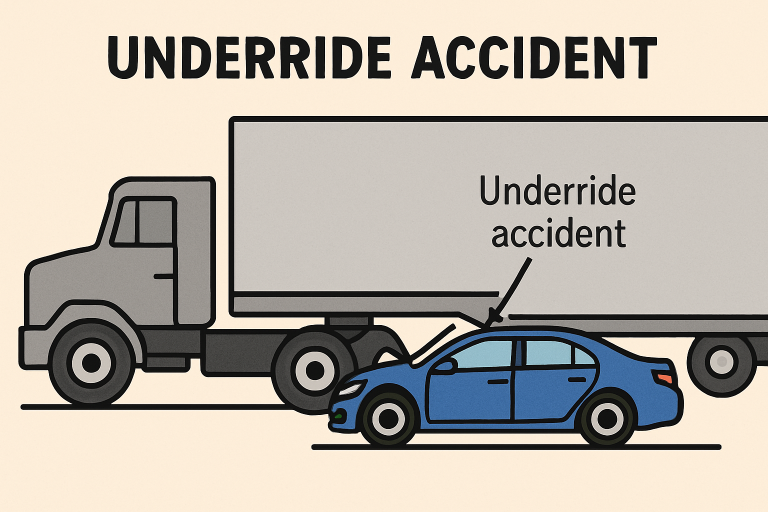
Insurance claims and property damage account for much of the visible economic harm from these accidents. Beyond the initial impact, companies can face rising premiums, legal expenses, and financial penalties that can threaten business continuity. In aggregate, the economic toll of underride crashes far outweighs the presumed savings from forgoing upgraded safety measures.
Human Costs and Societal Burden
The deepest cost is human. In 2021, more than 400 people died in underride accidents, a figure widely considered to be underestimated due to the inconsistencies in crash reporting. For those who survive, injuries often result in lasting physical disability, mental health challenges, and permanent changes in their quality of life. Families experience not only emotional trauma, but also the challenges of caring for loved ones who require ongoing rehabilitation or specialized medical care.
The community and the workforce feel the ripple effects of these incidents as well. Lost income, increased reliance on social service supports, and the psychological burden shared by witnesses and emergency personnel all add to the societal cost. The impact can persist for years, further underlying the necessity for effective prevention and interventions.
Legal Ramifications and Liability
Trucking companies and trailer manufacturers may face substantial legal liability in the event of underride crashes. Courts have held parties accountable for failing to adopt effective safety solutions, resulting in landmark verdicts. In one notable case from St. Louis, a jury awarded $462 million to the family of an accident victim after concluding that inadequate safety designs contributed directly to a fatal underride incident. These outcomes highlight a growing consensus: taking proactive measures is not only the ethical choice, but also the financially prudent one, given the scale of settlements and judgments.
Current Safety Measures and Their Effectiveness
Federal regulations require rear underride guards on trailers; however, side guards remain optional and are rarely installed. Multiple studies demonstrate that effective side guards could prevent up to 97 percent of side underride fatalities and 85 percent of serious injuries when crashes happen at lower speeds, such as under 40 mph. Adoption has lagged, with many operators citing high installation costs, increased weight, and maintenance concerns. Despite the demonstrated benefits, progress in regulation and adoption is slow.
Advancements in Underride Prevention Technologies
Innovation is changing the conversation around underride safety. Recent advances have led to the introduction of aerodynamic side guards, which serve a dual purpose. Not only do they prevent underride collisions, but they also reduce fuel consumption, making them particularly attractive for fleet owners mindful of operating costs. Such technology transforms the perceived choice between safety and efficiency into an opportunity to enhance both, broadening the appeal of mass adoption among industry stakeholders.
Policy Debates and Regulatory Challenges
The path forward for underride-prevention policies remains contentious. Critics argue that current regulatory proposals underestimate the human and financial costs of these crashes, thereby stalling progress toward more robust safety standards. Advocates call for improved data collection and a comprehensive cost-benefit analysis to ensure legislation better reflects real-world consequences. The ongoing debate over responsibility and funding further complicates the adoption of stronger regulations. Nevertheless, coalition-building between advocacy groups and industry leaders shows promise for more collaborative problem-solving in the years ahead.
Case Studies of Underride Accidents
The real-world consequences of underride accidents are vivid and tragic. In one case, a 16-year-old lost his life when his vehicle became trapped under a semi-trailer. The resulting court award of $42 million to his family reflected not only their individual loss, but also the broader societal desire for stronger prevention. Cases like these, unfortunately repeated across jurisdictions, drive home the pressing need for industry-wide standards and robust enforcement to prevent further tragedies.
Conclusion
Underride accidents involving semi-trucks demand a coordinated response that addresses the economic, human, and legal consequences of inaction. Saving lives and protecting communities requires adopting advanced safety technologies, engaging seriously with regulatory policy, and shifting priorities from cost-saving to life-saving. By recognizing the true cost of underride accidents, stakeholders can work together to advance solutions that ultimately ensure safer roads for all.

FOLLOW ME ON SOCIAL MEDIA


No comments:
Post a Comment
I love reading and responding to comments but in order to get my reply you must ensure you are NOT a no-reply blogger. If you are, here are some quick steps to change that!
1. Go to the home page of your Blogger account.
2. Select the drop down beside your name on the top right corner and choose Blogger Profile.
3. Select Edit Profile at the top right.
4. Select the Show My Email Address box.
5. Hit Save Profile.